
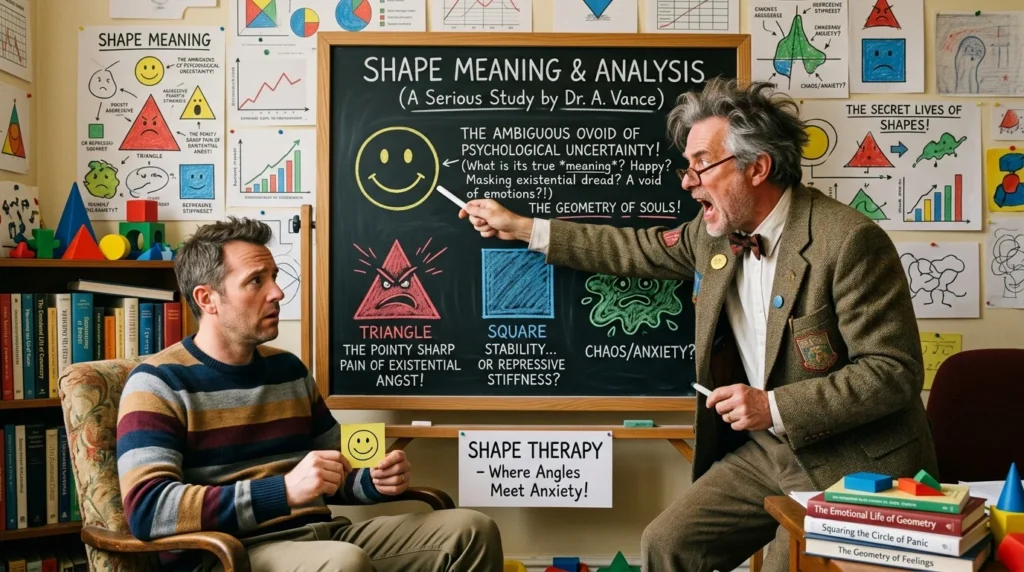

What Does “Shape” Mean?
A shape is the external form, outline, or appearance of an object.
In simple terms, shape describes what something looks like.
Examples include:
- Circle
- Square
- Triangle
- Rectangle
- Oval
- Heart
- Star
When you look at an object and recognize its outline, you’re identifying its shape.
Shape in Geometry
In mathematics, a shape is a figure that has boundaries, dimensions, or a defined structure.
Some basic geometric shapes include:
- Circles
- Squares
- Triangles
- Rectangles
- Pentagons
- Hexagons
Here’s a common geometric example:
This formula represents the area of a circle, one of the most recognizable shapes in geometry.
Origin of the Word Shape
The word shape comes from Old English and has been used for centuries to describe form, appearance, structure, and physical characteristics.
Today, the term is used across many fields, including:
- Mathematics
- Art
- Design
- Fitness
- Manufacturing
- Architecture
shape meaning How People Use “Shape” in Real Conversations
The word shape has several meanings depending on the context.
Physical Appearance
People often use shape to describe the form of an object.
Examples:
- “The table is rectangular in shape.”
- “The cloud formed a heart shape.”
- “The vase has a unique shape.”
Fitness and Health
Shape is commonly used when discussing physical condition.
Examples:
- “She’s in great shape.”
- “I want to get back into shape.”
- “Regular exercise helps you stay in shape.”
In these cases, shape refers to physical fitness rather than geometry.
Art and Design
Artists and designers use shapes as fundamental visual elements.
Examples:
- Logos
- Icons
- Illustrations
- Graphic designs
Shapes help create structure and visual balance.
Manufacturing and Engineering
Engineers frequently discuss the shape of materials, parts, and products.
Example:
“The component needs a different shape to fit properly.”
shape meaning Real-Life Examples of Shape
Let’s explore some common examples.
Example 1: Traffic Signs
Many road signs use recognizable shapes.
- Stop sign = Octagon
- Yield sign = Triangle
The shape helps drivers quickly understand the sign’s purpose.
Example 2: Pizza
A typical pizza has a:
- Circular shape
Each slice often forms a:
- Triangular shape
Example 3: Smartphone Screen
Most smartphones have a:
- Rectangular shape
This design maximizes screen space.
Example 4: Sports Ball
Different sports use different shapes.
Examples:
- Soccer ball = Sphere
- Football = Oval shape
- Baseball = Sphere
Example 5: Fitness Conversation
Friend: Have you been working out lately?
You: Yes, I’m trying to get back into shape.
Here, shape refers to physical condition rather than appearance.
Example 6: Logo Design
Many companies use simple shapes such as:
- Circles
- Squares
- Triangles
because they are easy to recognize and remember.
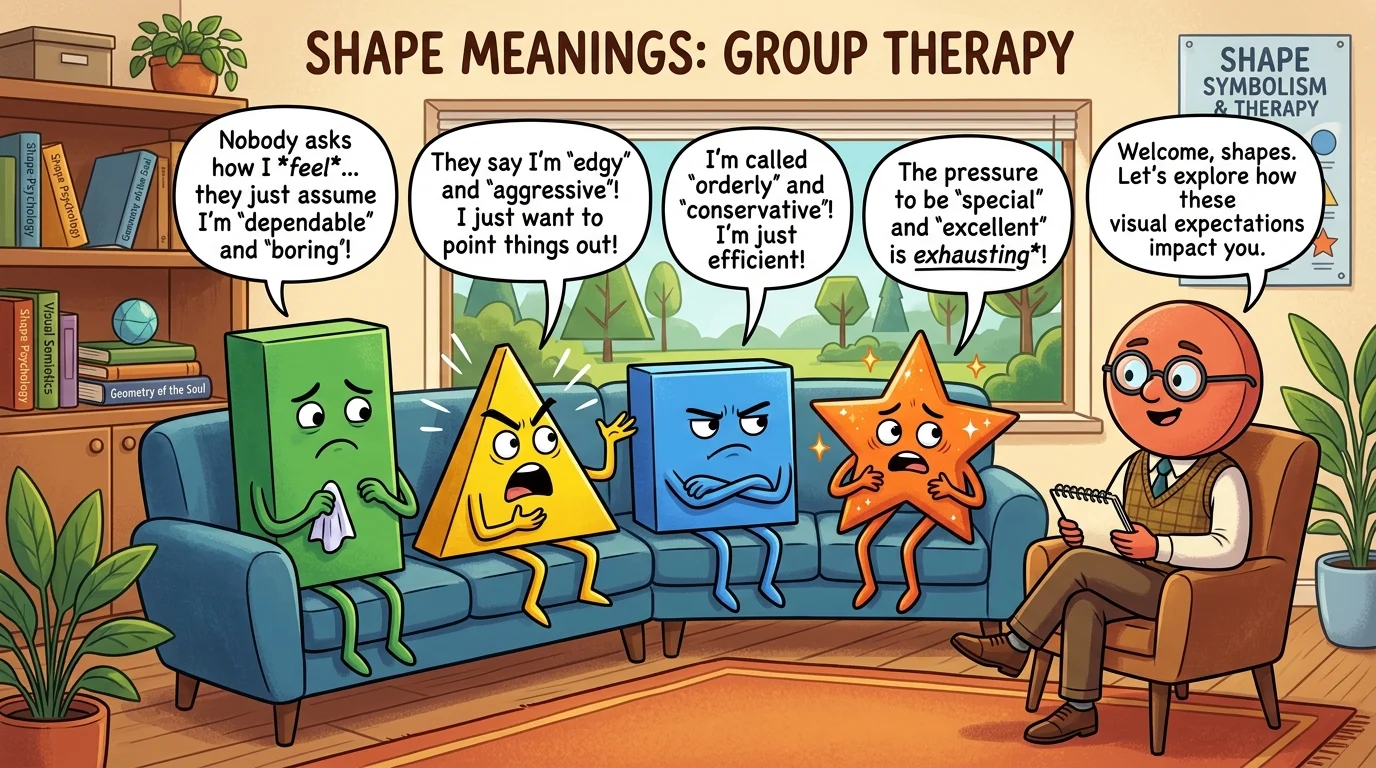
Types of Shapes
Shapes can be grouped into several categories.
Two-Dimensional (2D) Shapes
These shapes have:
- Length
- Width
Examples:
- Circle
- Square
- Rectangle
- Triangle
- Pentagon
Three-Dimensional (3D) Shapes
These shapes have:
- Length
- Width
- Height
Examples:
- Cube
- Sphere
- Cylinder
- Cone
- Pyramid
Regular Shapes
A regular shape has equal sides and equal angles.
Example:
- Square
Irregular Shapes
An irregular shape has sides or angles that differ.
Example:
- An uneven polygon
shape meaning Why Shapes Are Important
Shapes play a major role in everyday life.
Education
Children learn shapes early because they help develop:
- Spatial awareness
- Problem-solving skills
- Visual recognition
Architecture
Buildings rely on shapes for:
- Strength
- Functionality
- Aesthetics
Graphic Design
Designers use shapes to:
- Create logos
- Organize layouts
- Communicate messages
Nature
Shapes appear throughout nature.
Examples:
- Honeycombs (hexagons)
- Snowflakes
- Leaves
- Flowers
Technology
Modern technology uses shapes in:
- User interfaces
- App icons
- Product design
Common Mistakes & Misunderstandings
Confusing Shape and Size
Shape and size are different concepts.
For example:
- Two circles can have the same shape.
- They may have different sizes.
Thinking Shape Only Applies to Geometry
Many people associate shape solely with math.
However, shape is also used in:
- Fitness
- Design
- Art
- Everyday conversation
Mixing Up 2D and 3D Shapes
A circle is 2D, while a sphere is 3D.
Similarly:
- Square = 2D
- Cube = 3D
Assuming All Shapes Are Geometric
Not all shapes are perfect geometric figures.
Examples include:
- Clouds
- Leaves
- Abstract artwork
These still have identifiable shapes.
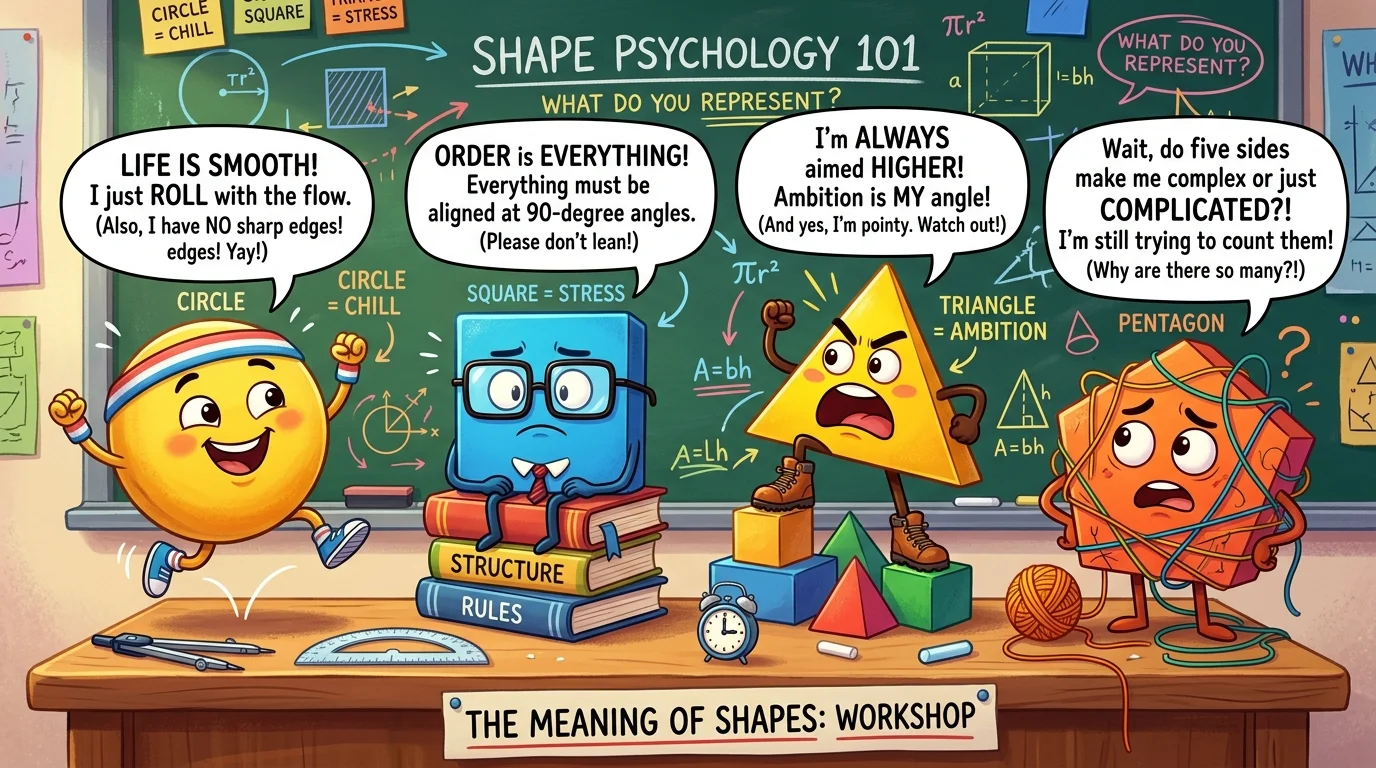
Related Terms
Geometry
The branch of mathematics that studies shapes, sizes, angles, and space.
Form
Often used in art and design to describe three-dimensional shape.
Pattern
A repeated arrangement of shapes or designs.
Symmetry
When a shape can be divided into matching parts.
Figure
A general term for a shape or geometric object.