
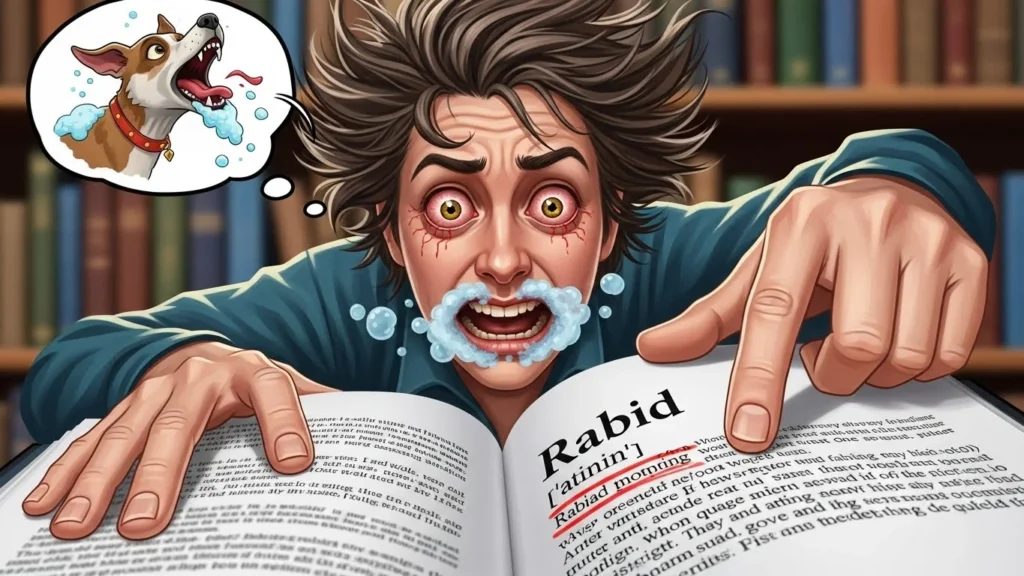

What Does “Rabid” Mean in English or Chat?
The word rabid has two main meanings, one literal and one figurative, and context decides which one applies.
Simple Definition
Rabid meaning:
Rabid means extremely aggressive, uncontrollable, or fanatically intense, either because of a disease (literal) or extreme behavior or beliefs (figurative).
Two Core Meanings Explained
Medical / literal meaning
Describes an animal or person infected with rabies
Associated with aggression, foaming at the mouth, and loss of control
Figurative / modern meaning (most common today)
Describes people who are wildly extreme, obsessed, or fanatical
Used in politics, fandoms, sports, and online arguments
In everyday language and online text, rabid almost always means “extremely intense or fanatical,” not medically sick.
Word Origin
Rabid comes from the Latin word rabidus, meaning “mad” or “furious.” Its emotional intensity has stayed strong even as its meaning evolved.
How People Use “Rabid” in Real Conversations
Rabid is not casual slang, but it’s very common in commentary, criticism, and strong opinions, especially online.
Common Places You’ll Hear “Rabid”
Political discussions
Sports commentary
Social media debates
News articles and opinion pieces
Pop culture fandoms
Casual Usage Examples
People often say:
“He has rabid supporters.”
“That comment section is full of rabid fans.”
“She’s a rabid defender of that idea.”
When It Sounds Natural
Describing extreme behavior or beliefs
Criticizing obsession or aggression
Analyzing heated debates
When It Sounds Awkward
Describing normal enthusiasm
Using it jokingly without context
Referring to actual illness casually
Rabid is a strong word, so it should be used carefully.
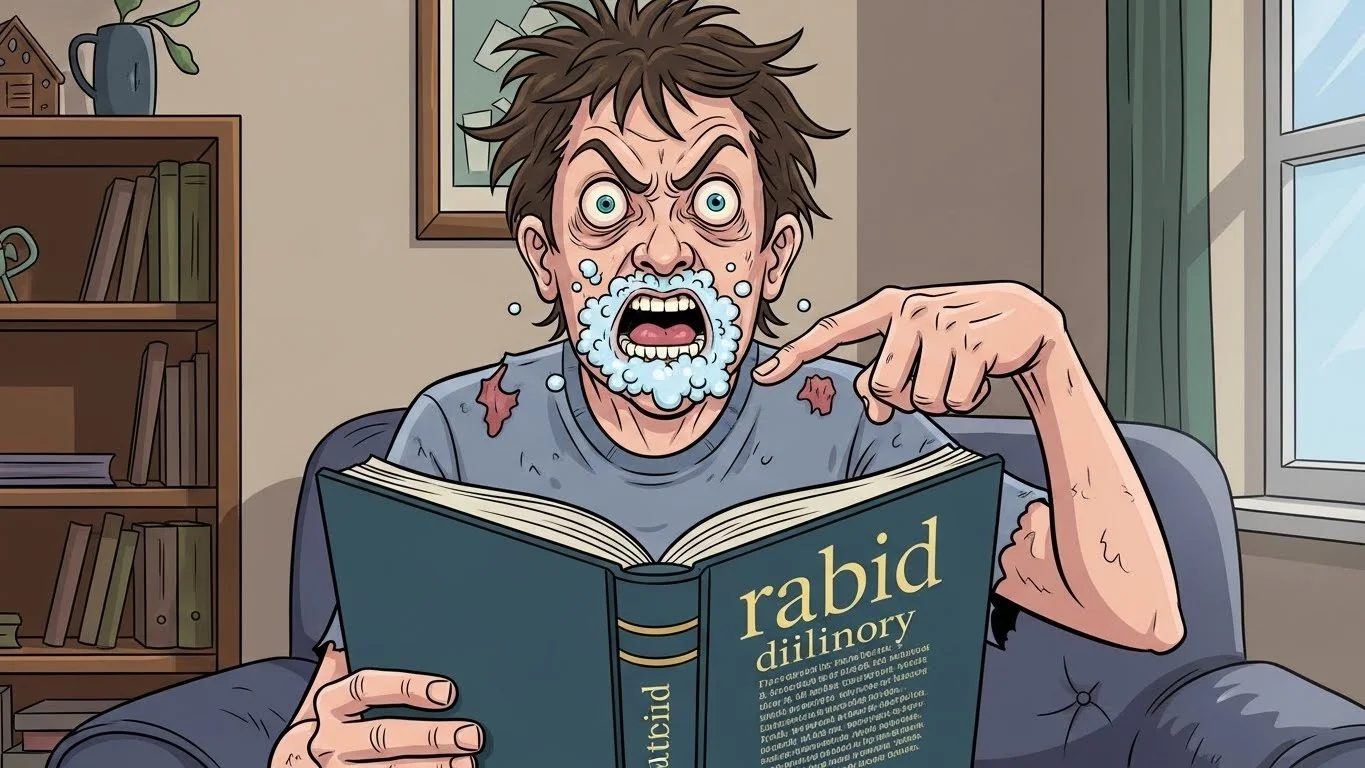
Real-Life Examples of “Rabid” in Text Messages & Media
Here are realistic examples showing how rabid is used today, with clear explanations.
Example 1
“He’s a rabid supporter of that political party.”
Meaning: He supports it in an extreme, emotional way.
Example 2
“The movie has rabid fans who attack critics online.”
Meaning: Fans are overly aggressive and defensive.
Example 3
“The debate turned ugly because of rabid comments.”
Meaning: The discussion became hostile and intense.
Example 4
“A rabid dog was reported in the area.”
Meaning: Literal use—an animal infected with rabies.
Example 5
“She’s a rabid critic of social media culture.”
Meaning: She strongly and passionately criticizes it.
Rabid Meaning in Writing, News, and Online Text
Understanding rabid meaning in text is important because it signals extremity and aggression.
In News & Journalism
Used to describe radical groups or behaviors
Emphasizes danger, intensity, or hostility
In Online Conversations
Often used critically
Implies obsession or loss of balance
Rarely neutral or positive
In Reviews & Commentary
Highlights extreme reactions
Suggests emotional rather than logical behavior
When someone is called rabid, it’s usually not a compliment.
Common Mistakes & Misunderstandings
Because rabid is powerful, it’s often misunderstood.
Mistake 1: Thinking Rabid Means “Excited”
Rabid is much stronger than excitement—it suggests uncontrolled intensity.
Mistake 2: Forgetting the Medical Meaning
Using rabid carelessly can sound insensitive if the literal disease context is relevant.
Mistake 3: Using It Lightly
Calling casual fans “rabid” can feel exaggerated or insulting.
Mistake 4: Assuming It’s Slang
Rabid is standard English, not internet slang, even though it’s widely used online.
Rabid vs Similar Words
Understanding similar words helps you choose the right tone.
Fanatical – Extremely devoted
Obsessed – Fixated on something
Extreme – Far beyond normal limits
Aggressive – Hostile or confrontational
Passionate – Strong feeling (not always negative)
Rabid implies intensity plus aggression, which makes it harsher than most alternatives.
Is “Rabid” Always Negative?
Almost always, yes.
Why It’s Usually Negative
Suggests lack of control
Implies hostility or danger
Often used as criticism
In rare cases, it’s used humorously or hyperbolically, but the underlying tone remains strong.
Why People Use the Word “Rabid”
People choose rabid because:
It grabs attention
It emphasizes extremity
It criticizes behavior strongly
It adds emotional impact
It frames opinions as irrational
That’s why it’s popular in headlines, debates, and viral posts.
Related Words & Expressions
You may see rabid alongside these terms:
Hardcore – Extremely committed
Militant – Aggressively active
Die-hard – Loyal to the extreme
Toxic fandom – Harmful fan behavior
Radical – Extreme beliefs or actions
These often appear in discussions about behavior and ideology.