

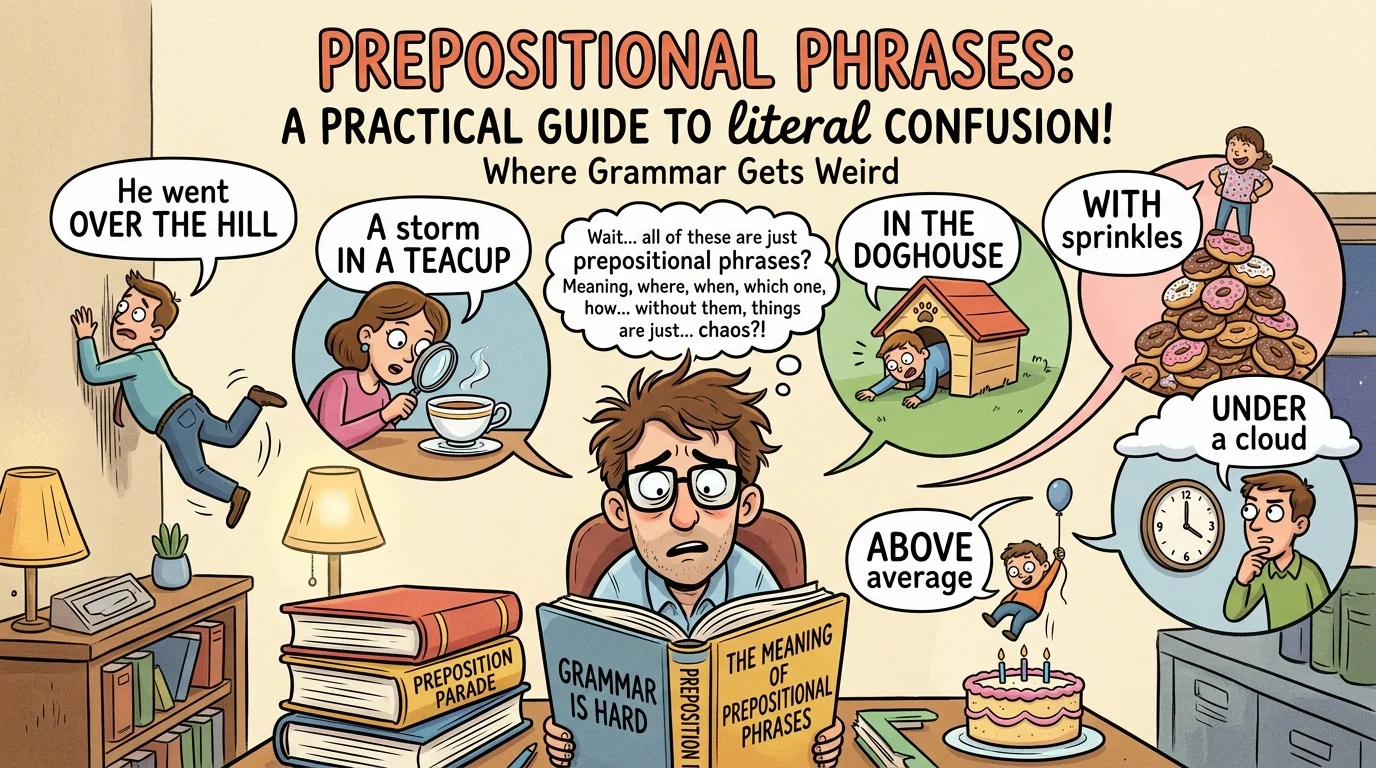
What Does “Prepositional Phrase” Mean in Chat or Text?
A prepositional phrase is a group of words that starts with a preposition and ends with a noun or pronoun.
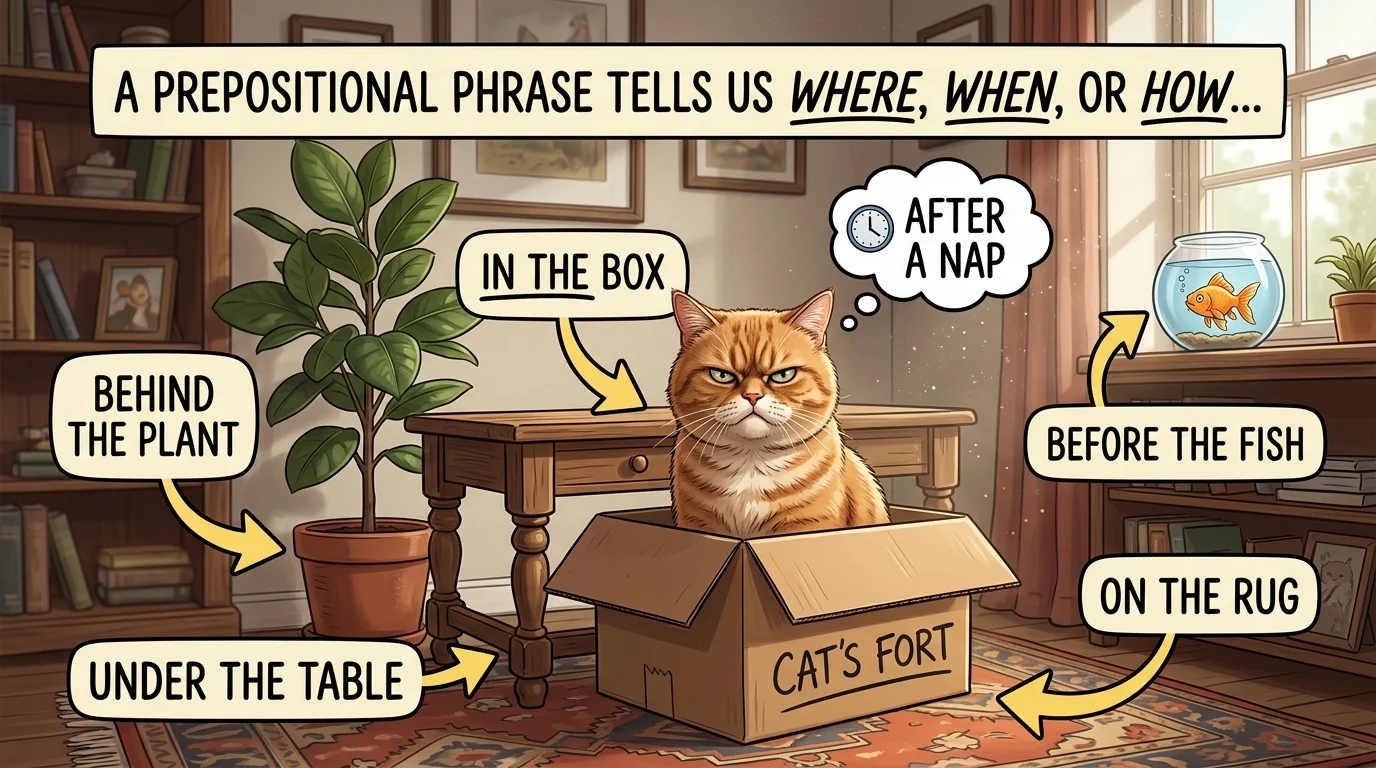
The phrase gives extra information about:
- Location
- Time
- Direction
- Cause
- Method
- Relationship
Simple Formula
A prepositional phrase usually follows this structure:
Preposition+Noun/Pronoun\text{Preposition} + \text{Noun/Pronoun}
Examples
- in the room
- after school
- under the bed
- with my friends
- during the movie
In each example:
- The first word is the preposition
- The remaining words complete the meaning
What Does “Prepositional Phrase Meaning” Actually Refer To?
When people search for “prepositional phrase meaning”, they usually want to know:
- What a prepositional phrase is
- How to identify one
- How it works in sentences
- Why teachers and grammar apps keep mentioning it
In simple words, a prepositional phrase adds detail to a sentence and helps make communication clearer.
Common Prepositions
Some of the most used prepositions include:
- in
- on
- at
- by
- with
- under
- over
- near
- through
- during
- after
- before
Brief Origin of Prepositional Phrases
The term comes from traditional English grammar. A “preposition” is called that because it’s usually “positioned before” a noun or pronoun.
Grammar experts have used prepositional phrases for centuries to explain sentence structure and relationships between ideas.
Today, they’re still essential in:
- School writing
- Professional emails
- Social media captions
- Blog posts
- Everyday conversation
How People Use “Prepositional Phrase” in Real Conversations
Most people don’t walk around saying “Hey, that’s a prepositional phrase.” But they use them constantly without realizing it.
Here’s how prepositional phrases naturally appear in daily communication.
In Text Messages
People use short prepositional phrases all the time:
- “I’m at home.”
- “Meet me after work.”
- “She’s in the car.”
These phrases quickly add context.
On Social Media
Instagram captions and TikTok comments often include them:
- “Living by the beach.”
- “Coffee before class.”
- “Late-night drive with friends.”
They make posts feel more descriptive and personal.
In Gaming Chats
Gamers use prepositional phrases for directions and teamwork:
- “Enemy behind the wall.”
- “Meet at the base.”
- “Loot inside the building.”
Without these phrases, communication would be confusing.
In School and Professional Writing
Teachers often explain prepositional phrase meaning because these phrases improve sentence detail.
Example:
- Basic: “The book is.”
- Better: “The book is on the desk.”
The second sentence gives actual useful information.
When Using Them Feels Natural vs Awkward
Prepositional phrases sound natural when they add clarity.
Good example:
- “She sat near the window.”
Awkward example:
- “She sat near.”
The phrase feels incomplete without the object.
Real-Life Examples of “Prepositional Phrase” in Text Messages
Here are realistic examples showing how prepositional phrases work in everyday conversations.
Example 1
Text Message:
“I’ll meet you at the mall.”
Explanation
The phrase “at the mall” tells the location.
Without it, the sentence loses important context.
Example 2
Chat Message:
“We’re leaving after dinner.”
Explanation
The phrase “after dinner” explains time.
It answers the question “When?”
Example 3
Gaming Chat
“The supplies are inside the house.”
Explanation
The phrase “inside the house” describes place and direction.
Example 4
Funny Conversation
“My phone disappeared under the couch again.”
Explanation
The phrase “under the couch” gives the exact location.
Relatable and painful at the same time.
Example 5
Social Media Caption
“Sunset by the ocean hits different.”
Explanation
The phrase “by the ocean” creates imagery and mood.
That’s why prepositional phrases are powerful in writing.
Common Types of Prepositional Phrases
Understanding different types makes grammar much easier.
1. Prepositional Phrases of Place
These describe location.
Examples:
- under the chair
- near the station
- inside the bag
2. Prepositional Phrases of Time
These explain when something happens.
Examples:
- after class
- before midnight
- during lunch
3. Prepositional Phrases of Direction
These show movement.
Examples:
- into the room
- through the tunnel
- across the street
4. Prepositional Phrases of Method or Manner
These explain how something happens.
Examples:
- with confidence
- by accident
- in silence
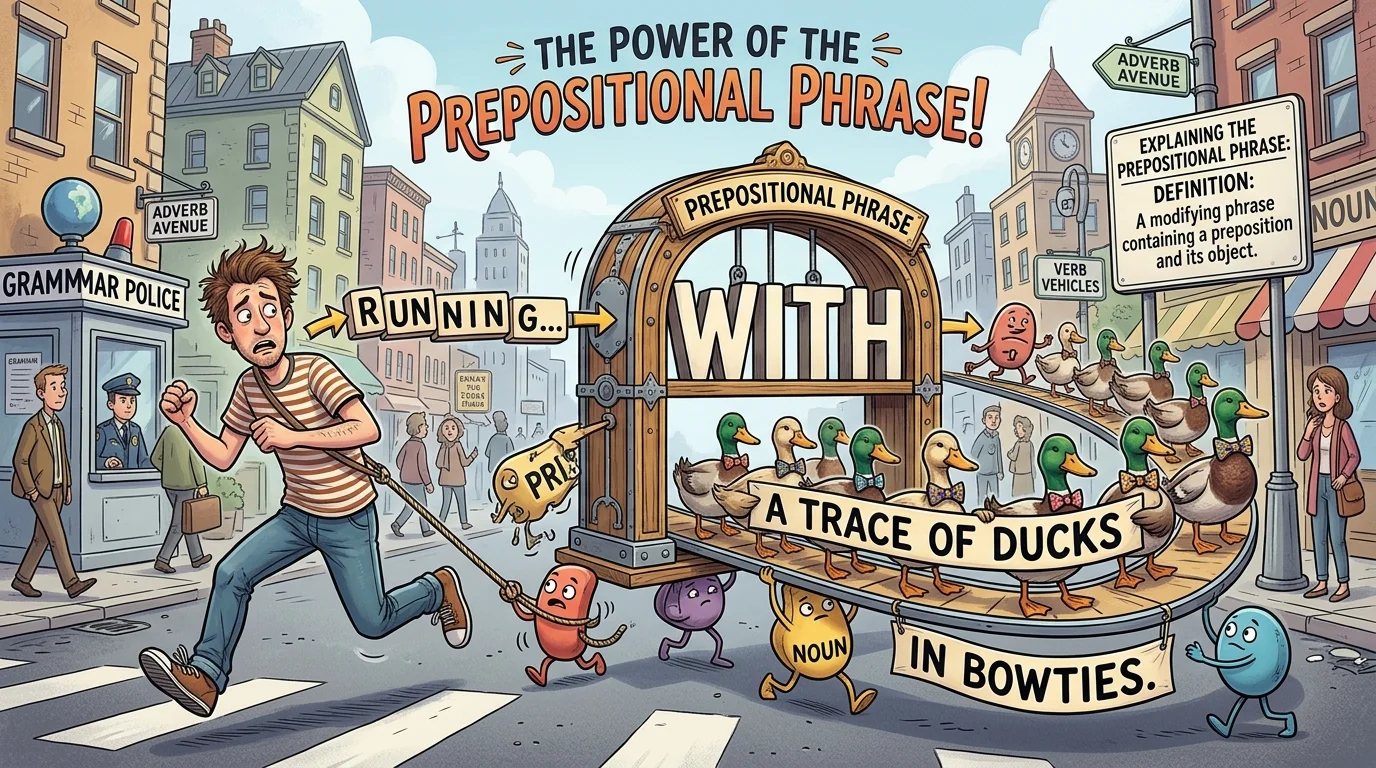
How to Identify a Prepositional Phrase Quickly
A simple trick is to look for the preposition first.
Step-by-Step Method
- Find words like:
- in
- on
- under
- beside
- through
- Check what follows
- If it ends with a noun or pronoun, it’s probably a prepositional phrase
Example
Sentence:
“The keys are under the sofa.”
Phrase:
“under the sofa”
- “under” = preposition
- “the sofa” = object of the preposition
Common Mistakes & Misunderstandings
A lot of learners struggle with prepositional phrases at first. Here are the most common mistakes.
Confusing the Phrase With the Preposition Alone
Incorrect thinking:
“under” is the full phrase
Correct:
“under the bed” is the complete prepositional phrase
The phrase needs an object.
Using Too Many Prepositional Phrases
Overloading a sentence can make writing confusing.
Example:
“The book on the shelf near the wall beside the window in the room…”
That becomes exhausting to read.
Better Version
Keep sentences cleaner and simpler.
Mixing Up Prepositions
Some prepositions sound similar but mean different things.
Examples:
- “in the car” vs “on the car”
- “at school” vs “in school”
Tiny word changes can completely change meaning.
Forgetting the Object
Incorrect:
“She walked into.”
Correct:
“She walked into the room.”
A prepositional phrase must include the object.
Why Prepositional Phrases Matter in Writing
Many people search for “what does prepositional phrase mean in text” because they want to improve communication naturally.
These phrases help:
- Add detail
- Improve clarity
- Create imagery
- Make writing sound smoother
- Explain time and location
Without prepositional phrases, sentences feel incomplete.
Example:
- Weak: “We met.”
- Better: “We met after class.”
- Stronger: “We met after class at the coffee shop.”
See the difference?
Related Slangs & Grammar Terms
If you’re learning grammar, these related terms are worth knowing too.
Preposition
A single word showing relationship.
Examples:
- in
- on
- at
- by
Object of the Preposition
The noun or pronoun after the preposition.
Example:
“under the table”
“table” is the object.
Adjective Phrase
A phrase that describes a noun.
Example:
“The book on the desk is mine.”
Adverb Phrase
A phrase that describes a verb.
Example:
“She arrived after lunch.”
Clause vs Phrase
A phrase does not contain a full subject and verb combination.
That’s why:
- “under the table” = phrase
- “because she left” = clause
These are great opportunities for internal linking if you run an English-learning or grammar website.
Tips for Using Prepositional Phrases Naturally
Here are some easy ways to improve your writing immediately.
Keep Them Short
Shorter phrases usually sound clearer.
Avoid Repetition
Using too many “in,” “on,” and “at” phrases can sound repetitive.
Read Sentences Out Loud
If the sentence sounds awkward, simplify the phrase.
Use Them for Imagery
Good writers use prepositional phrases to help readers visualize scenes.
Example:
“Rain tapped against the window during the storm.”
That feels more vivid than:
“It rained.”