

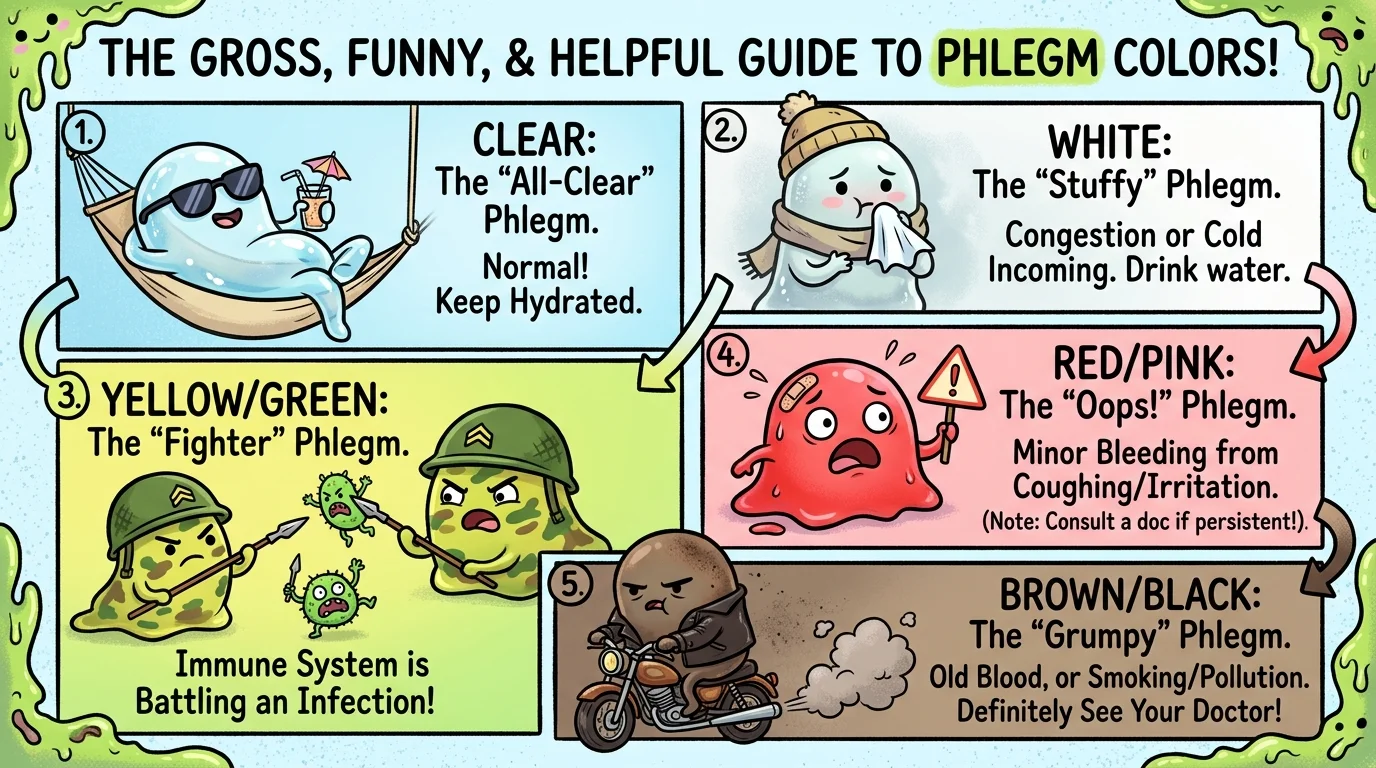
What Does Phlegm Color Mean?
Phlegm is a thick type of mucus produced by the respiratory tract. Changes in its color, consistency, or amount can occur for many reasons.
Common phlegm colors include:
- Clear
- White
- Yellow
- Green
- Brown
- Red or pink
- Black
Each color may be associated with different conditions, though context and symptoms matter just as much as color.
Why Phlegm Changes Color
Mucus can change color because of:
- Immune system activity
- Infections
- Allergies
- Air pollution
- Smoking
- Blood in the respiratory tract
- Environmental irritants
The color often reflects the cells, proteins, or substances present in the mucus.
Clear Phlegm Meaning
Clear mucus is generally considered normal.
Your body continuously produces mucus to:
- Moisturize airways
- Trap dust and germs
- Protect lung tissue
Common Causes of Clear Phlegm
- Normal respiratory function
- Mild allergies
- Viral infections in early stages
- Exposure to irritants
- Cold weather
Clear phlegm usually isn’t a cause for concern unless accompanied by severe symptoms.
White Phlegm Meaning
White mucus may indicate congestion or inflammation in the respiratory system.
Possible Causes
- Common cold
- Nasal congestion
- Sinus infections
- Mild respiratory infections
- Allergic reactions
When mucus thickens, it can appear white or cloudy.
Yellow Phlegm Meaning
Yellow mucus often appears when the immune system is actively responding to an infection.
Why It Turns Yellow
The color may result from white blood cells gathering in the affected area.
Possible Causes
- Viral respiratory infections
- Common cold
- Sinus infections
- Bronchitis
Yellow phlegm doesn’t automatically mean a bacterial infection. Many viral illnesses can also produce yellow mucus.
Green Phlegm Meaning
Green phlegm is one of the most commonly searched mucus colors.
Why It Appears Green
Green mucus often contains higher concentrations of immune cells and enzymes involved in fighting infection.
Possible Causes
- Respiratory infections
- Bronchitis
- Sinus infections
- Pneumonia
- Recovery phase of some illnesses
Contrary to a common myth, green mucus does not always mean antibiotics are needed.
Brown Phlegm Meaning
Brown mucus can result from inhaling certain substances or the presence of old blood.
Possible Causes
- Smoking
- Air pollution
- Dust exposure
- Chronic lung irritation
- Dried blood from previous bleeding
People exposed to construction dust, dirt, or environmental pollutants may occasionally notice brown phlegm.
Red or Pink Phlegm Meaning
Red or pink mucus may indicate the presence of blood.
Possible Causes
- Irritated airways
- Severe coughing
- Respiratory infections
- Lung inflammation
- More serious lung conditions
Even a small amount of blood should be taken seriously, especially if it occurs repeatedly.
When to Seek Medical Care
Contact a healthcare provider if you experience:
- Persistent bloody mucus
- Chest pain
- Shortness of breath
- Unexplained weight loss
- Significant bleeding
Black Phlegm Meaning
Black mucus is uncommon and should be evaluated by a healthcare professional.
Possible Causes
- Heavy smoking
- Coal dust exposure
- Air pollution
- Fungal infections (rare)
- Occupational exposure to certain particles
Black phlegm may indicate environmental exposure or an underlying medical condition requiring evaluation.
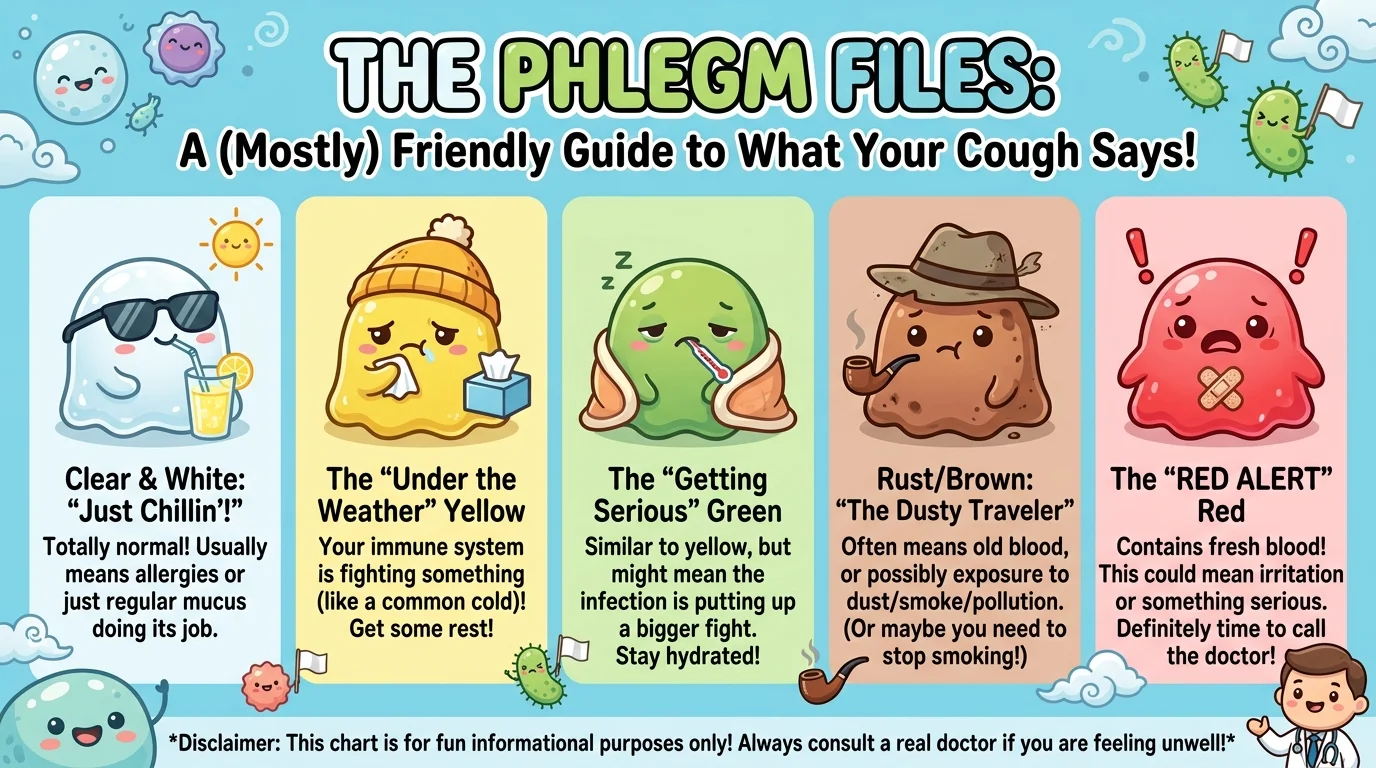
How People Notice Changes in Phlegm
Changes in mucus often occur during everyday illnesses.
Example 1: Common Cold
Day 1–2:
- Clear mucus
Day 3–5:
- White or yellow mucus
Possible Meaning:
The immune system is responding to the infection.
Example 2: Sinus Infection
Symptoms:
- Nasal congestion
- Facial pressure
- Yellow or green mucus
Possible Meaning:
Inflammation or infection affecting the sinuses.
Example 3: Smoking-Related Mucus
Symptoms:
- Morning cough
- Brown mucus
Possible Meaning:
Irritation of the respiratory tract from smoke exposure.
Example 4: Persistent Green Phlegm
Symptoms:
- Ongoing cough
- Fever
- Fatigue
Possible Meaning:
A respiratory infection that may require medical evaluation.
Common Mistakes & Misunderstandings
Mistake 1: Thinking Green Mucus Always Means Bacterial Infection
Green mucus can occur with both viral and bacterial illnesses.
Color alone doesn’t determine the cause.
Mistake 2: Assuming Clear Mucus Means You’re Healthy
Clear mucus can still occur with allergies, viral infections, and irritation.
Mistake 3: Ignoring Bloody Phlegm
Blood in mucus should not be dismissed, especially if it persists.
Mistake 4: Diagnosing Yourself Based Only on Color
Healthcare professionals consider:
- Symptoms
- Duration
- Medical history
- Physical examination
- Testing when necessary
Color is only one piece of the puzzle.
Related Medical Terms
Understanding these related terms may help when discussing respiratory symptoms.
Mucus
A protective substance produced throughout the body.
Phlegm
Mucus specifically produced by the lungs and lower respiratory tract.
Sputum
The mucus and saliva mixture coughed up from the respiratory system.
Bronchitis
Inflammation of the bronchial tubes that often causes coughing and mucus production.
Sinusitis
Inflammation of the sinuses that may lead to thick nasal mucus.
When Should You See a Doctor?
Consider seeking medical attention if you experience:
- Phlegm lasting longer than several weeks
- Persistent fever
- Difficulty breathing
- Chest pain
- Bloody mucus
- Black mucus
- Unexplained weight loss
- Severe fatigue
A healthcare professional can determine whether additional evaluation or treatment is needed.