
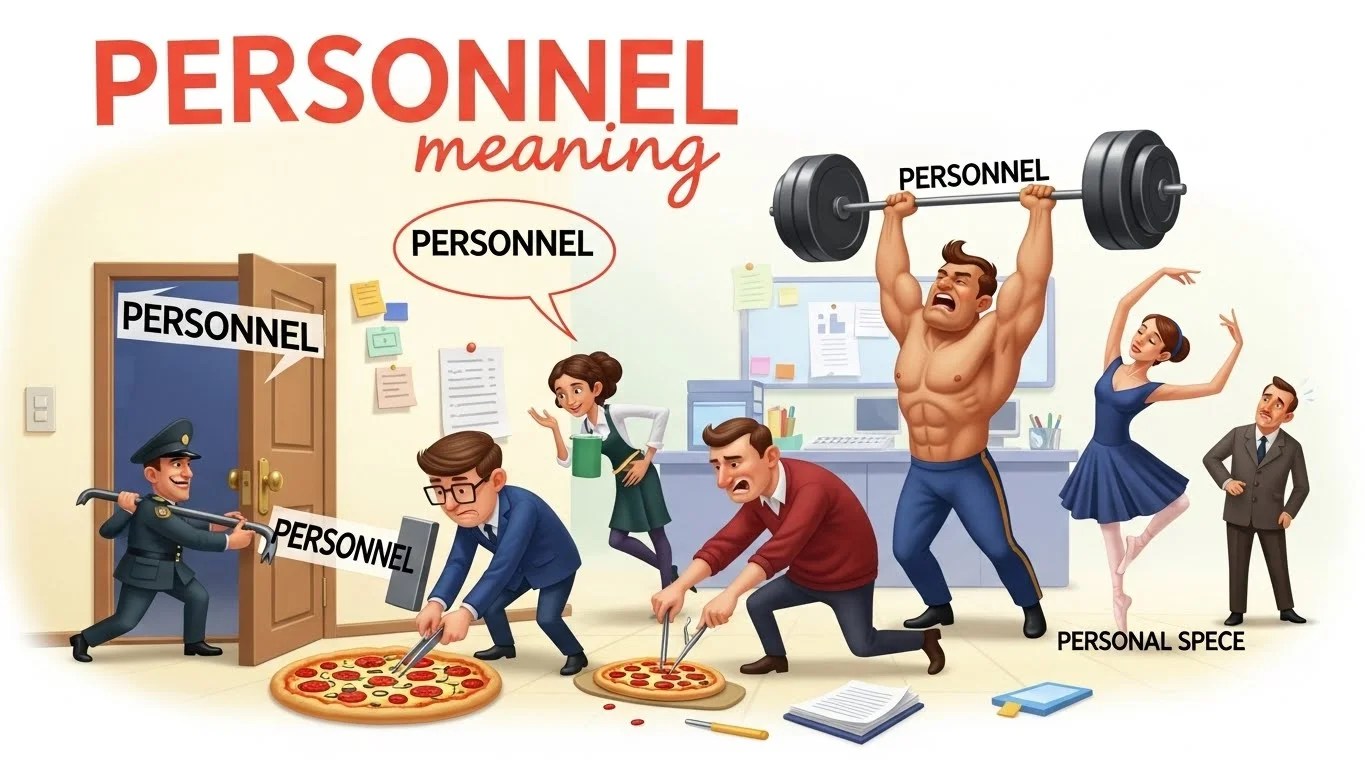
What Does “Personnel” Mean?
Personnel refers to all the people who work for an organization, company, or institution, especially employees in a specific department or role.
Simple Definition
Personnel meaning:
Personnel means staff, employees, or workers as a group, not an individual.
Key Point to Remember
Personnel is always plural in meaning, even though it looks like a singular word.
There is no singular form like “a personnel.”
Correct example:
“The company trained its personnel.”
Incorrect example:
“He is a personnel.”
Word Origin
The word personnel comes from French, where it meant “staff” or “employees.” Over time, it became widely used in English, especially in formal and professional contexts.
How People Use “Personnel” in Real-Life Contexts
Personnel is commonly used in workplace, military, government, and institutional settings.
Common Places You’ll See the Word
Office emails and memos
Human resources documents
Military and police reports
Hospital and emergency services
School and university notices
News articles
Natural Usage Examples
People often say:
“Only authorized personnel are allowed.”
“The HR department manages personnel.”
“Emergency personnel arrived quickly.”
When It Sounds Natural
Formal or professional communication
Referring to staff as a group
Policies, instructions, and notices
When It Sounds Awkward
Casual conversations with friends
Referring to one individual
Replacing the word “person”
Real-Life Examples of “Personnel” in Sentences
Here are realistic examples showing how personnel is used correctly, with explanations.
Example 1
“Only authorized personnel can enter this area.”
Meaning: Only approved staff members are allowed.
Example 2
“The company hired new personnel this year.”
Meaning: The company hired new employees.
Example 3
“Medical personnel responded to the emergency.”
Meaning: Doctors, nurses, and healthcare staff helped.
Example 4
“Military personnel were deployed overseas.”
Meaning: Soldiers and support staff were sent.
Example 5
“The incident was reported to security personnel.”
Meaning: Security staff were informed.
Personnel vs Personal: Common Confusion Explained
This is one of the most frequent mistakes people make.
Personnel
Refers to employees or staff
Example: “Company personnel attended the meeting.”
Personal
Refers to private or individual matters
Example: “This is my personal opinion.”
Easy Trick to Remember
Personnel = people who work
Personal = private
Mixing these up in writing can change the meaning completely.
Personnel Meaning in Business & HR
In business settings, personnel is closely linked with human resources.
Common Business Uses
Personnel management
Personnel training
Personnel records
Personnel policies
While modern workplaces often prefer “employees” or “staff”, personnel is still widely used in formal documents.
Personnel Meaning in Military & Emergency Services
The word personnel is especially common in military, police, and emergency contexts.
Why It’s Used
Emphasizes organization and roles
Covers both frontline and support staff
Maintains formal tone
Examples:
“Armed personnel guarded the facility.”
“Emergency personnel arrived within minutes.”
Common Mistakes & Misunderstandings
Despite being a common word, personnel is often misused.
Mistake 1: Using It as a Singular Noun
Personnel always refers to a group, not one person.
Mistake 2: Confusing It with Personal
This is especially common in emails and official writing.
Mistake 3: Using It in Casual Chat
In informal conversations, “people” or “staff” sound more natural.
Mistake 4: Adding an “S”
“Personnels” is incorrect in standard English.
Related Words & Alternatives
Depending on context, you may see or use these instead of personnel:
Staff – Common and neutral
Employees – Clear and direct
Workforce – All working members
Crew – Team-based roles
Team members – Modern, friendly tone
Each has slightly different usage, but personnel remains the most formal.

Why “Personnel” Is Still Widely Used
Even in 2026, personnel remains popular because:
It sounds professional
It covers large groups
It fits official and legal language
It avoids informal tone
That’s why you still see it in signs like:
“Authorized personnel only”