


What Does “Mark” Mean?
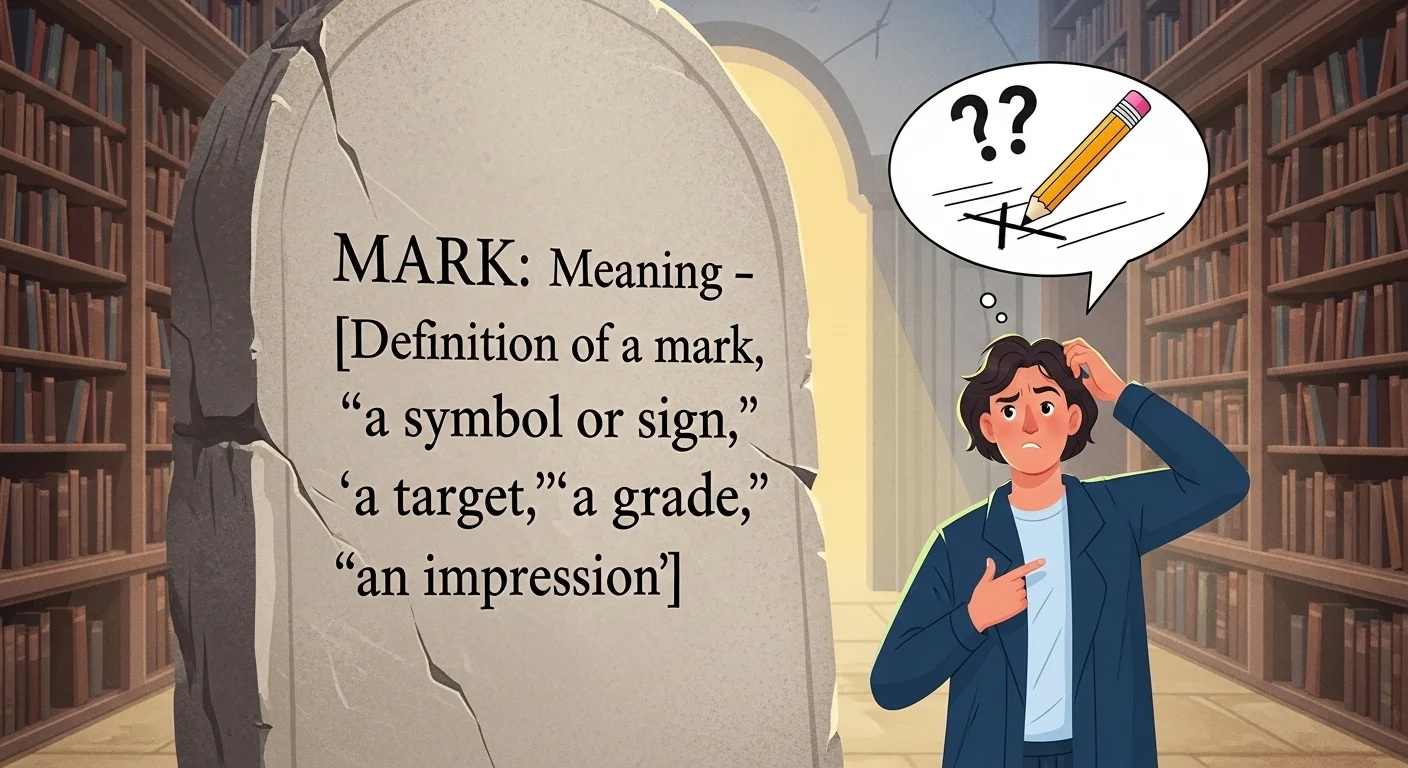
The word mark has several meanings depending on context:
Physical Symbol or Sign – A visible line, dot, or impression on a surface.
Score or Grade – A numerical or letter evaluation in education or tests.
Target or Goal – Something to aim at, like a mark in archery or a personal objective.
Person or Subject – Someone who is targeted, e.g., “He was the mark for the scam.”
Attention / Recognition – To highlight, indicate, or remember something.
Key idea: Mark = symbol, score, target, or sign depending on the situation.
Origin and History of Mark
The word comes from the Old English “mearc”, meaning boundary, sign, or sign of recognition.
Historically, it was used to mark territory, ownership, or boundaries.
Over time, it evolved to include grades in education, targets in sports, and slang usage.
How People Use “Mark” in Real Conversations
Everyday Context
Text / Chat:
“I left a mark on the table by accident.”Meaning: A visible impression or stain on a surface.
Educational Context
Text / Email:
“She got top marks in her math exam.”Meaning: She received a high score or grade.
Business / Goal Setting
Text / Chat:
“Let’s aim to hit our mark this quarter.”Meaning: Achieve the target or goal.
Slang / Casual Usage
Text / Chat:
“He’s a mark for the joke, everyone laughed at him.”Meaning: Someone being targeted, tricked, or teased.

Real-Life Examples of “Mark” Usage
Example 1: Physical Symbol
Text / Chat:
“There’s a mark on the wall from the door handle.”
Meaning: A visible sign or dent left on the wall.
Example 2: Education / Score
Email:
“Your final marks for the semester have been released.”
Meaning: Your grades or scores are available.
Example 3: Target / Goal
Text:
“We need to hit our sales mark this month to get the bonus.”
Meaning: Achieve the sales target.
Example 4: Slang / Person Targeted
Text:
“Watch out, he’s a mark for the prank.”
Meaning: Someone chosen to be the subject of a joke or trick.
Example 5: Attention / Recognition
Text:
“Mark my words, this project will succeed.”
Meaning: Pay attention to or remember what I’m saying.
Common Mistakes & Misunderstandings
1. Confusing Mark with Marked
“Mark” can be a noun (symbol, score) or verb (to highlight), while “marked” usually describes something already indicated or noticeable.
2. Misunderstanding Slang
In casual slang, “mark” means someone targeted or tricked, not a literal symbol.
3. Using Mark Only Academically
Mark isn’t limited to grades—it can refer to goals, attention, or signs in many contexts.
Related Terms & Synonyms
Score / Grade: For educational marks
Target / Goal: For objectives
Spot / Stain / Impression: For physical marks
Highlight / Indicate: For marking something for attention
Victim / Subject: For slang usage