
What Does “Love Languages” Mean?
The term love languages refers to the different ways people prefer to:
- Give love
- Receive love
- Feel emotionally valued
The idea became widely known after the release of the book The Five Love Languages by Gary Chapman.
According to the concept, people usually connect most strongly with one or two primary emotional communication styles.
Simple Definition
Love languages are the ways people naturally express and experience love.
Understanding someone’s love language can improve:
- Romantic relationships
- Friendships
- Family communication
- Emotional connection
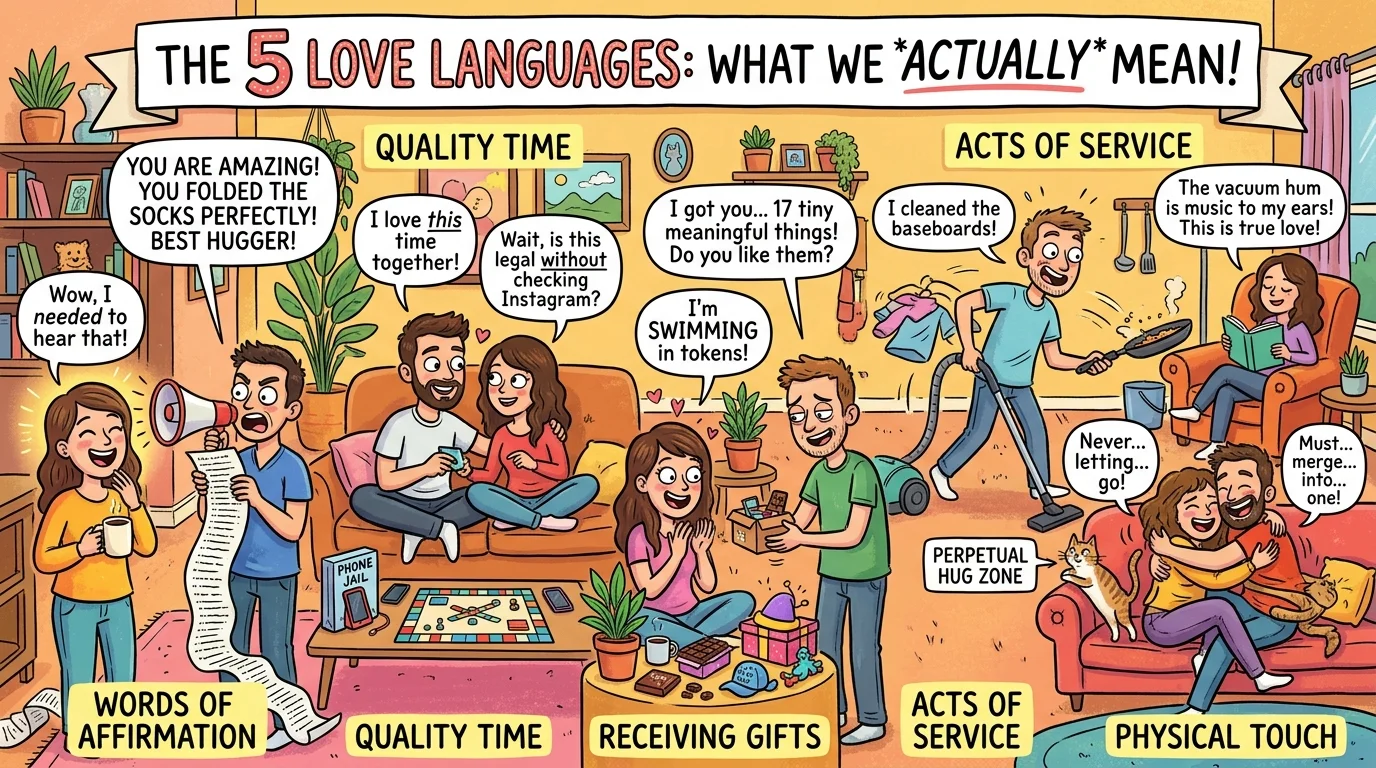
The 5 Love Languages Explained
The most popular version of the theory includes five main love languages.
1. Words of Affirmation
This love language focuses on verbal appreciation and emotional reassurance.
People with this love language value:
- Compliments
- Encouragement
- Kind messages
- Emotional support through words
Examples
- “I’m proud of you.”
- “You look amazing today.”
- “I appreciate everything you do.”
In Modern Chat Culture
You’ll often see:
- Long supportive texts
- Sweet good morning messages
- Public appreciation posts
- Cute Instagram captions
For some people, words genuinely matter more than gifts.
2. Quality Time
This love language centers around focused attention and shared experiences.
It’s not just “being near someone.” It means:
- Being mentally present
- Spending meaningful time together
- Avoiding distractions
Examples
- Deep conversations
- Date nights
- Watching movies together
- Going on walks
- Gaming together online
Why It Matters
Some people feel ignored when:
- Phones constantly interrupt conversations
- Partners multitask during time together
- Communication feels rushed
For them, attention equals love.
3. Acts of Service
People with this love language feel cared for when others help them practically.
Examples
- Making coffee for your partner
- Helping with chores
- Running errands
- Fixing something broken
- Bringing food after a stressful day
Modern Relationship Example
Someone may say:
“Doing small things for me means more than expensive gifts.”
For acts-of-service people, effort speaks loudly.
4. Receiving Gifts
This love language is often misunderstood.
It’s usually not about money or luxury. It’s about thoughtfulness and symbolic meaning.
Examples
- Favorite snacks
- Handmade items
- Souvenirs
- Flowers
- Small surprise presents
The emotional meaning behind the gift matters most.
Online Culture Example
TikTok and Instagram often romanticize:
- “Just because” gifts
- Matching accessories
- Personalized items
For gift-oriented people, these gestures feel deeply meaningful.
5. Physical Touch
This love language involves physical closeness and affection.
Examples
- Hugs
- Holding hands
- Cuddling
- Kissing
- Sitting close together
Important Note
Physical touch does not automatically mean intimacy or sexuality.
For many people, simple affectionate contact creates emotional safety and connection.
How People Use “Love Languages” in Real Conversations
The phrase has become extremely common online and offline.
On Dating Apps
People often include love languages in bios.
Example:
“Love language: quality time + food.”
This helps communicate relationship preferences quickly.
On TikTok and Instagram
Relationship creators constantly discuss:
- Compatibility
- Communication styles
- Romantic behavior
- Emotional needs
Example:
“If their love language is acts of service, help them without being asked.”
In Friendships
Love languages aren’t limited to romantic relationships.
Friends may show care through:
- Supportive texts
- Gifts
- Spending time together
- Helping during difficult situations
In Long-Distance Relationships
Love languages often become especially important online.
Examples:
- Sending voice notes
- Gaming together nightly
- Ordering food deliveries
- Mailing gifts
People adapt their love languages digitally.
Real-Life Examples of Love Languages in Text Messages
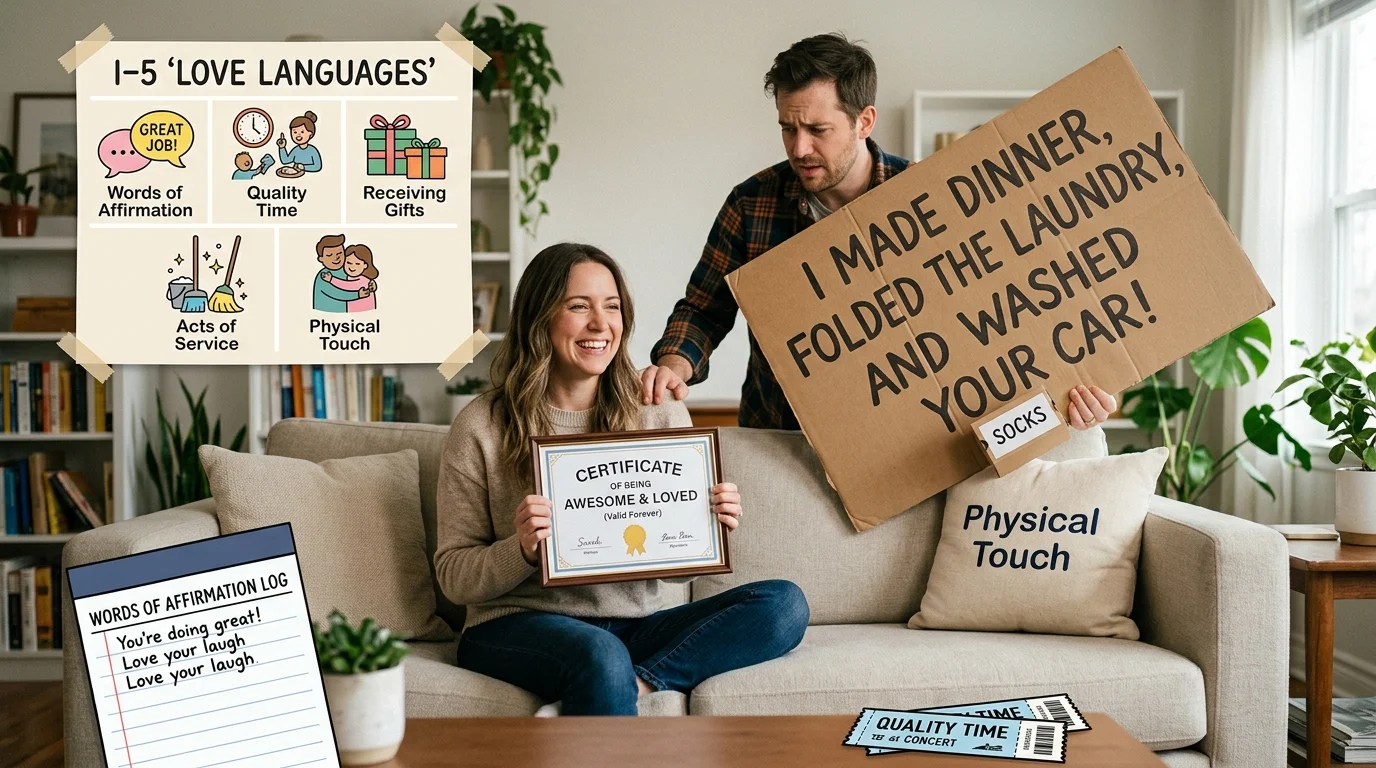
Here are relatable examples showing how love languages appear in everyday communication.
Example 1 — Words of Affirmation
Text Message:
“I know today was stressful, but you handled it really well.”
Meaning
Emotional encouragement and reassurance.
Example 2 — Quality Time
Message:
“Let’s put our phones away tonight and just hang out.”
Meaning
Focused attention matters more than distractions.
Example 3 — Acts of Service
Text Message:
“I picked up your favorite drink on the way home.”
Meaning
Helpful actions show affection.
Example 4 — Receiving Gifts
Chat Message:
“This reminded me of you, so I bought it.”
Meaning
The thought behind the gift creates emotional value.
Example 5 — Physical Touch
Message:
“I seriously need a hug after this week.”
Meaning
Physical comfort provides emotional connection.
Common Mistakes & Misunderstandings
The idea of love languages is popular, but people often misunderstand it.
Thinking Everyone Has Only One Love Language
Most people connect with multiple love languages.
Someone may value:
- Quality time
- AND words of affirmation
It’s rarely limited to one category.
Treating Love Languages Like Science
Love languages are a relationship tool, not a medical diagnosis or proven psychological law.
They help communication but don’t explain everything about relationships.
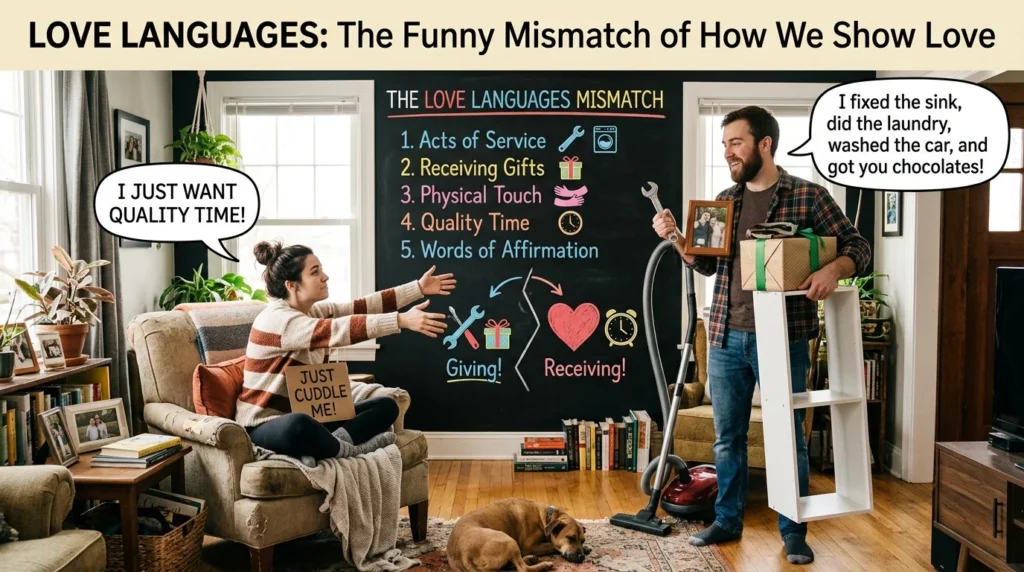
Assuming Your Partner Thinks Exactly Like You
A common issue happens when people show love the way they prefer receiving it.
Example:
- You give gifts
- Your partner wants quality time
Both people may care deeply but communicate differently.
Ignoring Emotional Effort
Knowing someone’s love language means little without consistency and care.
Real relationships still require:
- Respect
- Communication
- Trust
- Emotional maturity
Why Love Languages Became So Popular Online
The concept exploded online because it gives people easy language to discuss emotional needs.
It became especially popular because:
- It’s relatable
- Easy to understand
- Useful in dating culture
- Shareable on social media
People enjoy learning:
- Why they feel appreciated
- Why misunderstandings happen
- How others express affection
Related Relationship Terms
If you’re researching love languages, you may also encounter:
- Attachment styles
- Emotional availability
- Green flags
- Red flags
- Boundaries
- Communication styles
- Emotional intelligence
- Compatibility
These are strong internal linking opportunities for relationship-focused blogs or websites.
Tips for Understanding Someone’s Love Language
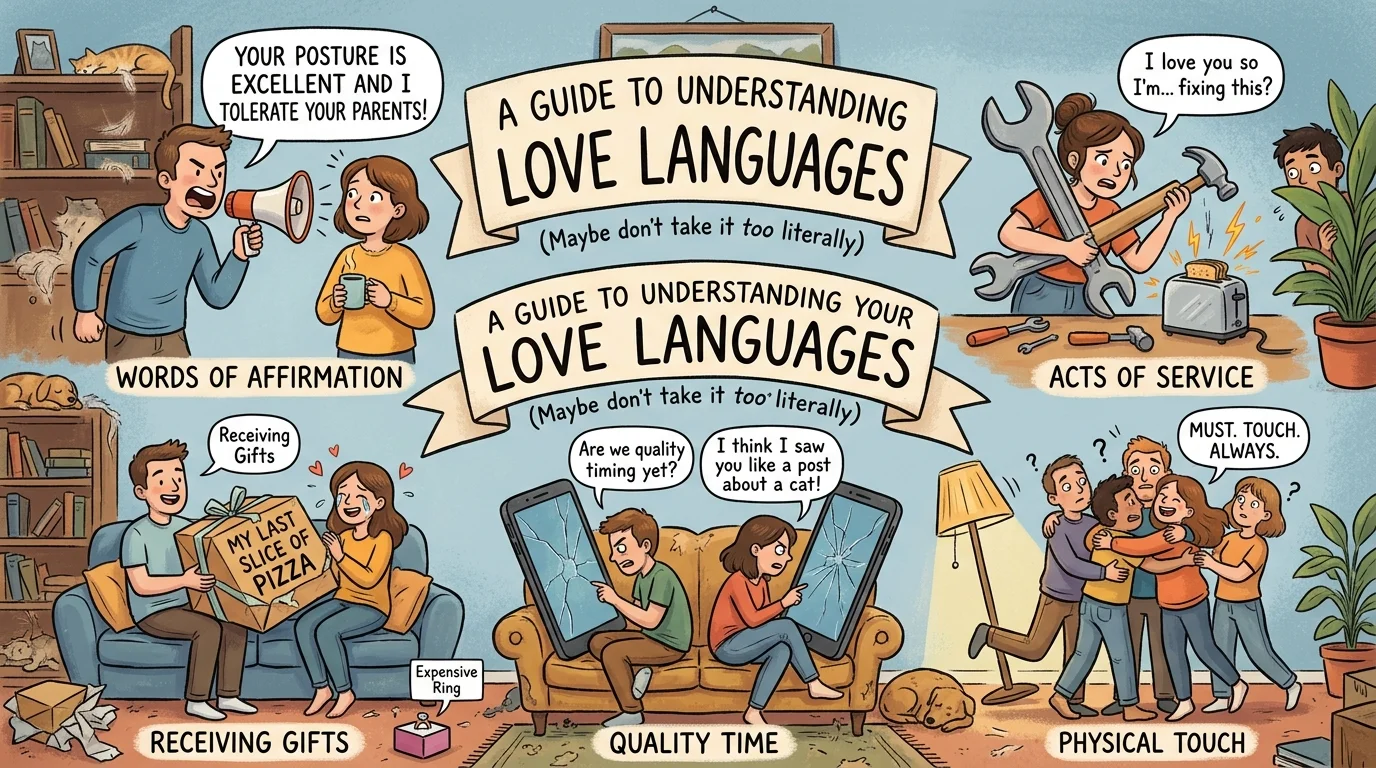
Here are practical ways to better understand people emotionally.
Pay Attention to What They Appreciate Most
People often express love the same way they want to receive it.
Ask Directly
Simple questions work best:
“What makes you feel most appreciated?”
Don’t Mock Their Preferences
Something small to you may feel deeply meaningful to them.
Balance Different Love Languages
Healthy relationships usually involve multiple forms of care.
Adapt When Possible
You don’t have to completely change yourself, but small adjustments improve communication a lot.