
What Does “Invert Sugar” Mean?
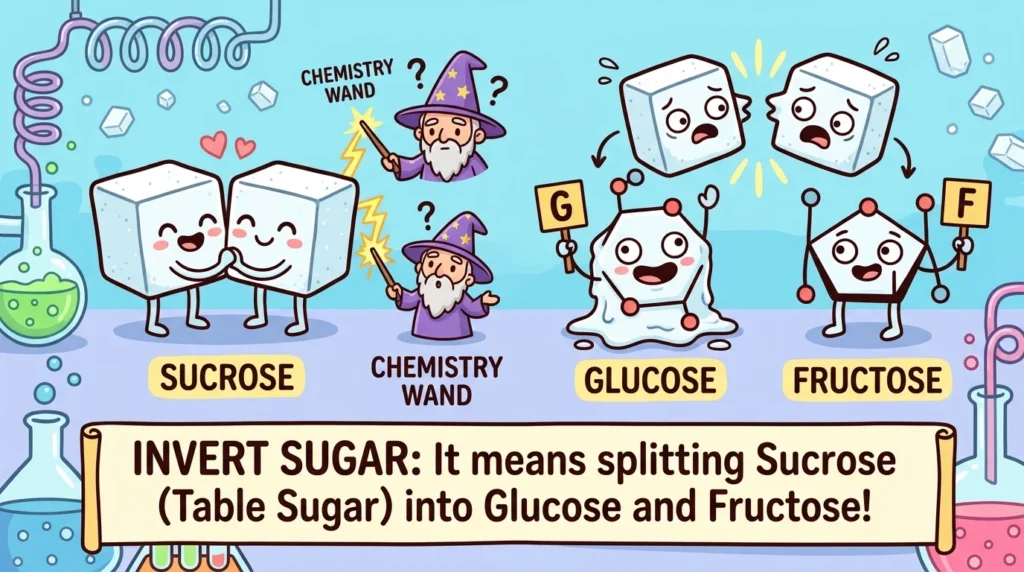
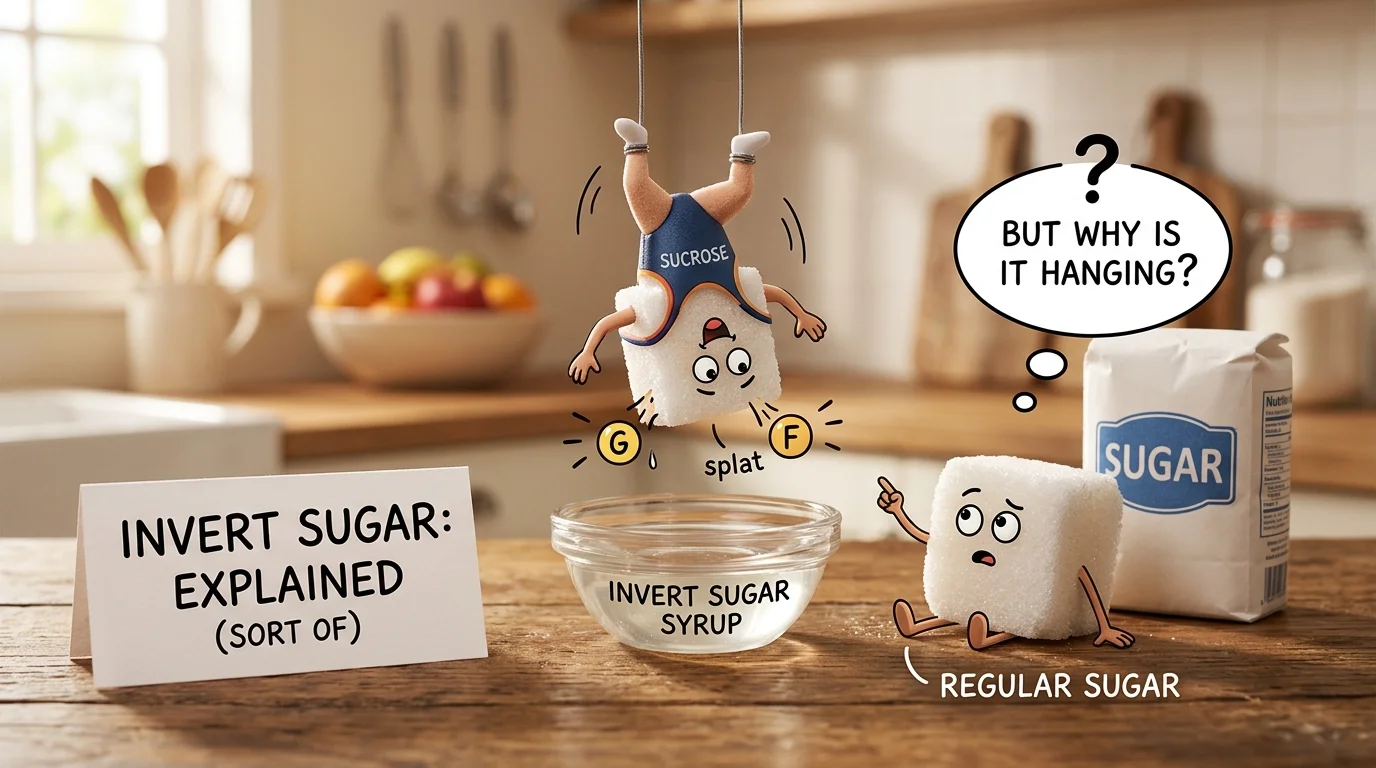
Invert sugar is a liquid sweetener created by breaking regular table sugar (sucrose) into two simpler sugars: glucose and fructose.
Simple Definition
Invert sugar = sugar syrup made by splitting sucrose into glucose and fructose
This process changes:
- Texture
- Sweetness
- Moisture retention
- Crystallization behavior
The result is a smoother, sweeter syrup commonly used in food production.
Why Is It Called “Invert” Sugar?
The name comes from chemistry.
When regular sugar dissolves and breaks down, the way it interacts with polarized light changes or “inverts.” Scientists noticed this optical change and called the resulting syrup “invert sugar.”
Even though the science sounds technical, in everyday food use it simply means:
A smoother liquid sugar mixture.
How Invert Sugar Is Made
Invert sugar starts with ordinary sucrose, which is the sugar found in:
- Table sugar
- Cane sugar
- Beet sugar
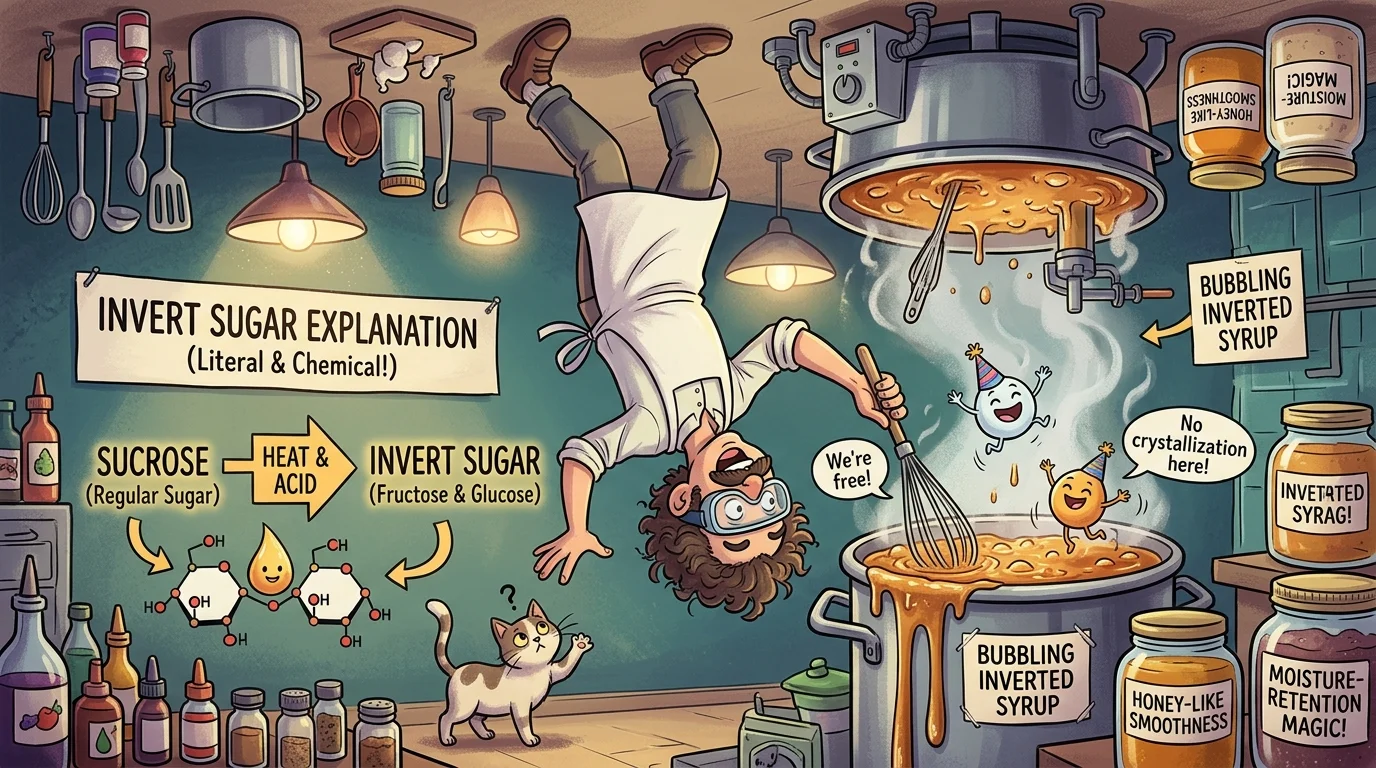
Manufacturers then add:
- Heat
- Water
- Acid or enzymes
This process splits sucrose into:
- Glucose
- Fructose
The final product becomes:
- Sweeter
- More stable
- Less likely to crystallize
What Is Invert Sugar Made Of?
Invert sugar contains:
- Glucose
- Fructose
These are the same simple sugars naturally found in:
- Fruits
- Honey
- Some syrups
Because fructose tastes sweeter than sucrose, invert sugar often tastes slightly sweeter than normal table sugar.
Difference Between Invert Sugar and Regular Sugar
Many people confuse invert sugar with ordinary sugar.
Here’s the main difference.
| Regular Sugar | Invert Sugar |
|---|---|
| Mainly sucrose | Glucose + fructose |
| Granulated crystals | Liquid syrup |
| Crystallizes easily | Resists crystallization |
| Less moisture retention | Keeps foods moist longer |
| Slightly less sweet | Slightly sweeter |
Why Food Companies Use Invert Sugar
Invert sugar has several practical advantages in food production.
1. Prevents Crystallization
This is one of its biggest benefits.
It helps products stay:
- Smooth
- Soft
- Creamy
instead of becoming grainy.
That’s why it’s common in:
- Candy
- Frosting
- Syrups
- Ice cream
2. Keeps Foods Moist
Invert sugar holds moisture very well.
This helps baked goods stay fresh longer.
Common examples:
- Cakes
- Cookies
- Soft breads
3. Improves Texture
Foods made with invert sugar often feel:
- Softer
- Smoother
- More stable
4. Increases Sweetness
Fructose is naturally sweeter than sucrose.
That means manufacturers may use slightly less sweetener overall.
5. Extends Shelf Life
Moisture retention and stability help foods last longer.
This is useful for:
- Packaged snacks
- Commercial baked goods
- Processed desserts
Common Foods Containing Invert Sugar
Invert sugar appears in many everyday products.
Popular Examples
You may find invert sugar in:
- Candy
- Ice cream
- Soft drinks
- Energy drinks
- Protein bars
- Frosting
- Commercial cakes
- Jams and jellies
- Chocolate fillings
- Bakery products
Invert Sugar vs Honey
People often compare invert sugar to honey because both contain:
- Glucose
- Fructose
Similarities
- Sweet liquid texture
- Moisture retention
- Anti-crystallization properties
Differences
Honey is natural and contains:
- Enzymes
- Minerals
- Trace nutrients
Invert sugar is usually manufactured specifically for food processing.
Is Invert Sugar Natural?
Technically, invert sugar can occur naturally.
Honey naturally contains a form of invert sugar because bees break down sucrose using enzymes.
However, most commercial invert sugar is industrially produced for food manufacturing.
Is Invert Sugar Bad for You?
Invert sugar is still sugar.
Like other sweeteners, excessive consumption may contribute to:
- Weight gain
- Blood sugar spikes
- Tooth decay
- High calorie intake
Nutritionally, invert sugar is not significantly healthier than regular sugar.
The main differences are:
- Texture
- Sweetness
- Food-processing benefits
Why Bakers Use Invert Sugar
Professional bakers often love invert sugar because it improves consistency.
Baking Benefits
Invert sugar helps:
- Prevent dryness
- Improve softness
- Keep pastries fresh longer
- Reduce sugar crystals
- Create smoother fillings
That’s why it’s common in:
- Professional pastry kitchens
- Commercial bakeries
- Candy-making
Real-Life Examples of Invert Sugar Usage
Example 1: Ice Cream
Invert sugar helps ice cream stay smooth instead of icy.
Example 2: Chocolate Filling
Chocolate centers stay creamy because invert sugar reduces crystallization.
Example 3: Soft Cookies
Commercial cookies remain soft longer due to moisture retention.
Example 4: Sports Drinks
Some drinks use invert sugar for fast energy absorption.
Common Misunderstandings About Invert Sugar
1. Thinking It’s Artificial
Invert sugar isn’t necessarily artificial.
It’s simply chemically altered sugar.
2. Assuming It’s Healthier Than Sugar
Invert sugar is still a form of sugar and should be consumed in moderation.
3. Confusing It With High-Fructose Corn Syrup
They are different ingredients.
Invert sugar comes from sucrose, while high-fructose corn syrup comes from corn starch.
4. Believing It’s Only Used in Candy
Invert sugar appears in many products beyond sweets.
5. Thinking It’s Dangerous
The name sounds scientific, but invert sugar is widely used and generally recognized as safe in food production.
Related Food Science Terms
If you’re researching the invert sugar meaning, these related terms may also help.
1. Sucrose
Regular table sugar.
2. Glucose
A simple sugar used for energy.
3. Fructose
Fruit sugar naturally found in fruits and honey.
4. Corn Syrup
A liquid sweetener commonly used in processed foods.
5. Crystallization
Formation of sugar crystals in food products.
6. Humectant
An ingredient that helps retain moisture.
Invert sugar acts as a humectant in many foods.
Why Invert Sugar Matters in Modern Food Production
In 2025, food manufacturers continue using invert sugar because consumers expect foods to:
- Stay soft longer
- Taste smooth
- Maintain freshness
- Have stable textures
Invert sugar helps companies achieve these goals efficiently.
It remains especially important in:
- Packaged foods
- Commercial baking
- Dessert manufacturing
- Candy production