
What Does Immigration Mean?
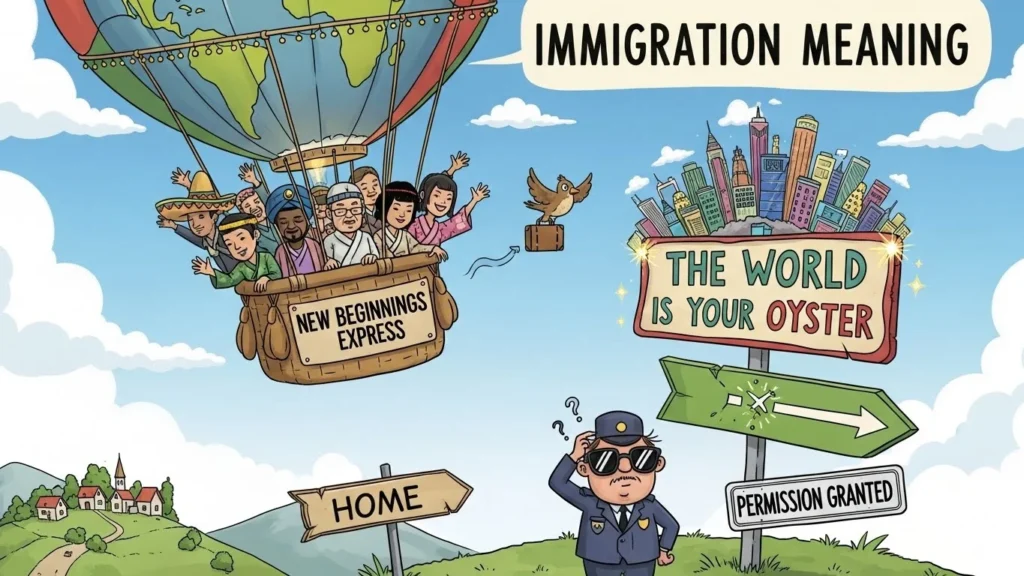
At its core, immigration means moving to a new country to live there permanently or for a long period of time.
Immigration = when a person enters a country that is not their native country to live, work, study, or settle.
The person who moves is called an immigrant.
Simple Example
Someone born in Mexico moves to the United States to live and work → that person is an immigrant to the U.S.
Someone born in India moves to Canada for permanent residence → also an immigrant
Immigration is about entering a country.
(Leaving a country is called emigration — more on that later.)
Immigration Meaning in Simple Terms
If we strip it down to everyday language:
Immigration is crossing borders
Immigration involves starting life in a new country
Immigration can be temporary or permanent
Immigration happens for many reasons
People immigrate to:
Find better jobs
Reunite with family
Escape war or danger
Study or build careers
Seek freedom or stability
Types of Immigration
Not all immigration looks the same. There are different types, depending on purpose and legal status.
1. Legal Immigration
This happens when someone moves to a country with official permission.
Examples:
Work visas
Student visas
Family sponsorship
Permanent residency (green cards)
Citizenship through naturalization
Legal immigrants follow the country’s laws and processes.
2. Illegal (Undocumented) Immigration
This refers to entering or staying in a country without legal authorization.
This can happen when:
Someone crosses a border without permission
A visa expires but the person stays
Asylum claims are denied but the person remains
This topic is often controversial and emotional, but at its base, it’s still about movement across borders.
3. Temporary Immigration
Some people immigrate for a limited time.
Examples:
International students
Seasonal workers
Temporary job contracts
Cultural exchange programs
They may leave later or apply for permanent status.
4. Permanent Immigration
This involves long-term settlement.
Permanent immigrants:
Plan to stay indefinitely
Often apply for citizenship later
Build families, careers, and communities
Immigration vs Emigration: What’s the Difference?
This confuses a lot of people.
Immigration = moving into a country
Emigration = moving out of a country
Same movement, different perspective.
Example
If someone moves from Brazil to Germany:
Brazil sees it as emigration
Germany sees it as immigration
Why Do People Immigrate?
Immigration isn’t random. People move for real, deeply personal reasons.
Common Reasons for Immigration
Economic opportunities
Education
Family reunification
Safety from war or violence
Political or religious freedom
Better healthcare or quality of life
Climate or environmental factors
Most immigrants don’t leave lightly. It’s often one of the biggest decisions of their lives.
Immigration Meaning in Law and Government
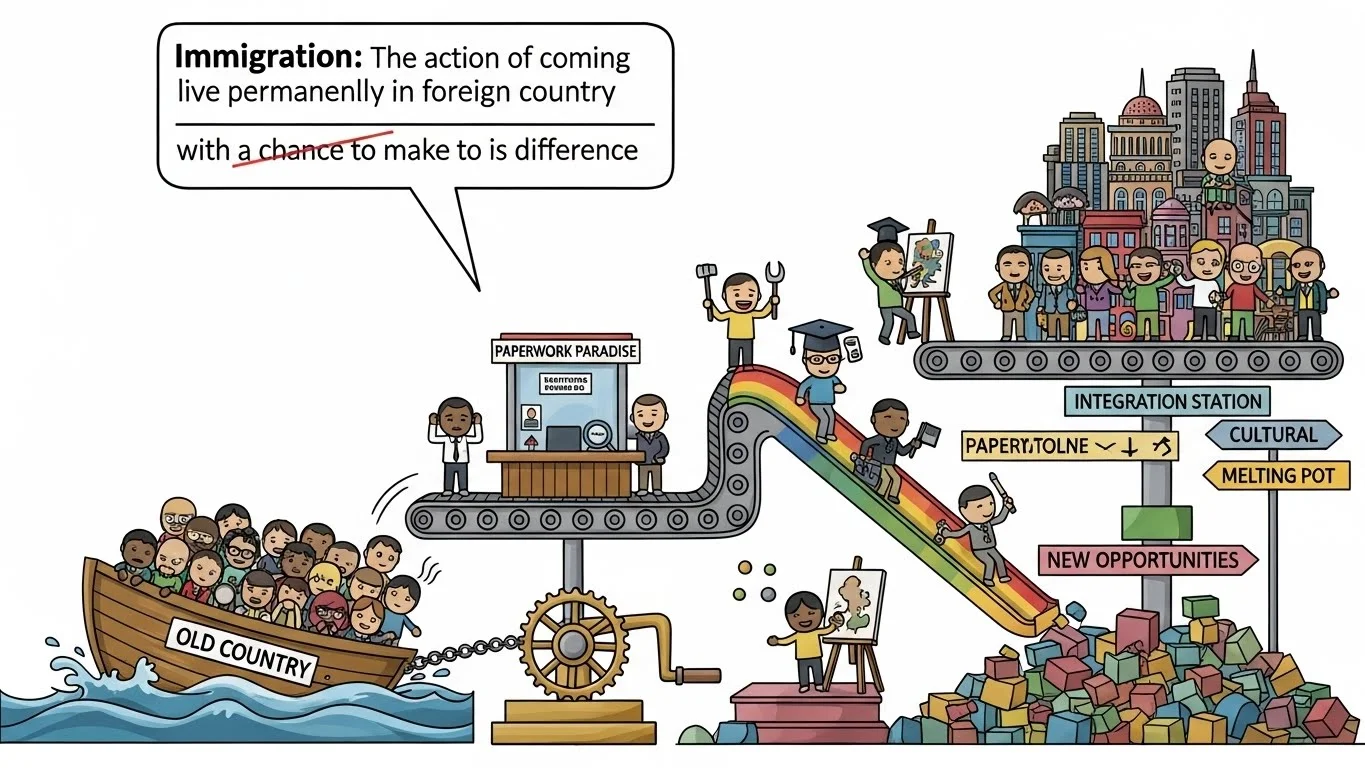
In legal terms, immigration refers to the system of laws, policies, and procedures that control who can enter, stay, and become a citizen of a country.
Governments regulate immigration through:
Visas
Border controls
Residency permits
Citizenship laws
Asylum systems
Each country has its own immigration rules, and they change over time.
Immigration Meaning in Modern Society
In 2026, immigration plays a huge role globally.
Why Immigration Matters Today
Global economies depend on immigrant labor
Universities rely on international students
Innovation often comes from immigrants
Cultural diversity shapes societies
Population growth in many countries relies on immigration
Many countries would struggle economically without immigrants.
Common Misunderstandings About Immigration
Let’s clear up some common myths.
Myth 1: Immigration Is Only About Politics
Reality: Immigration is about people, families, work, and survival, not just politics.
Myth 2: Immigrants Don’t Contribute
Reality: Immigrants contribute through:
Taxes
Labor
Business creation
Culture
Innovation
Myth 3: Immigration Means Permanent Settlement
Reality: Many immigrants are temporary residents.
Myth 4: Immigration Is the Same Everywhere
Reality: Every country handles immigration differently.
Immigration in Everyday Language vs Formal Language
In casual conversation:
“My parents immigrated here”
“She’s an immigrant”
“They’re first-generation immigrants”
In formal language:
“Immigration policy”
“Immigration status”
“Immigration law”
Both are correct — just different levels of formality.
Immigration Meaning in News and Media
When you see immigration discussed online or on TV, it often refers to:
Border control
Refugees
Visas and citizenship
National security
Labor shortages
Human rights
Understanding the basic meaning of immigration helps you follow these conversations without confusion.
Related Terms You Should Know
Here are words often used alongside immigration:
Immigrant – a person who moves into a country
Migrant – someone who moves, often temporarily
Refugee – someone forced to flee due to danger
Asylum seeker – someone asking for protection
Visa – official permission to enter/stay
Citizenship – legal membership in a country
Naturalization – process of becoming a citizen
Knowing these terms makes immigration discussions much easier to understand.