


What Does “EEO” Mean?
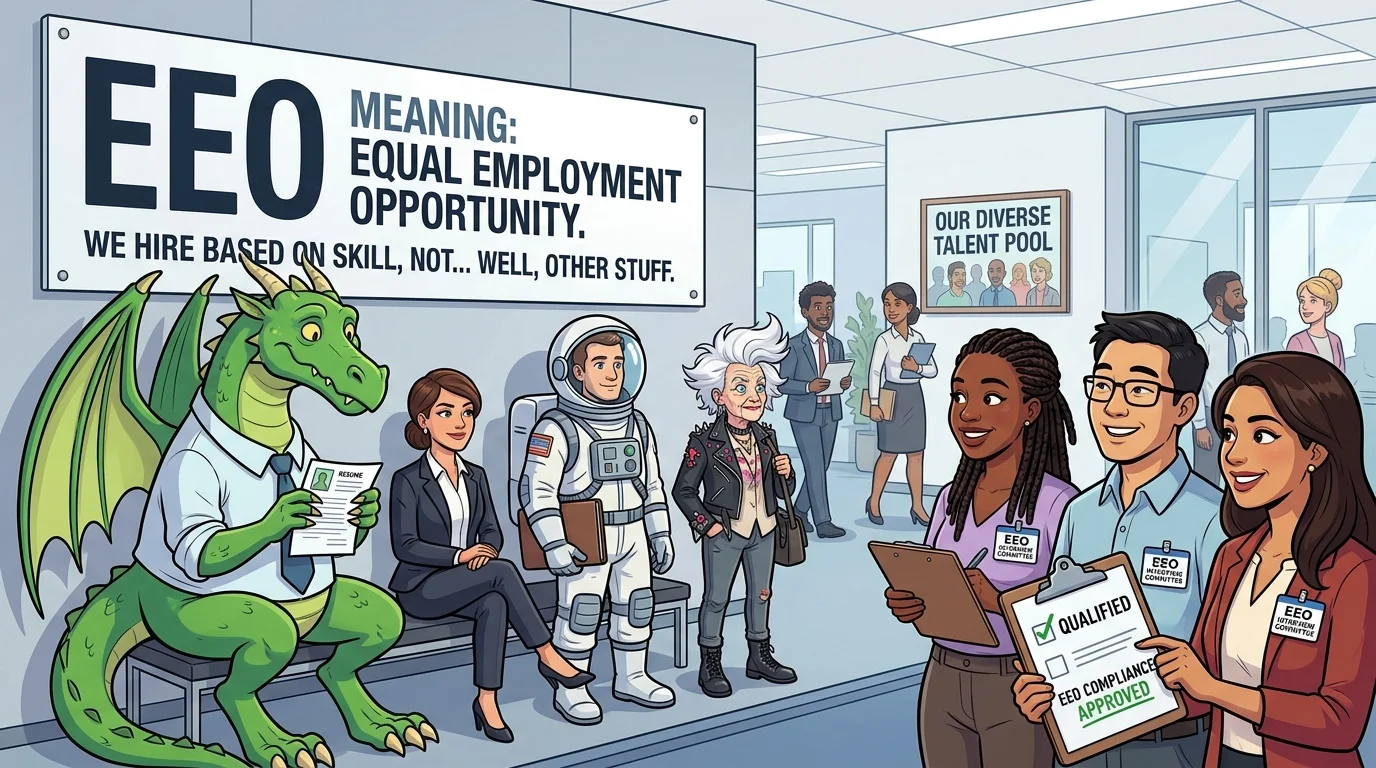
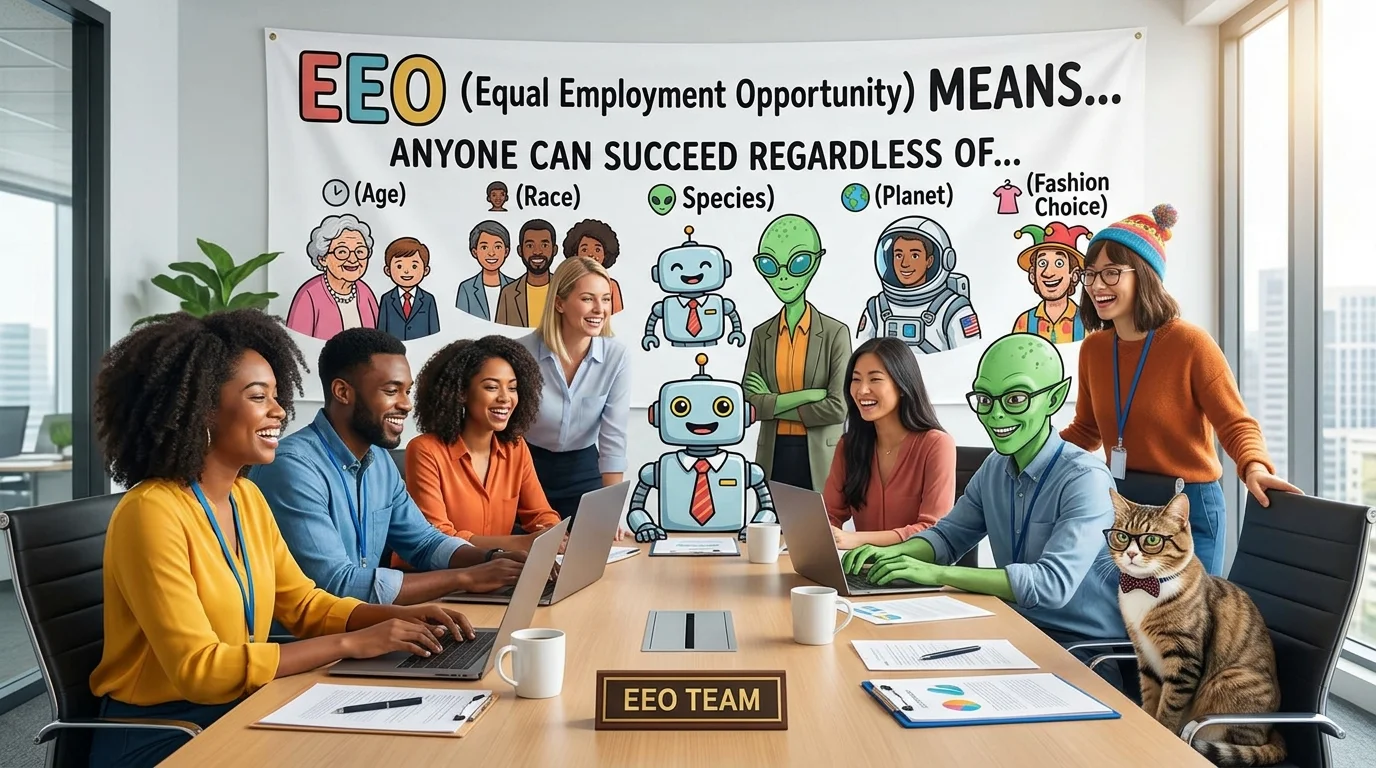
EEO = Equal Employment Opportunity
The term refers to workplace practices and policies designed to ensure that employment decisions are based on qualifications, skills, and job performance rather than protected personal characteristics.
In simple terms:
EEO means giving everyone a fair chance in employment.
What Is the Goal of EEO?
The primary goal of Equal Employment Opportunity is to prevent unfair treatment in areas such as:
- Hiring
- Recruitment
- Promotions
- Compensation
- Benefits
- Training opportunities
- Job assignments
- Termination decisions
Employers are expected to make decisions based on legitimate job-related factors rather than discrimination.
Why Is EEO Important?
Equal Employment Opportunity helps create workplaces where employees can compete fairly based on their abilities and qualifications.
Benefits of EEO
For employees:
- Fair treatment
- Equal access to opportunities
- Protection against discrimination
- Greater workplace inclusion
For employers:
- Stronger workplace culture
- Better employee morale
- Broader talent pools
- Reduced legal risks
- Improved reputation
A Fair Workplace
An EEO-focused workplace aims to ensure that individuals are evaluated based on:
- Skills
- Experience
- Education
- Performance
- Job-related qualifications
rather than unrelated personal characteristics.
How People Use “EEO” in Real Conversations
The abbreviation appears frequently in employment-related settings.
Job Applications
You may see statements such as:
“We are an Equal Opportunity Employer.”
This indicates the organization supports EEO principles.
Human Resources Policies
HR departments often discuss:
- EEO compliance
- EEO training
- EEO reporting
- EEO investigations
Workplace Training
Many organizations provide EEO training to managers and employees.
Government and Corporate Documents
EEO frequently appears in:
- Employment policies
- Employee handbooks
- Recruitment materials
- Workplace compliance documents
Real-Life Examples of EEO
Example 1: Hiring Process
A company interviews several candidates and selects the applicant with the strongest qualifications.
EEO Principle: Hiring decisions are based on merit and job-related criteria.
Example 2: Promotion Opportunity
Two employees apply for a promotion.
The company evaluates:
- Experience
- Leadership skills
- Performance
rather than unrelated personal characteristics.
EEO Principle: Equal access to advancement opportunities.
Example 3: Workplace Training
A company offers leadership training to all qualified employees.
EEO Principle: Fair access to professional development.
Example 4: Job Advertisement
A job posting encourages applications from diverse candidates.
EEO Principle: Expanding access to employment opportunities.
Example 5: Compensation Decisions
Employees performing similar work receive compensation based on objective business factors.
EEO Principle: Fair and consistent treatment.
Example 6: Employee Complaint
An employee raises concerns about unfair workplace treatment.
The employer investigates according to EEO policies.
EEO Principle: Maintaining a fair work environment.
What Does an Equal Opportunity Employer Mean?
An employer that supports Equal Employment Opportunity typically seeks to:
- Recruit fairly
- Hire fairly
- Promote fairly
- Provide equal access to benefits
- Maintain non-discriminatory workplace practices
Many job listings include statements such as:
“We are proud to be an Equal Opportunity Employer.”
This signals a commitment to fair employment practices.
Common Mistakes & Misunderstandings
Assuming EEO Guarantees Employment
EEO does not guarantee that every applicant will receive a job offer.
Employers may still choose the most qualified candidate.
The key principle is that decisions should be based on legitimate job-related factors.
Thinking EEO Applies Only to Hiring
Many people associate EEO solely with recruitment.
In reality, it applies throughout employment, including:
- Promotions
- Compensation
- Training
- Workplace treatment
- Termination decisions
Confusing EEO With Diversity Programs
Although related, EEO and diversity initiatives are not identical.
EEO focuses on equal opportunity and fair treatment, while diversity programs often aim to encourage broader representation and inclusion.
Believing EEO Only Affects Large Companies
Organizations of many sizes may be subject to employment laws and equal opportunity requirements depending on applicable regulations.
Related Workplace Terms
HR (Human Resources)
The department responsible for managing employee-related functions.
Diversity and Inclusion
Workplace efforts designed to foster representation, belonging, and inclusion.
Workplace Compliance
Following applicable employment laws and regulations.
Recruitment
The process of attracting and hiring candidates.
Employment Policy
Rules and guidelines governing workplace practices.
These concepts often appear alongside discussions about EEO.