

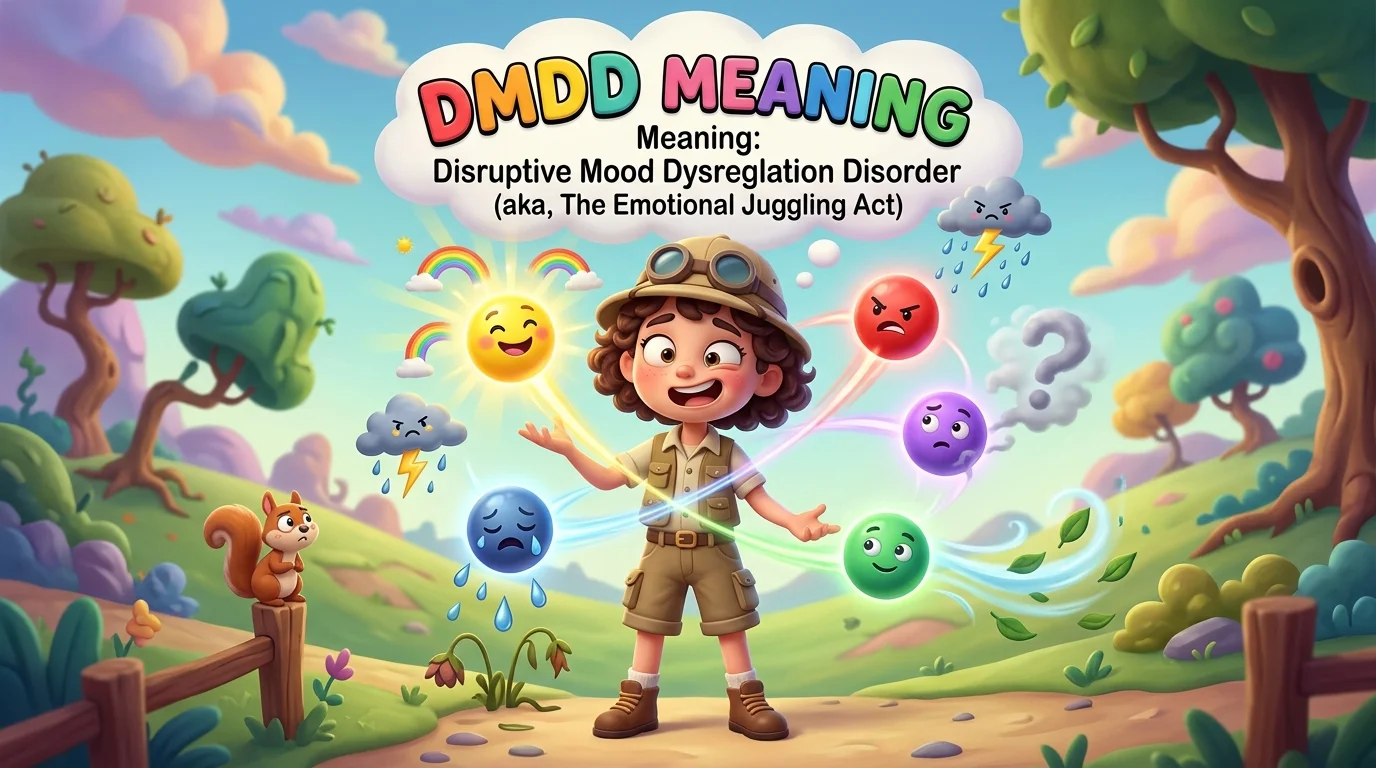
What Does “DMDD” Mean?
DMDD = Disruptive Mood Dysregulation Disorder
It is a mental health disorder primarily diagnosed in children and adolescents.
The condition involves:
- Severe irritability
- Frequent temper outbursts
- Persistent angry mood
- Difficulty managing emotions
These symptoms occur more often and are more intense than typical childhood frustration or occasional tantrums.
What Is Disruptive Mood Dysregulation Disorder?
DMDD is characterized by a pattern of emotional and behavioral symptoms that significantly affect daily life.
Children with DMDD may:
- Become angry easily
- Have intense verbal or behavioral outbursts
- Struggle to calm down after becoming upset
- Remain irritable between outbursts
The symptoms can affect:
- School performance
- Friendships
- Family relationships
- Social activities
Why Was DMDD Introduced?
Mental health professionals introduced DMDD to better describe children who experience chronic irritability and severe mood dysregulation.
Before the diagnosis existed, some children with these symptoms were sometimes diagnosed with other mood-related conditions that did not fully match their experiences.
Common Symptoms of DMDD
Symptoms can vary from child to child, but common signs include:
Frequent Temper Outbursts
Outbursts may be:
- Verbal
- Behavioral
- Intense
- Disproportionate to the situation
Examples:
- Extreme yelling
- Aggressive behavior
- Severe emotional reactions
Persistent Irritability
Children with DMDD may appear:
- Angry
- Easily annoyed
- Frustrated most of the time
This irritability often continues even when no outburst is occurring.
Difficulty Regulating Emotions
Children may struggle to:
- Cope with disappointment
- Manage frustration
- Control emotional reactions
Problems in Multiple Settings
Symptoms typically affect more than one environment, such as:
- Home
- School
- Social settings
How DMDD Affects Daily Life
DMDD can impact several areas of a child’s life.
Family Relationships
Frequent emotional outbursts can create stress within the household.
Parents may find it difficult to predict reactions or manage conflicts.
School Performance
Children may experience:
- Behavioral challenges
- Difficulty concentrating
- Problems interacting with peers
- Academic struggles
Friendships
Irritability and emotional outbursts can sometimes make it harder to maintain social relationships.
Emotional Well-Being
Children with DMDD may experience ongoing frustration and emotional distress.
Possible Causes of DMDD
Researchers continue studying the exact causes of DMDD.
Several factors may contribute, including:
Biological Factors
Differences in emotional regulation and brain function may play a role.
Genetic Influences
Family history of mood-related or mental health conditions may increase risk.
Environmental Factors
Stressful experiences, family challenges, or other environmental influences may contribute to emotional difficulties.
It’s important to remember that no single factor is known to cause DMDD.
How DMDD Is Diagnosed
Diagnosis is typically performed by qualified mental health professionals such as:
- Psychiatrists
- Psychologists
- Licensed mental health clinicians
The evaluation may include:
- Interviews
- Behavioral assessments
- Parent reports
- Teacher observations
- Review of symptom history
A professional determines whether symptoms meet established diagnostic criteria.
Treatment Options for DMDD
Treatment plans vary depending on the child’s needs.
Psychotherapy
Therapy may help children learn:
- Emotional regulation skills
- Coping strategies
- Problem-solving techniques
Parent Training and Support
Parents may receive guidance on:
- Managing challenging behaviors
- Improving communication
- Supporting emotional development
School-Based Support
Schools may provide accommodations or behavioral support when needed.
Medication
In some situations, healthcare providers may consider medication as part of a comprehensive treatment plan.
Treatment decisions should always be made with qualified medical professionals.
Common Mistakes & Misunderstandings
Assuming DMDD Is Just Bad Behavior
DMDD is not simply a child being difficult or disobedient.
The condition involves significant emotional regulation challenges that can affect daily functioning.
Confusing DMDD With Occasional Tantrums
Most children experience occasional frustration or temper tantrums.
DMDD involves symptoms that are more severe, persistent, and disruptive.
Believing Children Will Automatically Outgrow It
Some children may improve over time, but professional evaluation and support are often important when symptoms significantly affect daily life.
Thinking Parents Are to Blame
DMDD is a recognized mental health condition involving multiple contributing factors. It is not simply the result of parenting style.

Related Mental Health Terms
ADHD
Attention-Deficit/Hyperactivity Disorder
A condition involving attention, impulsivity, and hyperactivity challenges.
Anxiety Disorders
Mental health conditions involving excessive worry, fear, or nervousness.
Depression
A mood disorder characterized by persistent sadness and loss of interest.
Emotional Regulation
The ability to manage and respond appropriately to emotions.
Behavioral Therapy
A therapeutic approach that helps individuals develop healthier behaviors and coping skills.