

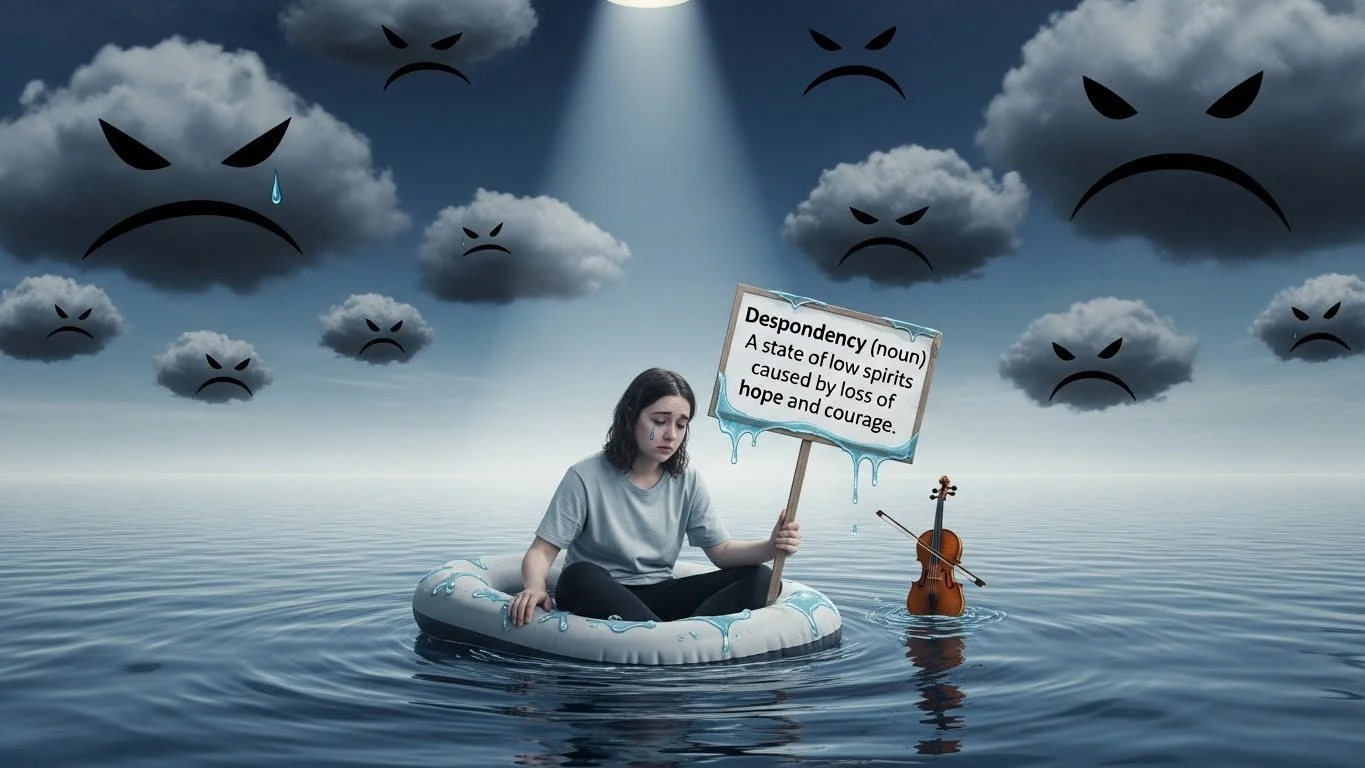
What Does “Despondency” Mean?
Despondency means a deep feeling of hopelessness, discouragement, or loss of optimism.
In simple words:
Despondency is when someone feels so discouraged that they struggle to see hope or a positive outcome.
It’s stronger than everyday sadness and usually tied to disappointment, loss, or prolonged stress.
Despondency vs Normal Sadness
Not all sadness is despondency.
Here’s the difference:
Sadness: Temporary emotional pain
Despondency: Persistent feeling of hopelessness and defeat
Someone experiencing despondency may feel:
Emotionally drained
Unmotivated
Like their efforts no longer matter
It’s more about giving up hope than just feeling upset.
Origin of the Word “Despondency”
Despondency comes from Latin roots:
De- = down
Spondere = to promise
Historically, it meant “to lose confidence or expectation.”
Over time, it evolved to describe emotional states where hope feels absent.
How Despondency Is Used in Everyday Language
Despondency is often used in:
Literature
News articles
Mental health discussions
Serious conversations
It sounds more formal than “sad” or “depressed,” but it’s still commonly understood.
Example:
“After months of rejection, she fell into despondency.”
This implies ongoing emotional discouragement, not a passing mood.
Despondency Meaning in Mental Health Contexts
Despondency is not a medical diagnosis, but it’s often associated with:
Depression
Grief
Burnout
Chronic stress
Important distinction:
Despondency describes a feeling
Depression is a clinical condition
Someone can feel despondent without having depression, but prolonged despondency may signal a need for support.
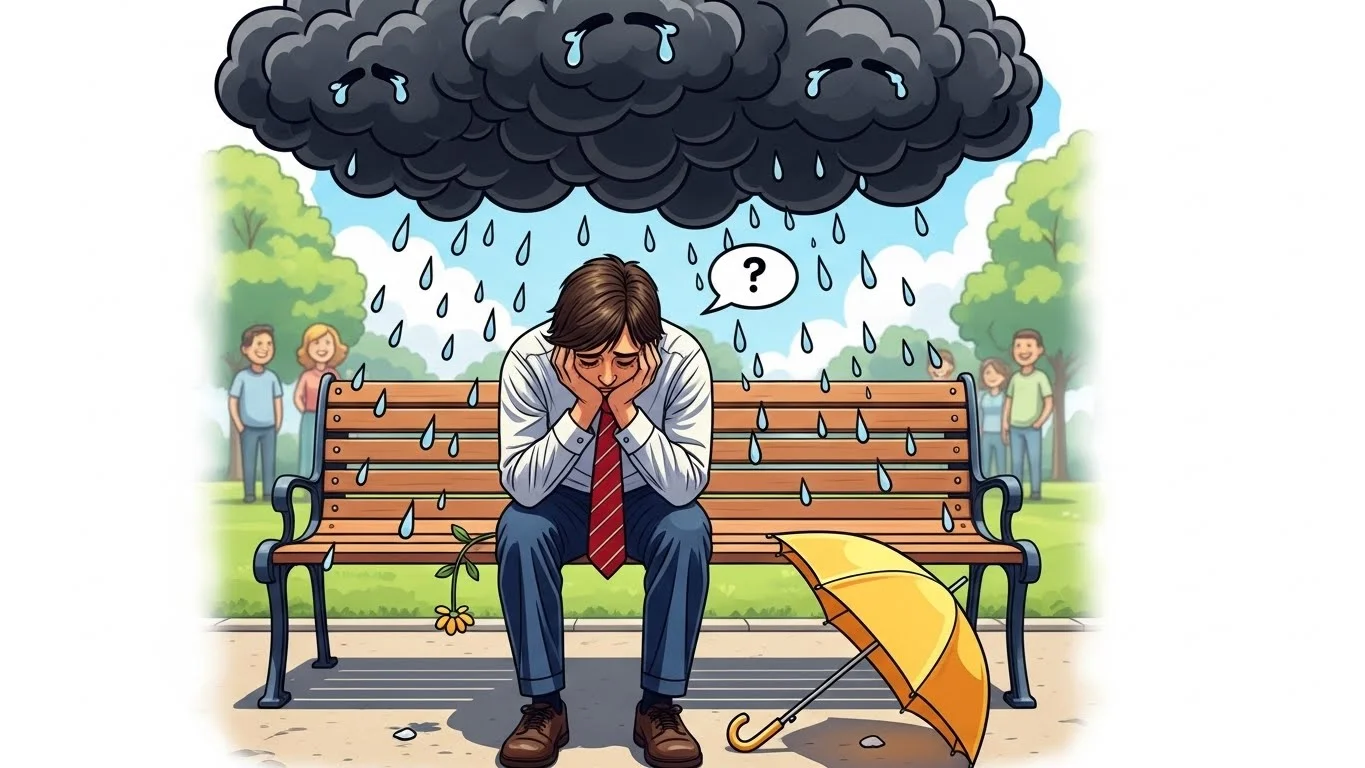
Real-Life Examples of Despondency in Use
Example 1
Sentence:
“He stared at the rejection letter with despondency.”
Meaning:
He felt deeply discouraged and hopeless.
Example 2
Sentence:
“The team’s losing streak led to widespread despondency.”
Meaning:
People lost optimism and motivation.
Example 3
Sentence:
“She spoke with quiet despondency about the future.”
Meaning:
Her tone showed a lack of hope.
Example 4
Sentence:
“Economic uncertainty has caused despondency among workers.”
Meaning:
Many people feel discouraged and pessimistic.
Common Mistakes & Misunderstandings
1. Confusing Despondency With Laziness
Despondency is emotional exhaustion, not a lack of effort.
2. Using It for Minor Inconveniences
Saying “I felt despondent because my coffee was cold” is an overstatement.
3. Equating It Exactly With Depression
They’re related, but not the same thing.
4. Thinking It’s Permanent
Despondency can pass with support, change, or time.
Related Words & Similar Terms
If you’re learning the despondency meaning, these related words help clarify nuance:
Hopelessness – Feeling no positive outcome is possible
Despair – Intense loss of hope
Dejection – Low spirits after disappointment
Melancholy – Lingering sadness
Discouragement – Loss of confidence or motivation
These are useful for understanding tone and context.
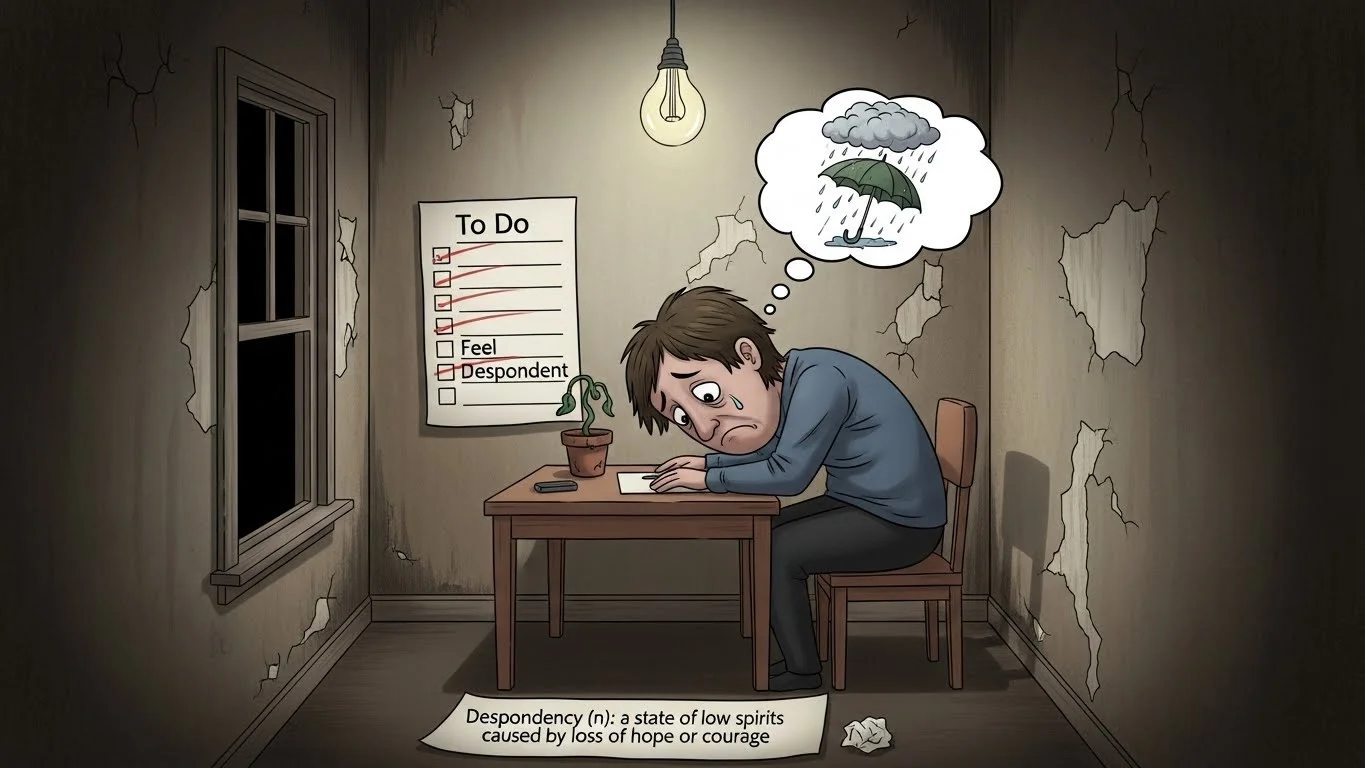
How Despondency Shows Up Emotionally
People experiencing despondency may:
Withdraw socially
Speak less or more quietly
Avoid planning for the future
Feel mentally exhausted
Struggle to feel excitement
It’s often subtle but deeply impactful.