
What Is the Normal Color of Urine?
Normal urine is usually pale yellow to light amber in color.
This yellow color comes from a natural pigment called urochrome, which is produced when your body breaks down hemoglobin.
Ideal Healthy Urine Color
- Light straw yellow
- Pale yellow
- Clear to slightly yellow
This usually means you are well hydrated and healthy.
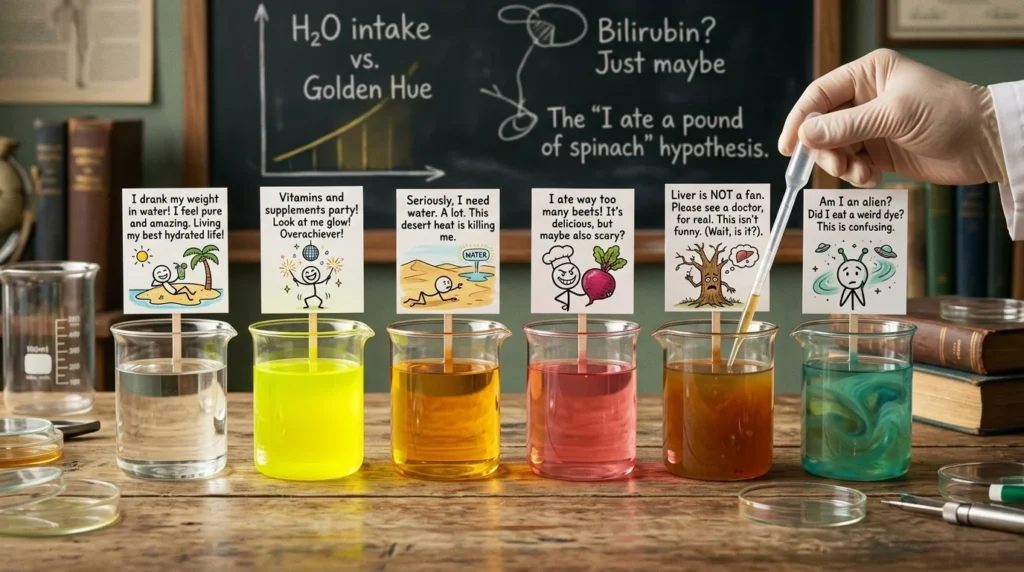
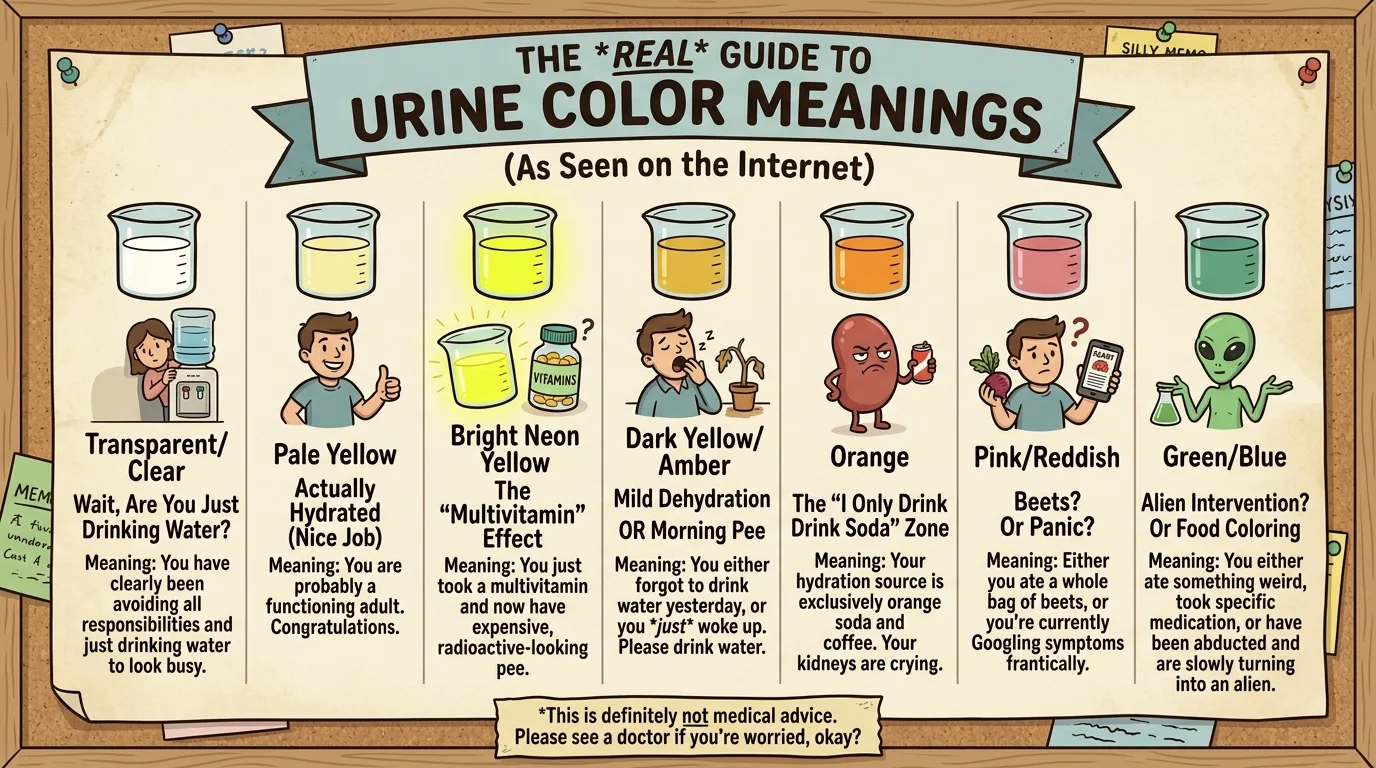
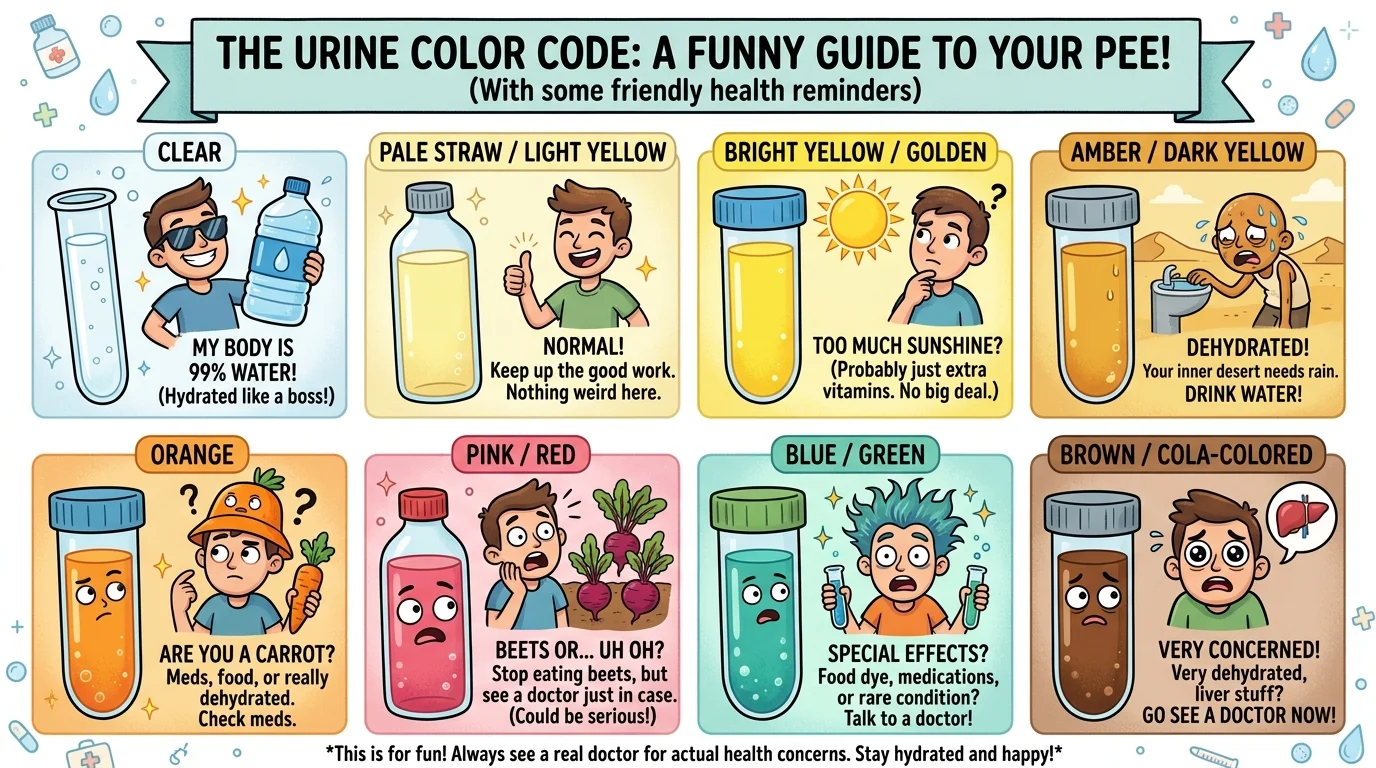
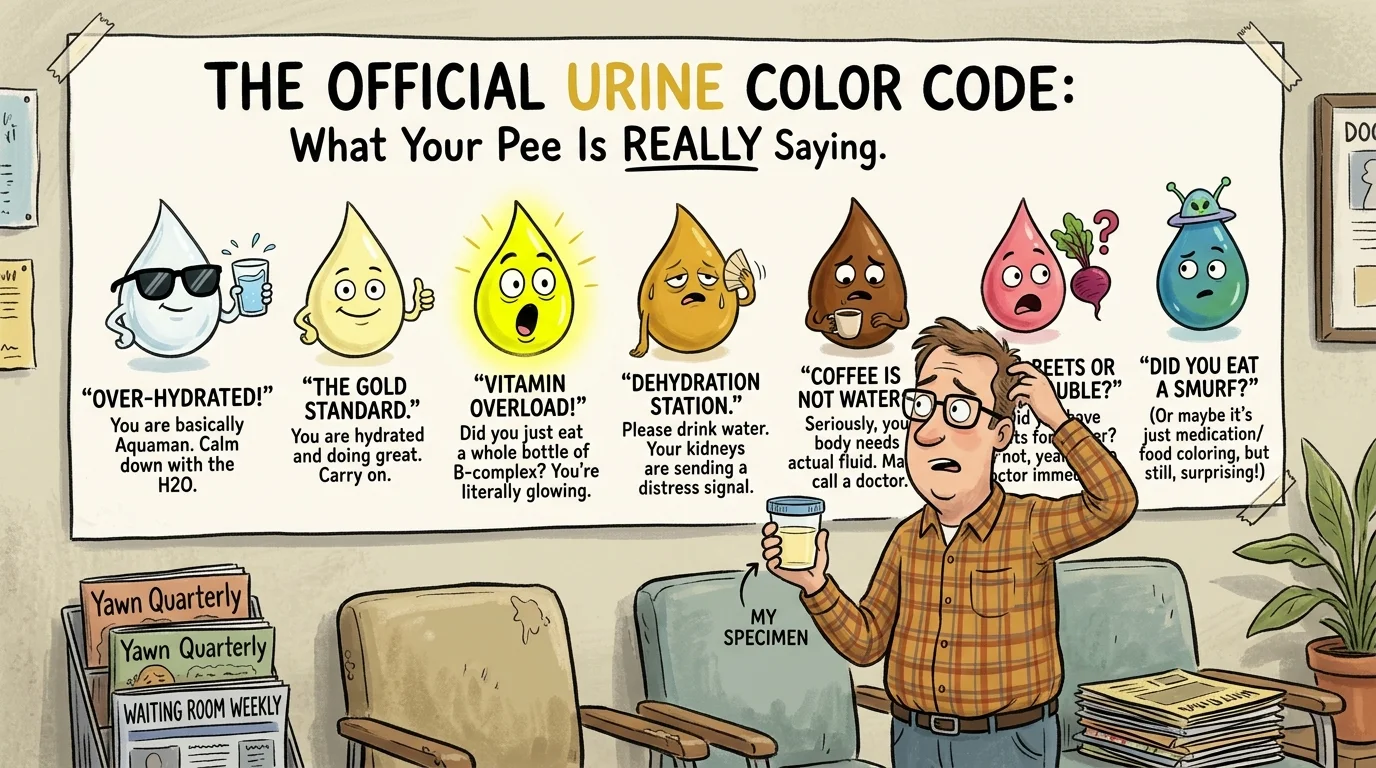
What Different Urine Colors Mean
Urine color can change for many reasons. Here is a simple breakdown of what each color may indicate.
1. Clear Urine
Meaning:
- Very well hydrated
- Possibly drinking too much water
What it suggests:
Clear urine is usually not dangerous, but consistently clear urine may mean you are overhydrated, which can sometimes dilute electrolytes.
2. Pale Yellow (Normal & Healthy)
Meaning:
- Perfect hydration balance
- Healthy kidney function
What it suggests:
This is the ideal urine color and indicates your body is well balanced.
3. Dark Yellow or Amber
Meaning:
- Mild dehydration
What it suggests:
You may need to drink more water. This is the most common cause of darker urine.
4. Honey or Brownish Yellow
Meaning:
- Dehydration
- Possible liver issues (in some cases)
What it suggests:
If persistent, especially with fatigue or yellowing skin, it may indicate a liver-related problem and should be checked.
5. Pink or Red Urine
Meaning:
- Blood in urine (hematuria)
- Certain foods (beets, berries)
- Medications
What it suggests:
Sometimes harmless (food-related), but it can also indicate:
- Urinary tract infection (UTI)
- Kidney stones
- Bladder issues
Medical evaluation is recommended if it persists.
6. Orange Urine
Meaning:
- Dehydration
- Liver or bile duct issues
- Certain medications (like some antibiotics)
What it suggests:
If not diet-related, it may need medical attention, especially if accompanied by other symptoms.
7. Blue or Green Urine
Meaning:
- Rare genetic conditions
- Certain medications or dyes
- Food coloring
What it suggests:
Usually harmless and temporary, often caused by medication or artificial coloring.
8. Foamy or Bubbly Urine
Meaning:
- High protein levels
- Possible kidney issues
- Fast urination
What it suggests:
Occasional foam is normal, but persistent foamy urine should be checked.
9. Cloudy Urine
Meaning:
- Infection
- Dehydration
- Kidney stones
What it suggests:
Cloudy urine often signals a urinary tract infection (UTI) or other inflammation.
Factors That Affect Urine Color
Several everyday factors can change urine color:
1. Hydration Level
- More water = lighter urine
- Less water = darker urine
2. Food and Diet
Foods like:
- Beets
- Carrots
- Berries
can temporarily change urine color.
3. Medications
Some antibiotics, laxatives, and supplements can affect color.
4. Vitamins
Especially B-complex vitamins can make urine bright yellow.
5. Health Conditions
Kidney, liver, or urinary tract problems may also change urine appearance.
When Should You Worry About Urine Color?
You should consider seeing a doctor if you notice:
- Blood (red/pink urine) without food cause
- Persistent dark brown urine
- Cloudy urine with pain or burning
- Foamy urine that does not go away
- Unexplained color changes lasting more than a few days
How to Maintain Healthy Urine Color
To keep urine within a healthy range:
- Drink enough water daily
- Avoid excessive sugary or colored drinks
- Maintain a balanced diet
- Do not ignore persistent changes
- Get regular health checkups
Common Misunderstandings
1. “Clear urine is always best”
Not always—too much water can dilute electrolytes.
2. “Any color change means disease”
Many changes are harmless and diet-related.
3. “Only pain means a problem”
Some kidney or liver issues can start without pain.
4. “Urine color never matters”
Actually, it’s one of the simplest health indicators.
Related Health Terms
- Hydration
- Kidney function
- Urinalysis
- UTI (Urinary Tract Infection)
- Hematuria (blood in urine)
- Bilirubin (liver pigment)