

What Does “Chemical Pregnancy” Mean?
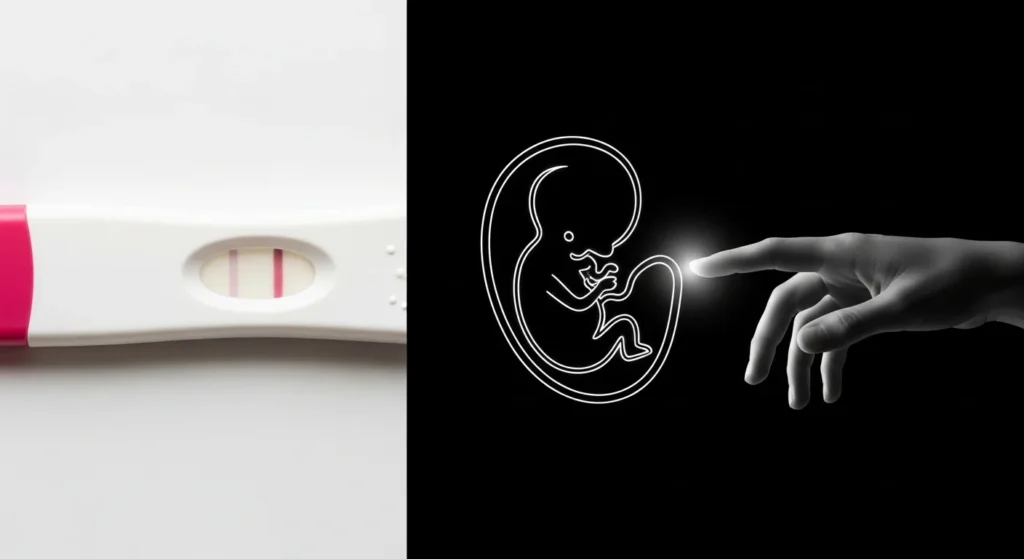
A chemical pregnancy is an extremely early miscarriage that happens shortly after implantation. It usually occurs before the fifth week of pregnancy, often before an ultrasound can detect the pregnancy.
The term “chemical” comes from the fact that the pregnancy is detected only through hormones (chemicals) in the body, specifically the hormone hCG (human chorionic gonadotropin).
Simple Definition
Chemical pregnancy meaning:
A very early miscarriage that happens soon after implantation and is usually detected only through a positive pregnancy test.
In most cases:
A pregnancy test shows positive
Hormone levels begin to rise
The pregnancy stops developing shortly afterward
A menstrual-like bleeding follows
Because pregnancy tests today are very sensitive, chemical pregnancies are detected much more often than in the past.
Why Is It Called a Chemical Pregnancy?
The name can sound strange at first. The reason behind the term is purely medical.
Pregnancy can be confirmed in two ways:
Chemical confirmation – through hormone levels in blood or urine
Clinical confirmation – through ultrasound or fetal heartbeat
In a chemical pregnancy:
The pregnancy is confirmed only by the pregnancy hormone
It ends before it becomes visible on ultrasound
This is why doctors call it a chemical pregnancy instead of a clinical pregnancy.
How Common Are Chemical Pregnancies?
Many people are surprised to learn that chemical pregnancies are actually very common.
Research suggests:
50–60% of first-time miscarriages may be chemical pregnancies
Many occur before someone even knows they are pregnant
In earlier decades, most people never knew this happened because pregnancy tests were not sensitive enough to detect such early hormone changes.
Today, early testing means more people are aware of these early pregnancy losses.
Symptoms of a Chemical Pregnancy
A chemical pregnancy can look similar to a normal period, but there are a few signs that may indicate what happened.
Common symptoms include:
A positive pregnancy test followed by a negative one
Light or heavy bleeding
Bleeding a few days after a missed period
Mild abdominal cramping
Pregnancy symptoms that suddenly disappear
Some people experience no noticeable symptoms at all besides the test result.
Example Timeline
A common scenario might look like this:
Day 1: Positive pregnancy test
Day 3–5: Hormone levels stop rising
Day 7–10: Bleeding begins
Pregnancy test becomes negative
Because the loss happens so early, many people mistake it for a slightly late period.

What Causes a Chemical Pregnancy?
There are several possible causes behind a chemical pregnancy. In most cases, it is completely outside a person’s control.
The most common causes include:
1. Chromosomal Abnormalities
The most frequent cause is genetic abnormalities in the embryo.
When the embryo has missing or extra chromosomes, the body often stops the pregnancy naturally because the embryo cannot develop normally.
2. Implantation Problems
Sometimes the fertilized egg cannot properly attach to the uterine lining, which prevents the pregnancy from continuing.
3. Hormonal Imbalances
Low levels of hormones like progesterone may prevent the pregnancy from progressing.
4. Uterine Conditions
Certain conditions can increase risk:
Uterine fibroids
Scar tissue
Uterine abnormalities
5. Immune System Issues
Rarely, immune responses may interfere with early pregnancy development.
How Doctors Diagnose a Chemical Pregnancy
Doctors usually diagnose a chemical pregnancy through blood tests that measure hCG levels.
Typical diagnostic steps include:
Initial positive pregnancy test
Blood test confirms hCG
Follow-up test shows hormone levels dropping
Since the pregnancy ends very early, ultrasound usually shows no gestational sac.
This confirms that the pregnancy ended before becoming clinically visible.
How People Use the Term “Chemical Pregnancy” in Conversations
Although this is a medical term rather than internet slang, the phrase appears frequently in online communities, parenting forums, and fertility discussions.
You might see it on:
Reddit pregnancy groups
Fertility forums
Parenting blogs
IVF discussion boards
Social media support communities
Common Situations Where It Appears
People often mention chemical pregnancy when:
Sharing early pregnancy experiences
Discussing fertility treatments
Talking about miscarriages
Seeking support after a loss
Because the experience can be emotionally confusing, many people search for “chemical pregnancy meaning” after seeing the term in these discussions.
Real-Life Examples of Chemical Pregnancy Conversations
Here are some typical ways the term appears in real discussions.
Example 1
“I got a positive test last week but started bleeding today. My doctor said it might be a chemical pregnancy.”
Explanation:
The pregnancy hormone appeared briefly but the pregnancy ended early.
Example 2
“After IVF, I had a chemical pregnancy. My doctor said it’s common and we can try again.”
Explanation:
Chemical pregnancies sometimes occur during fertility treatments.
Example 3
“My period was five days late and I tested positive, but then it turned negative.”
Explanation:
This pattern often leads doctors to suspect a chemical pregnancy.
Example 4
“We experienced two chemical pregnancies before our successful pregnancy.”
Explanation:
Many people go on to have healthy pregnancies afterward.
Does a Chemical Pregnancy Affect Future Fertility?
For most people, a chemical pregnancy does not affect future fertility.
In fact, many fertility specialists say it can show that:
Fertilization happened successfully
Implantation began
This means the reproductive process is working.
Many people conceive successfully within a few months after a chemical pregnancy.
However, if someone experiences repeated chemical pregnancies, doctors may recommend tests to look for underlying causes.
Emotional Impact of Chemical Pregnancy
Even though the pregnancy ends very early, the emotional impact can still be real.
Some people feel:
Confusion
Sadness
Frustration
Anxiety about future pregnancies
Others may feel less affected because the loss happened so early.
Both reactions are completely normal.
Support from partners, doctors, or support groups can help people process the experience.
Common Misunderstandings About Chemical Pregnancy
There are several myths surrounding chemical pregnancies.
Mistake 1: Thinking It Was Caused by Something You Did
Daily activities do not cause chemical pregnancies. Things like exercise, working, or normal stress are rarely responsible.
Mistake 2: Believing It Means You Can’t Get Pregnant
In most cases, fertility remains normal after a chemical pregnancy.
Mistake 3: Assuming It’s Rare
Chemical pregnancies are actually very common, but many people simply never realize they occurred.
Mistake 4: Thinking It Is the Same as a Late Miscarriage
A chemical pregnancy happens before the pregnancy can be seen on ultrasound, making it different from later miscarriages.
Related Pregnancy and Fertility Terms
If you’re researching chemical pregnancy, you might also encounter these related terms.
Early Miscarriage
A miscarriage that occurs within the first 12 weeks of pregnancy.
Implantation
The moment when a fertilized egg attaches to the uterus.
hCG Hormone
The pregnancy hormone detected by pregnancy tests.
Clinical Pregnancy
A pregnancy that can be confirmed through ultrasound.
Implantation Bleeding
Light spotting that occurs when the embryo attaches to the uterine wall.
Understanding these terms can make fertility discussions and medical advice much easier to follow.