

What Does “Haboob” Mean?
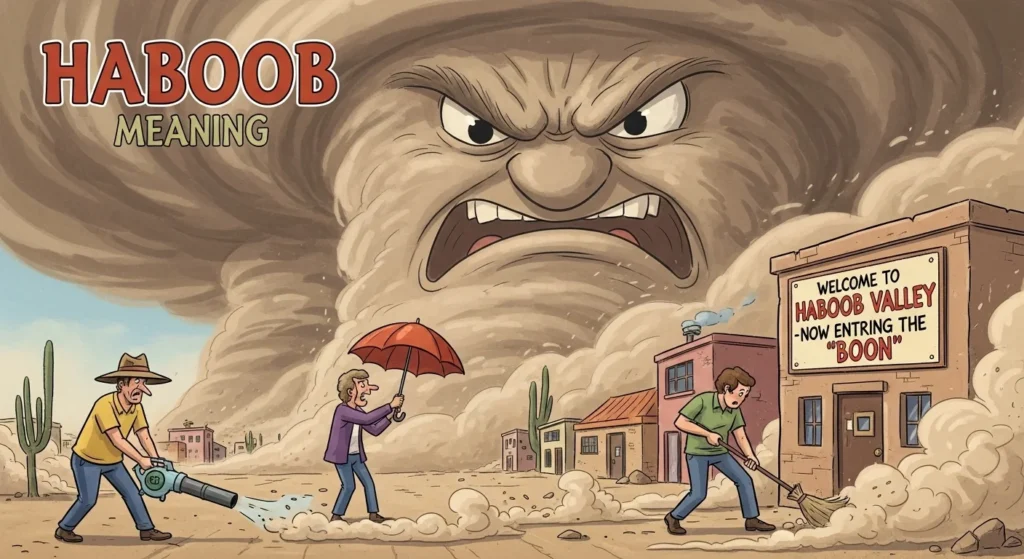
A haboob is a large, intense dust storm caused by strong winds, usually associated with thunderstorms.
Simple definition
Haboob = a massive wall of dust pushed by storm winds
It typically:
Moves fast
Looks like a towering brown or gray wall
Reduces visibility to near zero
Causes dangerous driving conditions
Haboobs are most common in desert and semi-arid regions, especially in the southwestern United States.
Where the Word “Haboob” Comes From
The term haboob comes from Arabic, where it means “blasting” or “blowing.”
It was originally used to describe:
Sudden dust storms in desert regions
Storm-driven wind events in the Middle East and North Africa
Meteorologists later adopted the word because it perfectly described this specific type of dust storm.
How a Haboob Forms (In Simple Terms)
A haboob forms when:
A thunderstorm creates strong downdraft winds
Those winds hit the ground and spread outward
Loose dust and sand get lifted into the air
A massive dust wall forms and moves forward rapidly
Unlike regular dust storms, haboobs are:
Taller
Denser
More sudden
They can appear with very little warning.
How People Use “Haboob” in Real Conversations
Even though it’s a scientific term, haboob has crossed into everyday language.
Where you’ll see “haboob”
Weather reports
News headlines
Social media videos
Twitter/X trending topics
Local emergency alerts
Casual conversations in desert regions
Meme captions (often joking about the word itself)
How people talk about it casually
Examples:
“Another haboob just rolled through.”
“That haboob was insane.”
“We had to pull over because of the haboob.”
In casual use, people often treat haboob as:
A dramatic weather event
A shared regional experience
Something serious but also oddly memorable
Real-Life Examples of “Haboob” in Use
Example 1
Sentence:
“A huge haboob shut down the highway.”
Meaning:
A dust storm made driving too dangerous.
Example 2
Sentence:
“You could see the haboob from miles away.”
Meaning:
The dust wall was massive and visible at a distance.
Example 3
Sentence:
“That haboob came out of nowhere.”
Meaning:
The dust storm formed suddenly and unexpectedly.
Example 4
Sentence:
“Arizona gets haboobs every summer.”
Meaning:
Dust storms are common in that region during monsoon season.
Why Haboobs Are Dangerous
Haboobs are more than just dusty weather.
Main dangers include:
Near-zero visibility
Traffic accidents
Respiratory issues
Power outages
Damage to infrastructure
Air quality hazards
Because of their speed and density, haboobs are especially dangerous for drivers who don’t pull over quickly.
Common Mistakes & Misunderstandings
1. Thinking haboob is slang or a joke word
It sounds funny, but haboob is a legitimate scientific term used by meteorologists.
2. Confusing a haboob with a regular dust storm
Not all dust storms are haboobs.
Dust storm = general term
Haboob = specific, storm-driven dust wall
3. Assuming haboobs only happen overseas
While common in the Middle East and Africa, haboobs occur frequently in:
Arizona
New Mexico
Texas
Parts of California
4. Underestimating their danger
Some people treat haboobs like a novelty, but they can be life-threatening.
Related Weather Terms You Might See
If you’re learning the haboob meaning, these related terms often appear alongside it.
Dust storm – Wind-driven dust event
Sandstorm – Dust storm with larger sand particles
Thunderstorm outflow – Wind that causes haboobs
Monsoon – Seasonal weather pattern linked to haboobs
Visibility warning – Safety alert during dust storms
Knowing these helps you better understand weather alerts.

Is “Haboob” Used as Slang?
No. Haboob is not slang.
However, it’s sometimes used:
Humorously in memes
Casually in regional speech
As shorthand in weather discussions
Despite the playful sound, it always refers to a real weather event.