
What Does “Barb” Mean in English or Chat?
The word barb has multiple meanings, depending on context. It can refer to a sharp object, a verbal insult, or even a cultural reference.
Simple Definition
Barb meaning:
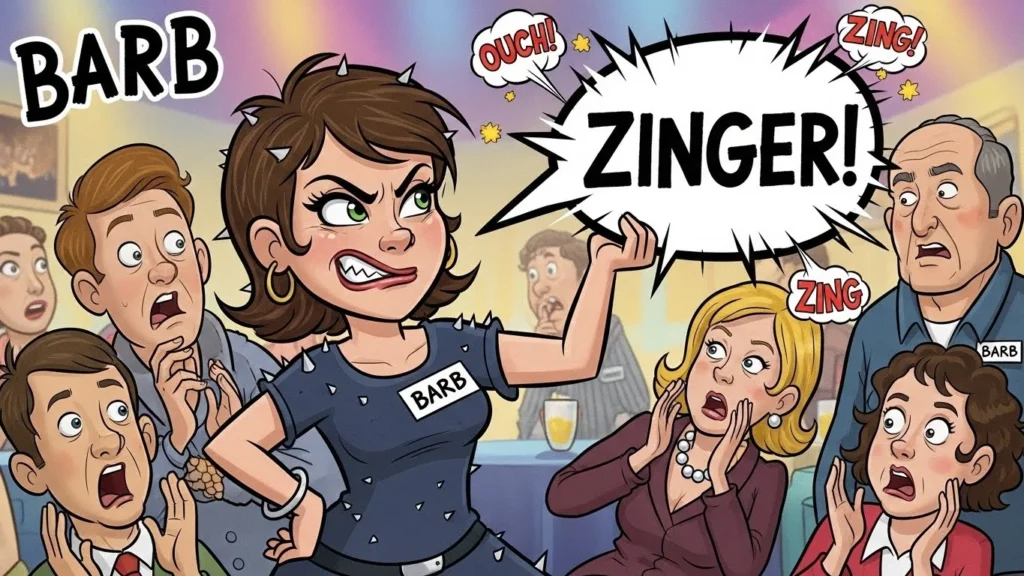
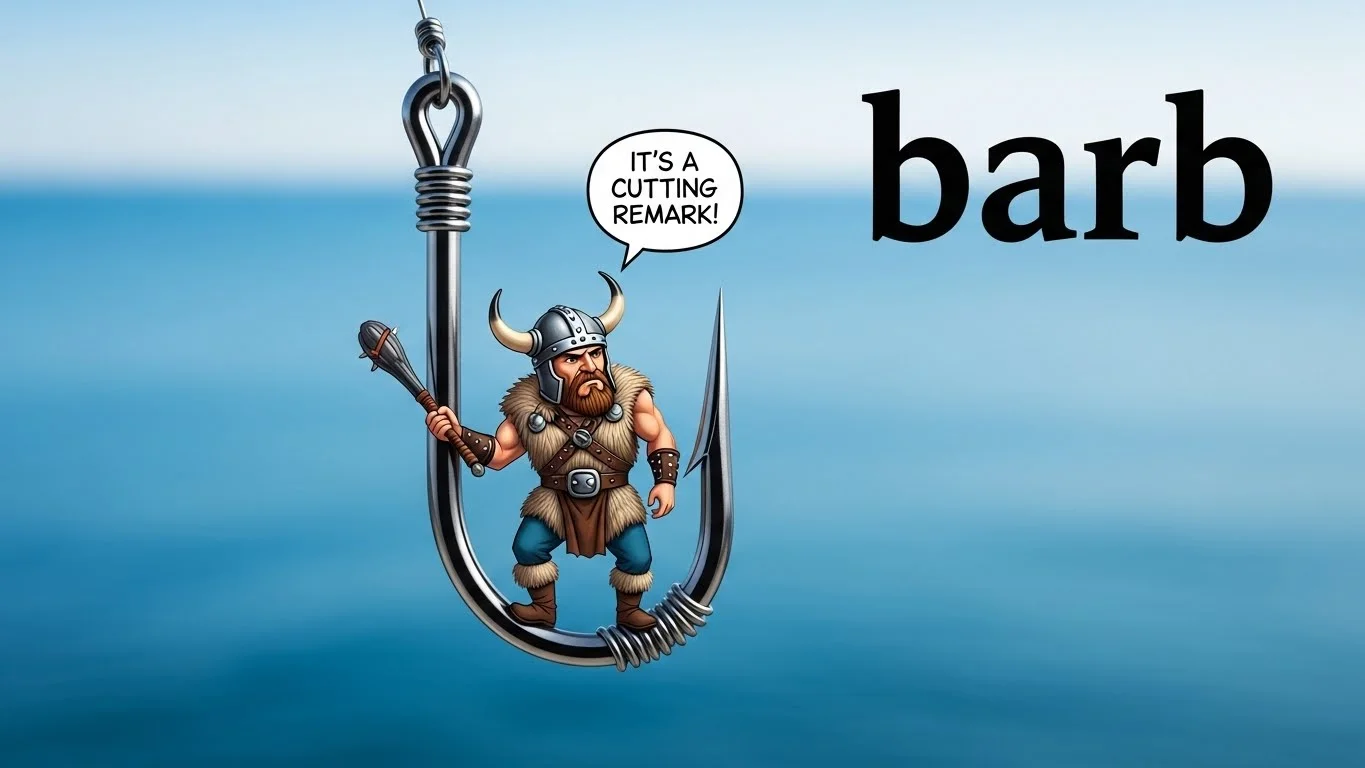
A barb is either a sharp point designed to catch or hold, or a sharp, cutting remark meant to hurt or criticize someone.
Main Meanings Based on Context
Physical meaning (object)
A sharp projection or hook
Common in arrows, fishhooks, wire, or animal anatomy
Verbal meaning (speech or writing)
A sarcastic, rude, or hurtful comment
Often subtle but intentional
Pop culture usage (modern)
Used as a nickname or identity in fandoms (context-specific)
The verbal meaning is the most common in conversations and online text.
Word Origin
The word barb comes from Latin barba, meaning “beard,” referring to sharp, hair-like projections. Over time, it evolved to describe anything sharp—physically or verbally.
How People Use “Barb” in Real Conversations
In everyday language, barb is usually used to describe speech, not objects, especially when discussing tone or attitude.
Common Situations Where “Barb” Appears
Arguments or debates
Workplace discussions
Social media comments
Political commentary
Movie and book reviews
Casual Usage Examples
People often say:
“That comment felt like a barb.”
“He threw a barb at her during the meeting.”
“It sounded polite, but there was a barb in it.”
When It Sounds Natural
Describing subtle insults
Analyzing conversations
Talking about sarcasm or passive aggression
When It Sounds Awkward
Using it as casual slang with friends
Replacing words like “joke” or “tease”
Using it without clear context
Real-Life Examples of “Barb” in Text Messages
Here are realistic examples showing how barb is used, along with simple explanations.
Example 1
“He congratulated me, but there was a barb in his tone.”
Meaning: The compliment included a hidden insult.
Example 2
“That comment was a clear barb at her performance.”
Meaning: The remark was meant to criticize or hurt.
Example 3
“She smiled, but her words were full of barbs.”
Meaning: She used polite language with sharp intent.
Example 4
“He always throws barbs instead of speaking directly.”
Meaning: He prefers indirect insults.
Example 5
“The debate was filled with political barbs.”
Meaning: The speakers exchanged sharp criticisms.
Barb Meaning in Writing, Media, and Speech
Understanding barb meaning in text helps you interpret tone more accurately.
In Writing
Often used in reviews or commentary
Suggests intelligence mixed with cruelty
Indicates intentional sharpness
In Speech
May sound calm but hurtful
Often delivered with sarcasm
Can be more damaging than direct insults
In Media
Journalists often use barb to describe:
Subtle attacks
Passive-aggressive statements
Clever but mean remarks
Common Mistakes & Misunderstandings
Many people misuse barb because of its layered meaning.
Mistake 1: Thinking Barb Means a Joke
A barb is not playful. It’s usually meant to sting.
Mistake 2: Confusing Barb with Direct Insults
Barbs are often subtle, indirect, and sarcastic.
Mistake 3: Using Barb as Slang
Barb is not casual slang like “roast.” It’s more analytical.
Mistake 4: Missing the Tone
Barbs can sound polite on the surface but hurt emotionally.
Barb vs Similar Words
Here’s how barb compares to related terms:
Insult – Direct and obvious
Sarcasm – Mocking tone, not always cruel
Roast – Often playful, sometimes friendly
Dig – Mild, indirect criticism
Jab – Short, sharp verbal attack
Barb implies sharp intelligence + intention to hurt.
Barb Meaning in Pop Culture (Modern Context)
In recent years, barb has also appeared in pop culture conversations, especially online.
Fandom Usage
“Barb” can refer to a fan identity (context-specific)
Used as a self-label within certain music communities
This meaning is entirely different from the insult-based definition and depends heavily on context. Without that context, barb almost always means a sharp remark.

Why People Use Barbs Instead of Direct Insults
People use barbs because:
They sound smarter
They avoid confrontation
They maintain politeness
They create emotional impact
They allow deniability
A barb lets someone say, “I didn’t mean it that way,” even when they did.
Related Words & Expressions
You may also encounter these terms alongside barb:
Cutting remark – Emotionally sharp comment
Passive-aggressive – Indirect hostility
Snide – Disrespectful in a subtle way
Backhanded compliment – Praise with insult inside
Sharp-tongued – Known for hurtful speech
These words often appear in the same discussions.