
What Does “Bombastic” Mean in Language or Conversation?
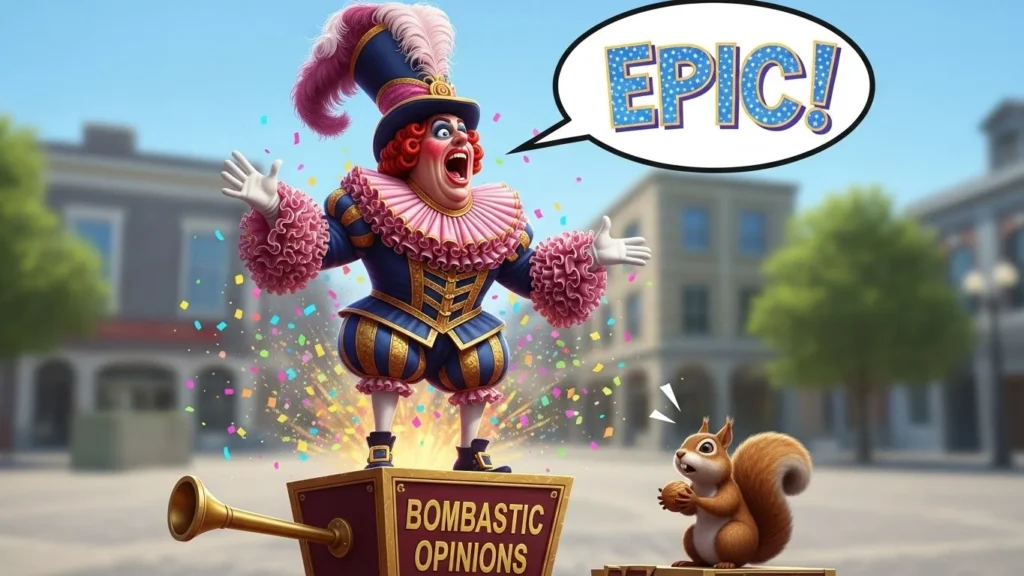
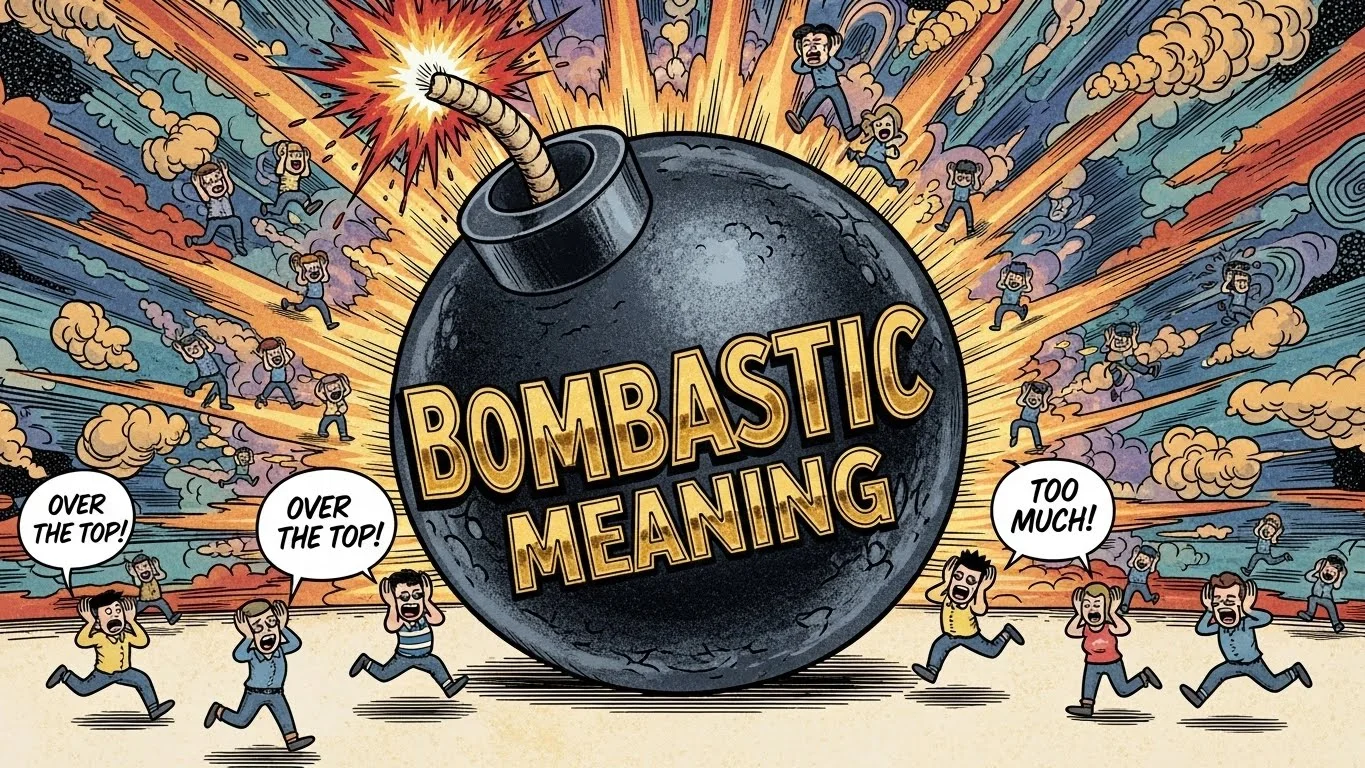
Bombastic describes language, behavior, or speech that is overly dramatic, exaggerated, or pretentious, often used to impress others but lacking real substance.
Simple Definition
Bombastic meaning:
Using big, fancy, or dramatic words and actions to sound important, confident, or impressive—often more than necessary.
In most cases, bombastic has a negative or critical tone, suggesting that someone is trying too hard.
Where the Word Comes From
The word bombastic comes from the word “bombast,” which originally meant cotton padding used to make clothes look fuller. Over time, it became a metaphor for inflated language—speech that looks impressive on the outside but feels empty inside.
Positive or Negative?
Usually negative, but context matters:
Negative: Trying to sound smart without real meaning
Neutral: Dramatic or theatrical speaking style
Rarely positive: Confident, energetic delivery (used loosely)
How People Use “Bombastic” in Real Conversations
Bombastic isn’t slang, but it’s commonly used in modern speech, online discussions, and social media commentary, especially when judging tone or attitude.
Common Places You’ll Hear “Bombastic”
Political discussions
Social media debates
Movie and TV reviews
School or college essays
Comment sections and forums
Meme captions and reaction posts
Casual Usage in Daily Talk
People often say:
“That was a bombastic speech.”
“He’s so bombastic online.”
“Stop being bombastic and get to the point.”
When It Sounds Natural
Critiquing speeches or arguments
Describing exaggerated confidence
Analyzing writing or presentations
When It Sounds Awkward
Using it as praise without context
Applying it to simple, casual talk
Confusing it with “bomb” (slang for something good)
Real-Life Examples of “Bombastic” in Use
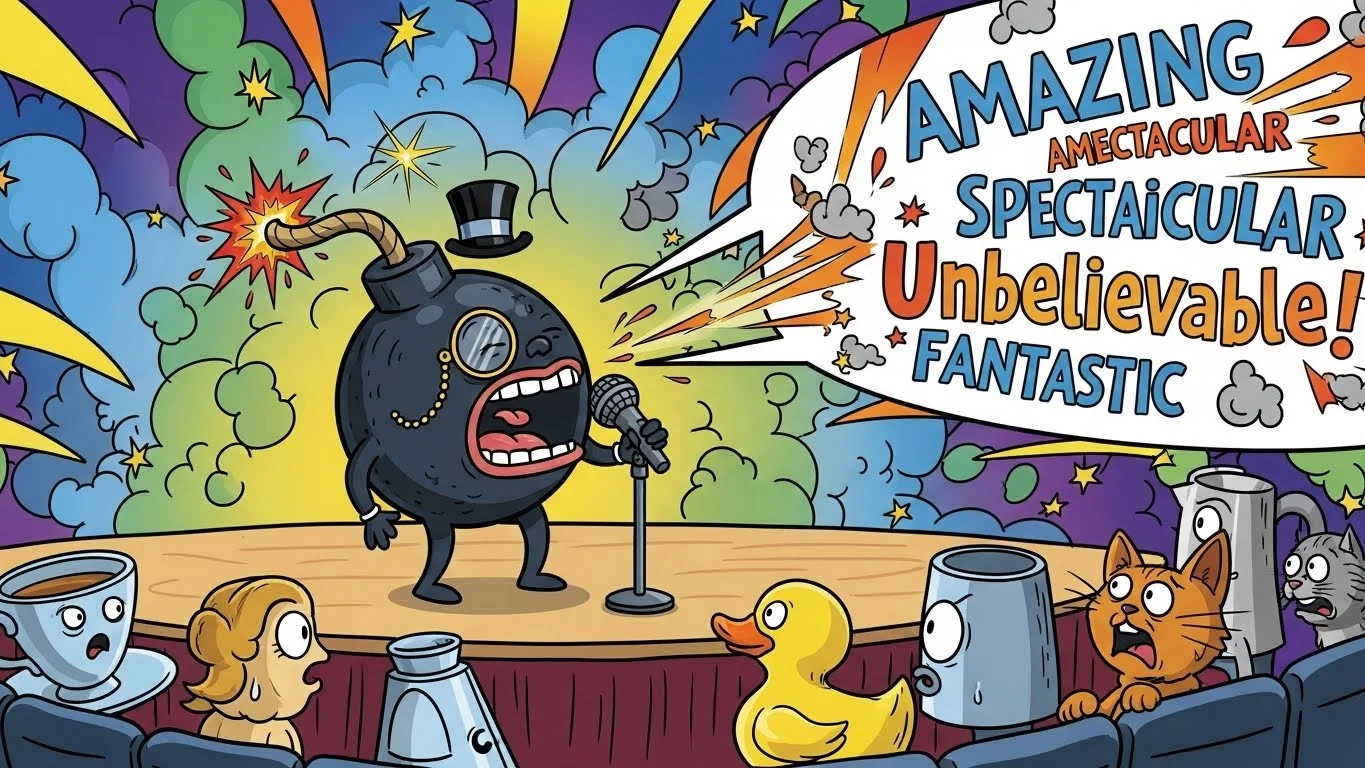
These examples show how bombastic is used naturally, along with simple explanations.
Example 1
“His bombastic speech impressed some people, but others found it fake.”
Meaning: The speech sounded grand but lacked real substance.
Example 2
“She has a bombastic personality online.”
Meaning: She appears loud, dramatic, and attention-seeking on social media.
Example 3
“The essay was full of bombastic language but weak arguments.”
Meaning: Fancy words were used instead of clear ideas.
Example 4
“That announcement felt bombastic for such a small update.”
Meaning: The reaction was exaggerated compared to the importance of the news.
Example 5
“He talks in a bombastic way during debates.”
Meaning: He speaks dramatically to dominate conversations.
Bombastic Meaning in Writing, Speech, and Media
Understanding bombastic meaning in text is especially important when reading articles, speeches, or online arguments.
Bombastic Writing
Uses long, complex words unnecessarily
Focuses on style over clarity
Sounds impressive but says little
Bombastic Speech
Loud, confident, and theatrical
Designed to influence emotions
Often used in politics and debates
Bombastic Behavior
Overconfidence
Excessive gestures
Attention-seeking actions
In media, bombastic styles are often criticized for prioritizing appearance over truth.
Common Mistakes & Misunderstandings
Many people misuse or misunderstand bombastic.
Mistake 1: Thinking Bombastic Means “Excellent”
Bombastic does not mean amazing or impressive in a good way. It usually suggests exaggeration.
Mistake 2: Confusing Bombastic with Confidence
Confidence is calm and clear. Bombastic behavior often feels forced or excessive.
Mistake 3: Using It as Internet Slang
Bombastic is not casual slang like “fire” or “lit.” It’s a descriptive word with a critical tone.
Mistake 4: Assuming It’s Always Negative
While mostly critical, bombastic can sometimes be neutral when describing dramatic styles.
Bombastic vs Similar Words
Understanding similar words helps avoid confusion.
Arrogant – Excessive self-importance
Pretentious – Trying to seem smarter or better
Over-the-top – Excessively dramatic
Grandiose – Big and impressive, sometimes unreal
Theatrical – Dramatic but not always negative
Bombastic meaning slang-wise is closest to over-the-top or trying too hard.
Why People Use Bombastic Language
People use bombastic language for different reasons:
To impress others
To dominate conversations
To hide weak arguments
To gain attention
To sound authoritative
In online spaces, bombastic tone often attracts engagement—but also criticism.
Is Being Bombastic Always Bad?
Not always. In certain situations, a bombastic style can:
Energize audiences
Create dramatic impact
Entertain viewers
However, in serious discussions, bombastic language often reduces credibility.
Related Words & Expressions
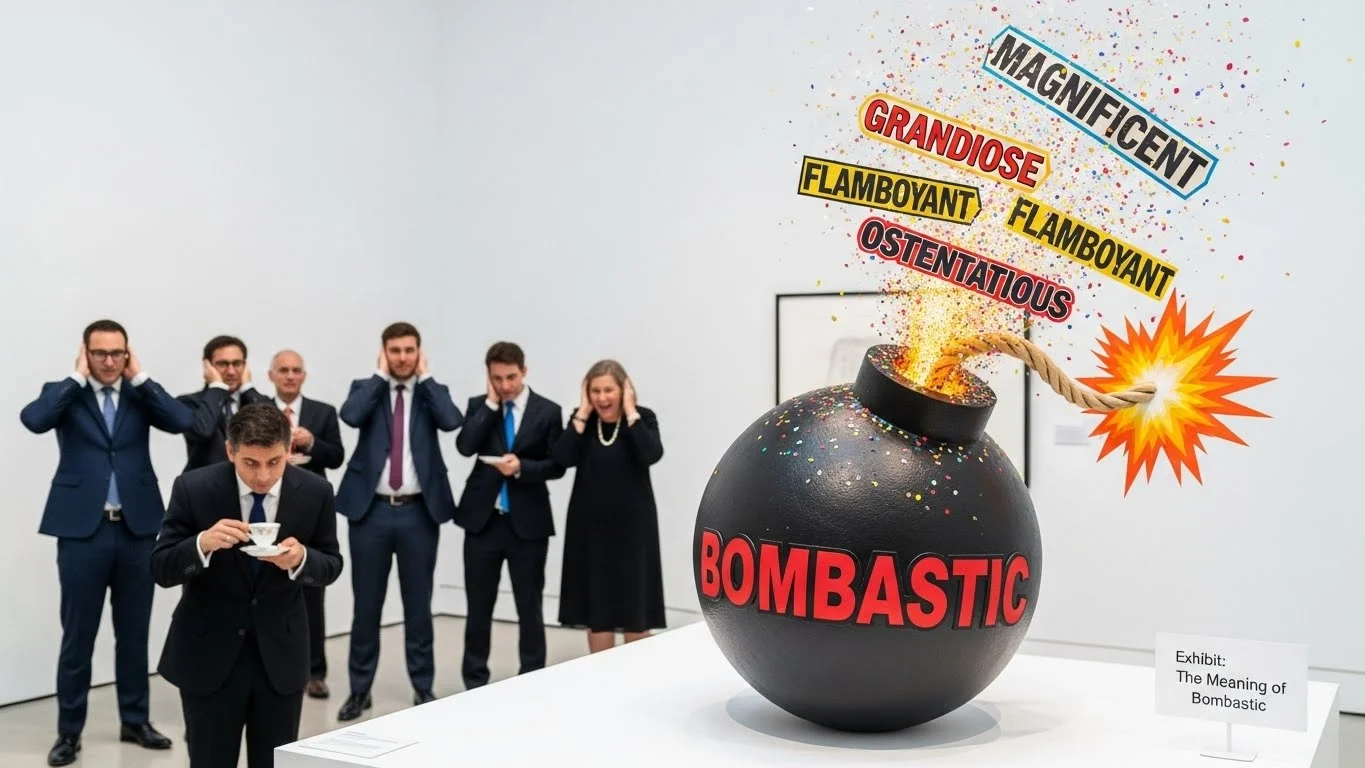
Here are related terms you might encounter:
Verbose – Using too many words
Inflated language – Overly fancy wording
Rhetoric – Persuasive speech
Hyperbole – Extreme exaggeration
Showy – Designed to attract attention
These are often used when analyzing tone or communication style.