

What Does “Håfa Adai” Mean?
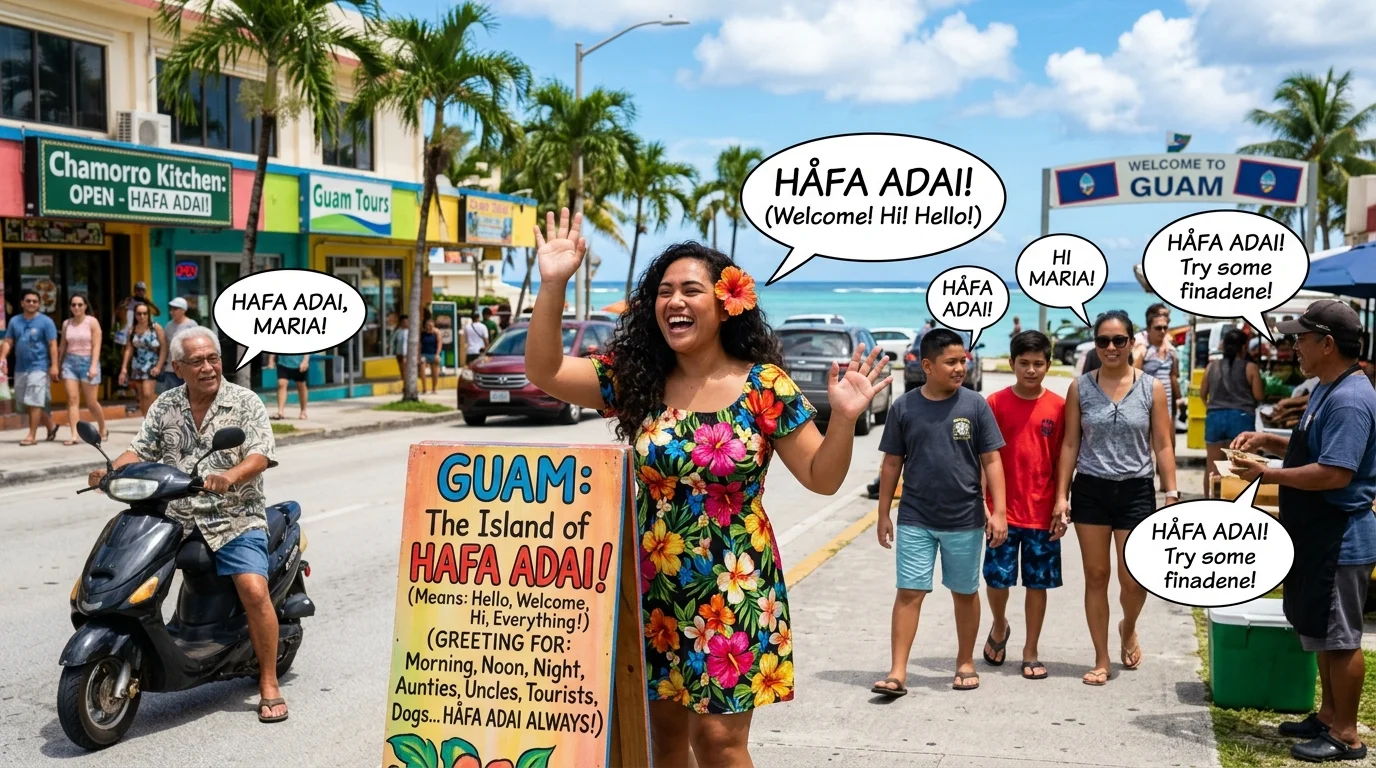
Håfa Adai is a traditional greeting in the Chamorro language, spoken by the indigenous Chamorro people of Guam and the Northern Mariana Islands.
Simple Definition
Håfa Adai = Hello, Hi, Greetings, or Welcome.
Depending on the situation, it can be used similarly to:
- Hello
- Hi
- Good day
- Welcome
It is one of the most recognized phrases associated with Guam’s culture.
Where Does Håfa Adai Come From?
Håfa Adai comes from the Chamorro language, the native language of the Chamorro people.
Historically, the phrase evolved from an older Chamorro expression that was similar to asking:
“What is there?” or “What’s happening?”
Over time, it became a general greeting used in everyday conversation.
Today, Håfa Adai serves as both a greeting and a symbol of cultural pride.
How Do You Pronounce Håfa Adai?
The phrase is commonly pronounced as:
“HAH-fuh uh-DYE”
or
“Hafa Adai”
Since pronunciation can vary slightly among speakers and regions, you may hear small differences, but the greeting remains easily recognizable.
Cultural Importance of Håfa Adai
Håfa Adai is more than a simple hello.
For many Chamorro people, it represents:
- Hospitality
- Respect
- Community
- Kindness
- Cultural identity
Visitors to Guam often notice the phrase displayed in:
- Airports
- Hotels
- Government buildings
- Schools
- Businesses
- Tourism campaigns
The greeting reflects the welcoming spirit that Guam is known for.
How People Use Håfa Adai in Real Conversations
Håfa Adai can be used in many situations.
Greeting Someone
Person A: Håfa Adai!
Person B: Håfa Adai!
Meaning:
A friendly hello.
Welcoming Visitors
Businesses and organizations often greet guests with:
“Håfa Adai and welcome to Guam.”
Meaning:
A warm welcome.
Starting Conversations
People may begin interactions with Håfa Adai before continuing the conversation.
Similar to saying:
- Hello
- Hi there
- Good morning

Real-Life Examples of Håfa Adai
Example 1: At the Airport
A visitor arrives in Guam and sees a sign saying:
“Håfa Adai! Welcome to Guam.”
Meaning:
A warm greeting and welcome.
Example 2: Meeting a Friend
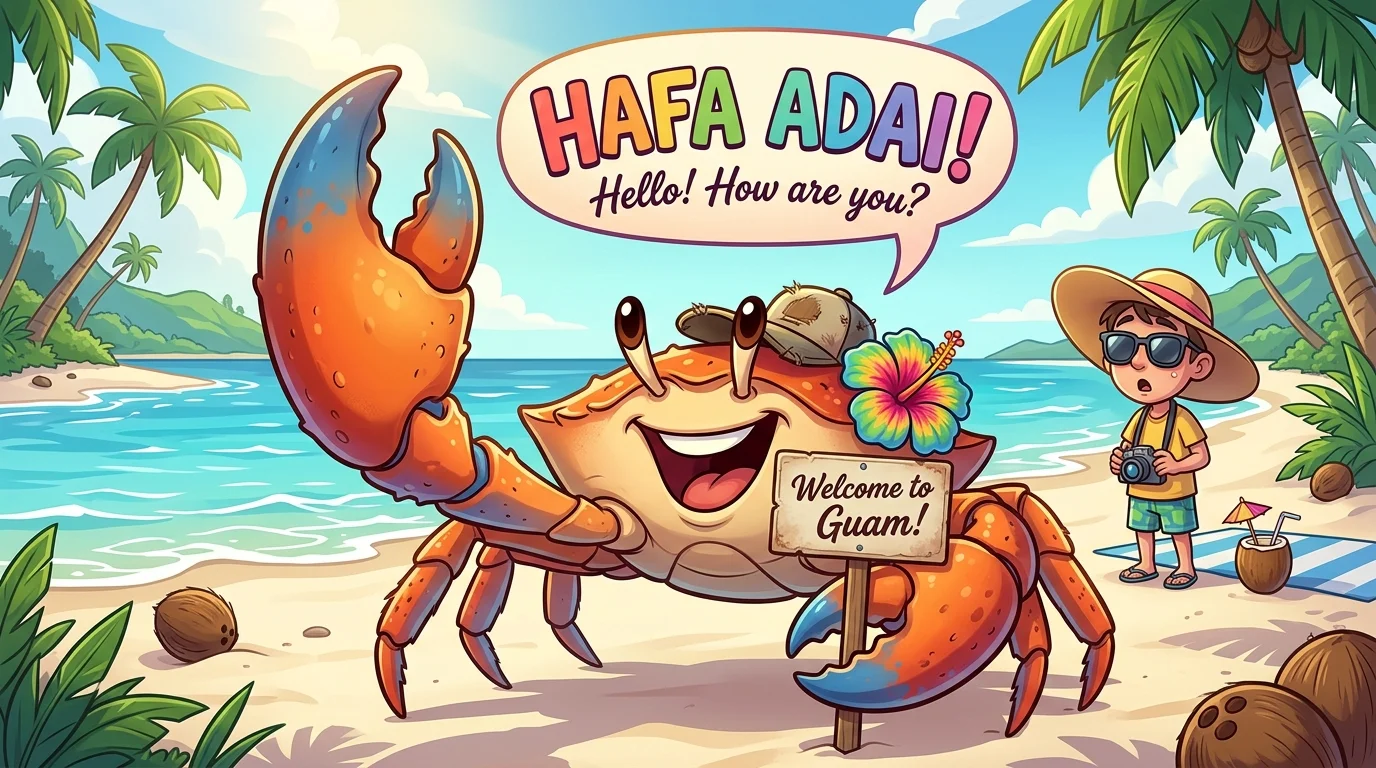
Friend: Håfa Adai! How are you?
Meaning:
Hello! How are you?
Example 3: Business Greeting
A store employee says:
“Håfa Adai! Can I help you today?”
Meaning:
Hello! How can I assist you?
Example 4: Cultural Event
A speaker opens a presentation with:
“Håfa Adai, everyone.”
Meaning:
Greetings, everyone.
Example 5: Social Media Post
“Håfa Adai from beautiful Guam!”
Meaning:
Hello from Guam.
Håfa Adai and Guam Tourism
The phrase has become closely associated with Guam’s tourism industry.
Visitors often encounter:
- Håfa Adai festivals
- Håfa Adai campaigns
- Håfa Adai hospitality programs
- Håfa Adai cultural celebrations
The greeting helps showcase the island’s welcoming atmosphere and cultural heritage.
Common Mistakes & Misunderstandings
1. Thinking Håfa Adai Is Only a Tourist Phrase
While tourists often see it, Håfa Adai is a genuine and meaningful part of Chamorro culture.
2. Assuming It Means Only “Hello”
Although hello is the closest English translation, the phrase can also convey:
- Greetings
- Welcome
- Friendly acknowledgment
3. Misspelling the Phrase
The traditional spelling is:
Håfa Adai
However, you may also see:
Hafa Adai
The second version is commonly used when special characters are unavailable.
4. Believing It Comes from Hawaiian
Many visitors mistakenly assume Håfa Adai is Hawaiian.
In reality, it comes from the Chamorro language of Guam and the Northern Mariana Islands.
5. Using It Incorrectly
Håfa Adai is primarily a greeting, not a farewell.
For goodbyes, other expressions are generally used.
Related Chamorro Expressions
If you’re learning about Håfa Adai, you may also encounter other Chamorro phrases.
1. Si Yu’os Ma’åse’
Meaning:
Thank you.
2. Buenas
Meaning:
Good day or greetings.
3. Adios
Meaning:
Goodbye.
4. Kao Mamaolek Hao?
Meaning:
How are you?
5. Na’an-mu Håyi?
Meaning:
What is your name?
These phrases can help visitors engage more respectfully with local culture.
Why Understanding Håfa Adai Matters
Learning the meaning of Håfa Adai helps you:
- Appreciate Chamorro culture
- Understand Guam’s traditions
- Communicate respectfully with locals
- Recognize cultural symbols
- Gain deeper insight into Pacific Island heritage
Understanding the phrase goes beyond translation—it helps connect people with the values and history behind it.