
What Does “PMHNP-BC” Mean?
The credential can be broken down into four parts:
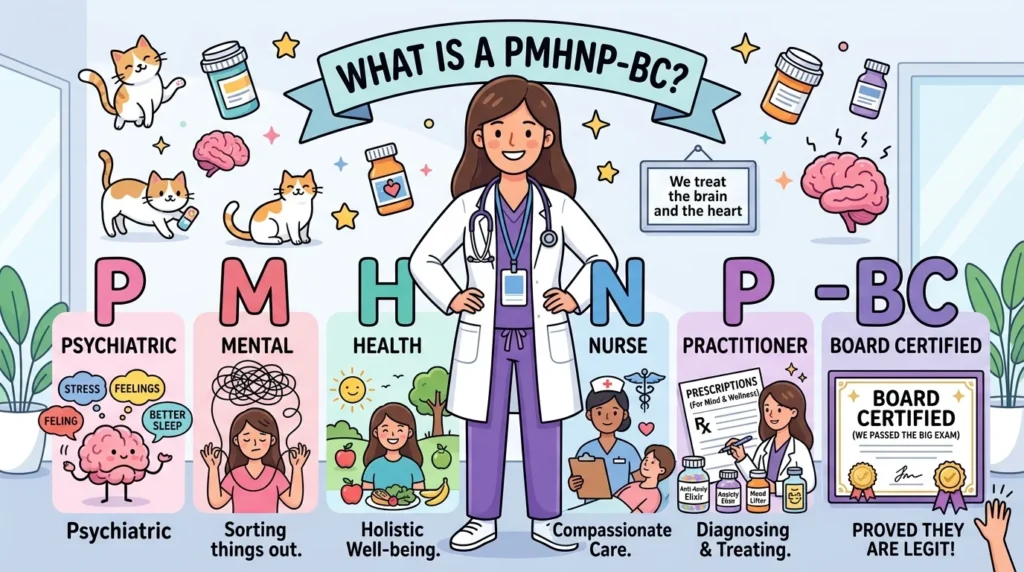
P = Psychiatric
This refers to the diagnosis, treatment, and management of mental health conditions.
MH = Mental Health
Mental health focuses on emotional, psychological, and behavioral well-being.
NP = Nurse Practitioner
A Nurse Practitioner (NP) is an advanced practice registered nurse with graduate-level education who can assess patients, diagnose conditions, and develop treatment plans.
BC = Board Certified
Board Certified means the nurse practitioner has passed a nationally recognized certification examination and met professional competency standards.
Full PMHNP-BC Meaning
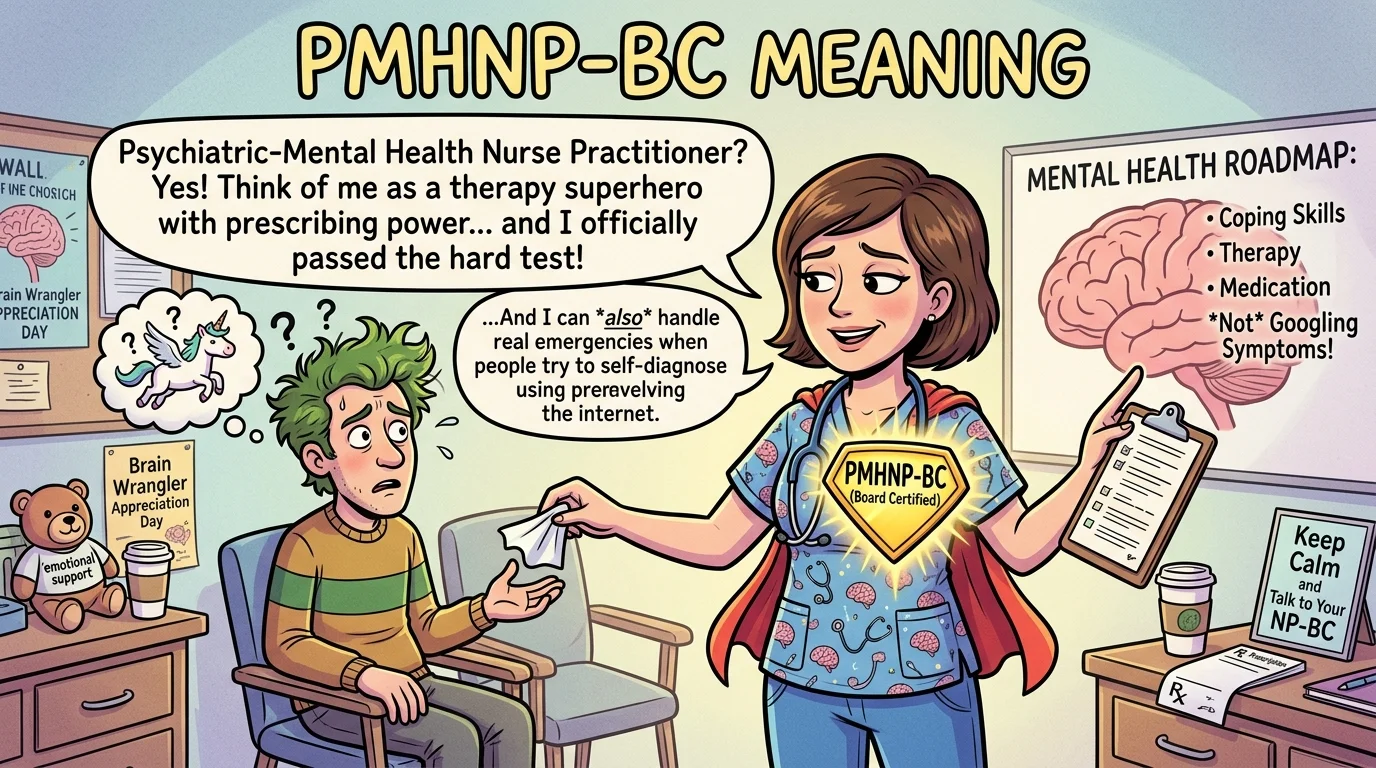
PMHNP-BC = Psychiatric Mental Health Nurse Practitioner – Board Certified
This designation shows that the provider has specialized expertise in psychiatric and mental health care.
What Does a PMHNP-BC Do?
A PMHNP-BC provides comprehensive mental health services across the lifespan.
Their responsibilities often include:
- Evaluating mental health conditions
- Diagnosing psychiatric disorders
- Creating treatment plans
- Prescribing medications (where allowed by law)
- Providing psychotherapy
- Monitoring treatment progress
- Educating patients and families
- Coordinating care with other healthcare providers
Conditions Commonly Treated
PMHNP-BC professionals often help patients with:
- Anxiety disorders
- Depression
- Bipolar disorder
- PTSD (Post-Traumatic Stress Disorder)
- ADHD
- Schizophrenia
- Panic disorders
- Substance use disorders
- Obsessive-compulsive disorder (OCD)
- Sleep-related mental health concerns
How People Use “PMHNP-BC” in Real Conversations
The abbreviation is commonly seen in healthcare settings.
Provider Credentials
Example:
Sarah Johnson, PMHNP-BC
This indicates that Sarah is a board-certified psychiatric mental health nurse practitioner.
Healthcare Directories
Patients searching for mental health providers may see PMHNP-BC listed in:
- Provider profiles
- Hospital directories
- Telehealth platforms
- Mental health clinics
Professional Signatures
Example:
Michael Smith, MSN, PMHNP-BC
This shows the provider’s educational background and professional certification.
How to Become a PMHNP-BC
Becoming a PMHNP-BC requires significant education and clinical training.
Step 1: Become a Registered Nurse (RN)
The first step is earning nursing credentials and becoming licensed as an RN.
Step 2: Earn an Advanced Nursing Degree
Candidates typically complete:
- Master of Science in Nursing (MSN), or
- Doctor of Nursing Practice (DNP)
with a psychiatric mental health specialization.
Step 3: Complete Clinical Training
Students must complete supervised clinical hours in psychiatric and mental health settings.
Step 4: Pass Board Certification
After meeting educational and clinical requirements, candidates take a national certification examination.
Successfully passing the exam allows them to use the PMHNP-BC credential.
Where PMHNP-BC Professionals Work
These specialists can work in various healthcare environments.
Common Work Settings
- Hospitals
- Mental health clinics
- Private practices
- Telehealth services
- Community health centers
- Substance abuse treatment facilities
- Schools and universities
- Veterans’ healthcare systems
- Correctional facilities
Because mental health services are in high demand, PMHNP-BC professionals often have a wide range of employment opportunities.
Real-Life Examples of PMHNP-BC Usage
Example 1: Finding a Mental Health Provider
A patient searches online and finds:
Jennifer Lee, PMHNP-BC
This means Jennifer is certified to provide psychiatric and mental health care.
Example 2: Telehealth Appointment
A telehealth platform lists:
Robert Green, DNP, PMHNP-BC
This indicates advanced nursing education and board certification.
Example 3: Clinic Staff Directory
A behavioral health clinic may feature multiple providers with the PMHNP-BC credential.
Example 4: Professional Email Signature
A provider signs an email:
Emily Carter, MSN, PMHNP-BC
This identifies her specialization and certification status.
Common Mistakes & Misunderstandings
Confusing PMHNP-BC With a Psychiatrist
While both treat mental health conditions, they have different educational pathways.
- Psychiatrists are medical doctors (MD or DO).
- PMHNP-BC professionals are advanced practice nurses with specialized psychiatric training.
Assuming PMHNP-BC Is Just a Nursing Title
The credential represents advanced education, clinical experience, and national certification beyond standard nursing licensure.
Thinking PMHNP-BC Only Prescribes Medication
Although medication management is often part of the role, many PMHNP-BC providers also offer counseling, therapy, patient education, and holistic treatment planning.
Confusing the Credential With Other NP Specialties
Nurse practitioners can specialize in many fields, including:
- Family practice
- Pediatrics
- Adult-gerontology
- Acute care
- Women’s health
PMHNP-BC specifically focuses on psychiatric and mental health care.
Related Healthcare Credentials
RN
Registered Nurse
Provides direct patient care and foundational nursing services.
APRN
Advanced Practice Registered Nurse
An umbrella category that includes nurse practitioners.
FNP-BC
Family Nurse Practitioner – Board Certified
Focuses on primary care across all age groups.
DNP
Doctor of Nursing Practice
An advanced clinical doctoral degree in nursing.
MSN
Master of Science in Nursing
A graduate degree commonly required for advanced nursing roles.