
What Does “Annual Plants” Mean?
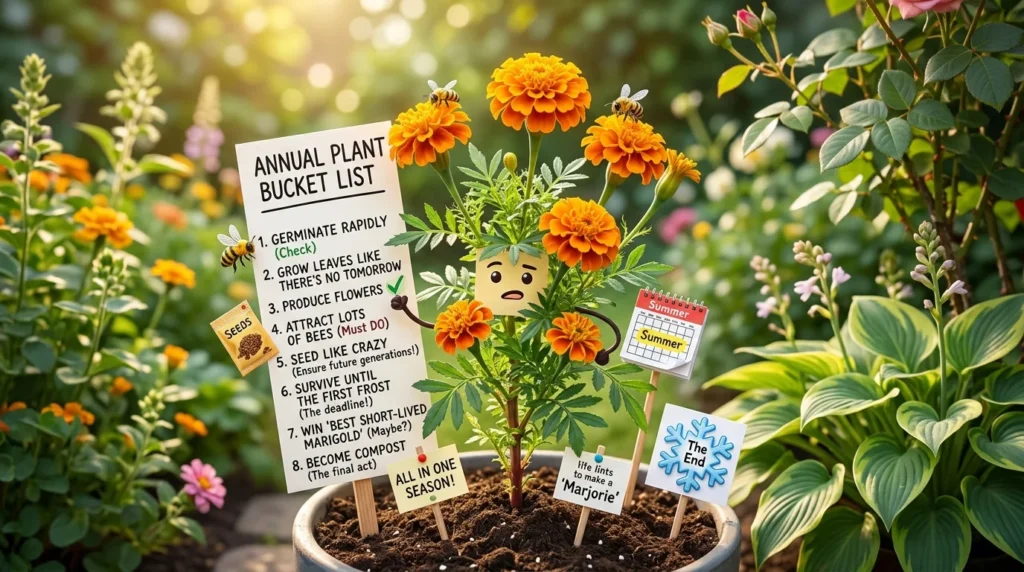
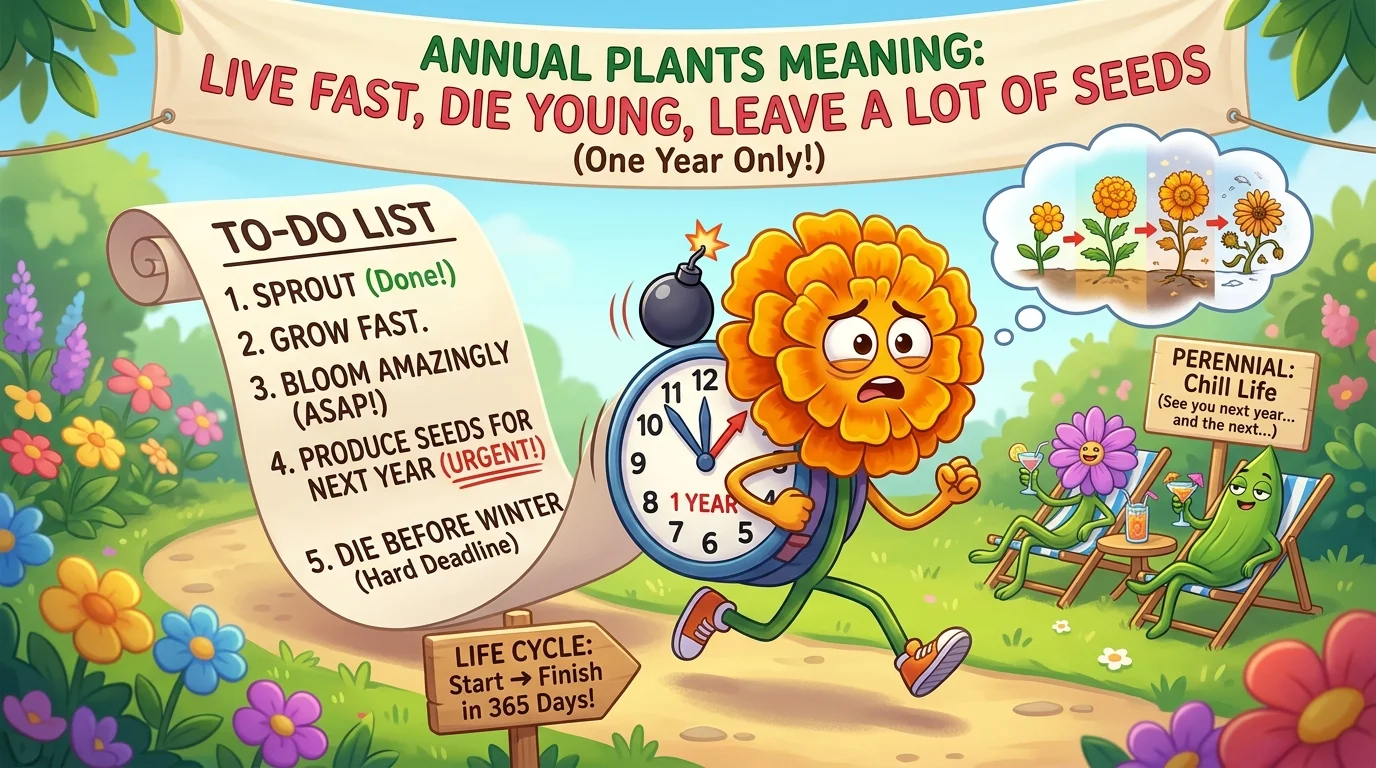
Annual plants are plants that complete their entire life cycle in one growing season or one year.
That means they:
- Germinate from seeds
- Grow leaves and stems
- Flower
- Produce seeds
- Die
all within a single season.
Simple Definition
Annual plants = plants that live for only one growing season
Unlike perennial plants, annuals do not return year after year from the same roots.
Gardeners usually replant them every season.
How Annual Plants Grow
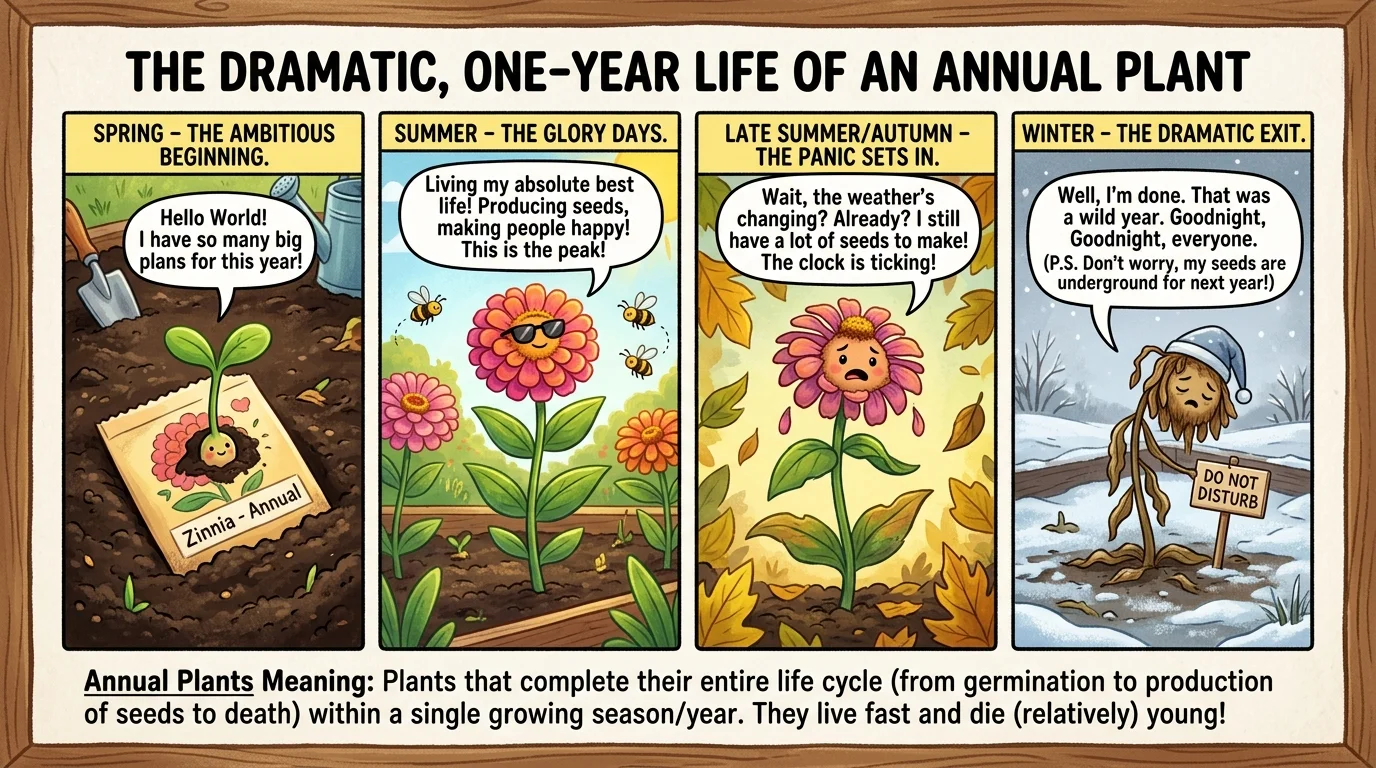
The life cycle of annual plants is fast and efficient.
Here’s the typical process:
1. Seed Germination
The plant starts as a seed in spring or warm weather.
2. Vegetative Growth
The plant develops:
- Roots
- Leaves
- Stems
During this stage, it grows rapidly.
3. Flowering Stage
Most annuals produce colorful flowers or edible crops.
This is often the most attractive stage.
4. Seed Production
The plant creates seeds for the next generation.
5. Death
After producing seeds, the plant dies naturally.
The cycle then restarts with new seeds next season.
Popular Examples of Annual Plants
Many common flowers and vegetables are annuals.
Popular Annual Flowers
Some favorite annual flowers include:
- Marigolds
- Petunias
- Zinnias
- Sunflowers
- Cosmos
- Impatiens
These plants are loved for:
- Bright colors
- Fast growth
- Long blooming periods
Popular Annual Vegetables
Many food crops are also annual plants.
Examples include:
- Tomatoes
- Cucumbers
- Lettuce
- Corn
- Beans
- Watermelon
Farmers and gardeners typically replant these every year.
Why Gardeners Love Annual Plants
Annual plants are extremely popular because they provide:
- Fast results
- Bright seasonal color
- Continuous blooms
- Flexible garden design
1. Long Blooming Season
Many annual flowers bloom for months.
This keeps gardens colorful throughout spring and summer.
2. Easy to Experiment With
Since annuals only last one season, gardeners can redesign gardens every year.
You can:
- Change colors
- Try new flowers
- Experiment with layouts
without long-term commitment.
3. Beginner-Friendly Gardening
Many annual plants are easy to grow from seed.
That makes them perfect for beginners.
4. Great for Containers
Annuals grow well in:
- Pots
- Hanging baskets
- Balcony gardens
- Window boxes
Difference Between Annuals and Perennials
One of the biggest gardening questions is:
What’s the difference between annual and perennial plants?
Here’s the simplest explanation.
| Annual Plants | Perennial Plants |
|---|---|
| Live for one season | Live for multiple years |
| Must be replanted yearly | Return every year |
| Fast growth | Slower long-term growth |
| Often bloom heavily | Usually bloom seasonally |
| Flexible garden changes | More permanent landscaping |
Simple Memory Trick
- Annual = one year
- Perennial = many years
Types of Annual Plants
Not all annuals behave exactly the same way.
1. Summer Annuals
These grow during warm weather.
Examples:
- Zinnias
- Marigolds
- Sunflowers
They die after frost arrives.
2. Winter Annuals
These grow during cooler seasons.
Examples:
- Pansies
- Sweet peas
They often die when summer heat becomes too intense.
3. Hardy Annuals
Can survive mild cold temperatures.
4. Tender Annuals
Very sensitive to frost and cold weather.
Real-Life Examples of Annual Plants in Gardens
Here are common ways people use annual plants.
Example 1: Colorful Flower Beds
Homeowners plant annual flowers each spring for vibrant summer gardens.
Example 2: Vegetable Gardens
Tomatoes and cucumbers are replanted every growing season.
Example 3: Balcony Decoration
Petunias and geraniums are popular in hanging baskets and containers.
Example 4: Seasonal Landscaping
Businesses and parks often use annuals for:
- Bright displays
- Temporary decorations
- Seasonal themes
Common Mistakes Beginners Make
Many new gardeners misunderstand annual plants at first.
1. Expecting Them to Return Automatically
A common beginner mistake is assuming annuals regrow next year naturally.
Most annuals die completely after one season.
2. Planting Too Early
Tender annuals can die from frost damage.
Always check your local climate before planting.
3. Overwatering
Many annuals dislike constantly wet soil.
Too much water can damage roots.
4. Ignoring Sunlight Needs
Some annuals need:
- Full sun
- Partial shade
- Cooler conditions
Choosing the wrong location affects growth.
5. Forgetting Deadheading
Deadheading means removing old flowers.
This helps many annuals continue blooming longer.
Advantages of Annual Plants
Fast Growth
Annuals grow quickly compared to many perennials.
Bright Colors
They often produce more vibrant flowers.
Affordable Gardening
Seeds and starter plants are usually inexpensive.
Flexible Design
You can completely redesign your garden every season.
Disadvantages of Annual Plants
Need Replanting Every Year
Unlike perennials, annuals require yearly planting.
Higher Maintenance
Some annuals need:
- Frequent watering
- Fertilizer
- Deadheading
Seasonal Lifespan
They only last for one growing season.
Are Annual Plants Good for Beginners?
Yes — absolutely.
Many gardening experts recommend annuals for beginners because they:
- Grow quickly
- Show visible results fast
- Teach plant care basics
- Require less long-term planning
Easy beginner annuals include:
- Marigolds
- Sunflowers
- Zinnias
- Nasturtiums
Annual Plants in Modern Gardening Trends
In 2025, annual plants remain popular because of:
- Small-space gardening
- Balcony gardens
- Container gardening
- Urban farming
- Social media gardening trends
TikTok and Instagram gardening creators frequently showcase seasonal annual flower arrangements and beginner vegetable gardens.
Related Gardening Terms
If you’re learning the annual plants meaning, these related terms may also help.
1. Perennials
Plants that return year after year.
2. Biennials
Plants that complete their life cycle in two years.
3. Germination
The process of seeds beginning to grow.
4. Deadheading
Removing old flowers to encourage more blooms.
5. Frost Tender
Plants sensitive to cold temperatures.
6. Companion Planting
Growing plants together for better growth or pest control.