
What Does “Bigender” Mean in Chat or Text?
The word bigender is a gender identity term used within LGBTQ+ communities.
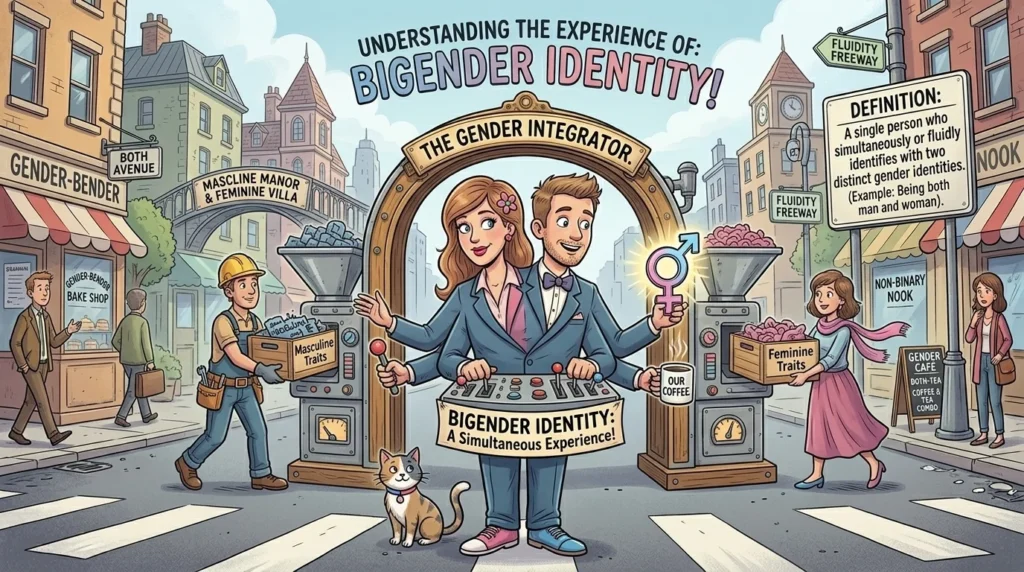
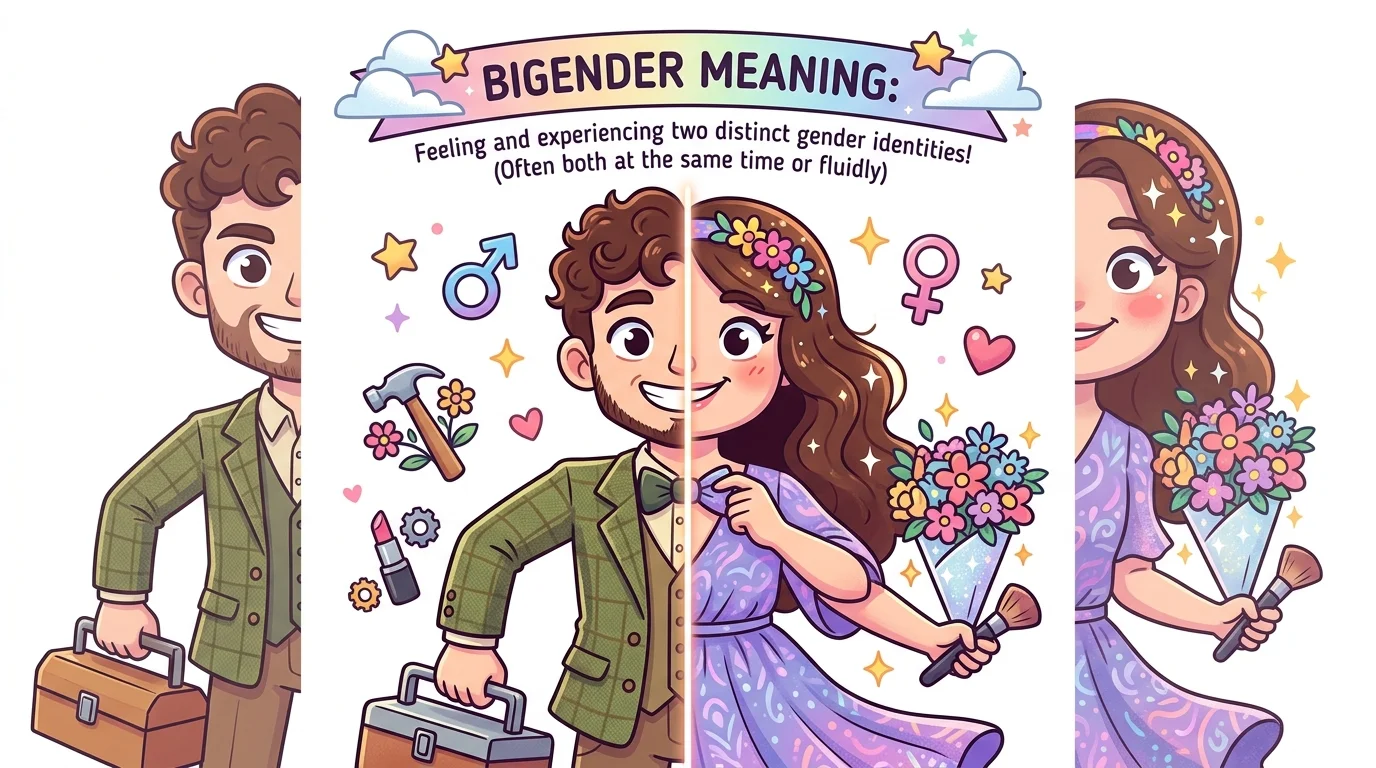
A person who is bigender identifies with two genders. These genders may include:
- Male and female
- Male and nonbinary
- Female and nonbinary
- Or other gender combinations
Every bigender person experiences their identity differently.
Simple Definition
A simple way to understand the term is:
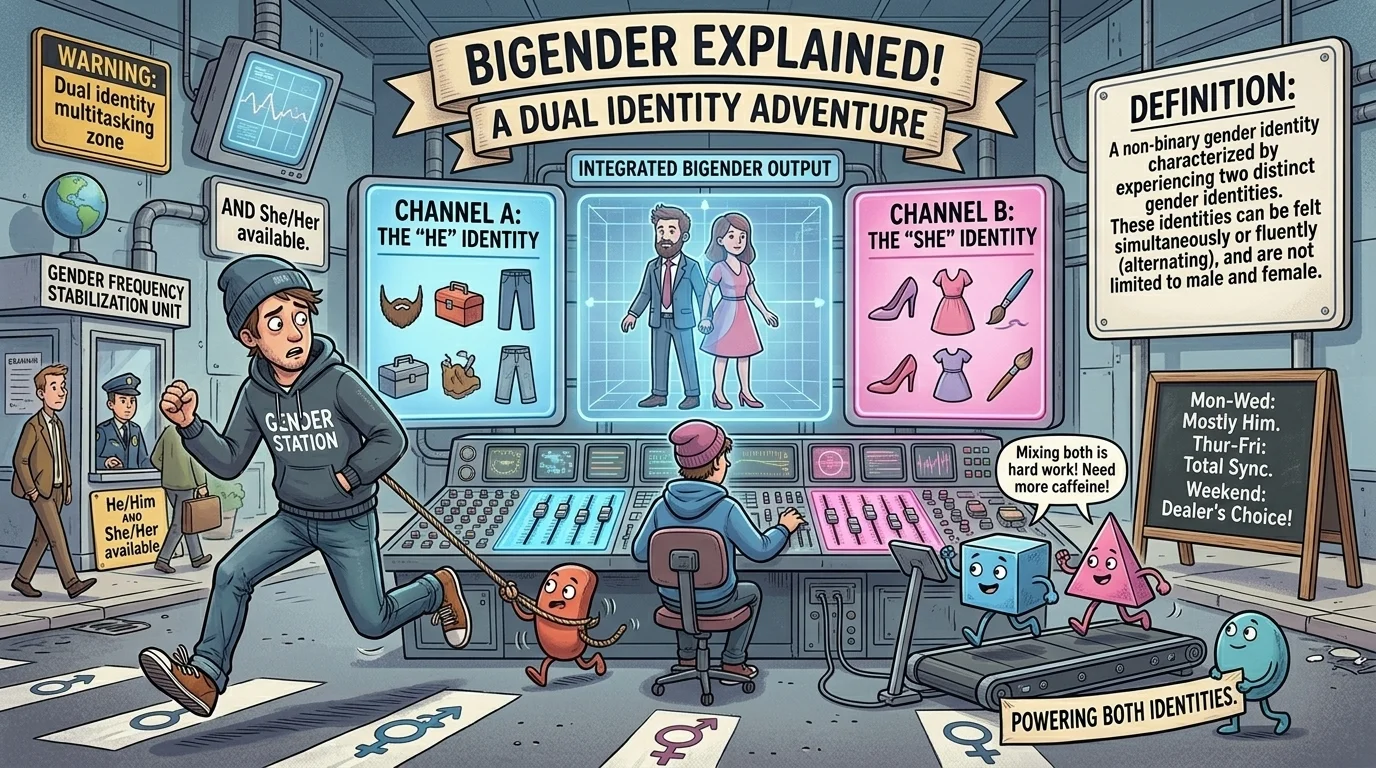
Bigender means experiencing two gender identities.
Some people feel both genders equally at the same time, while others shift between them depending on mood, environment, comfort, or self-expression.
Bigender Meaning in Online Conversations
In online chats or social media bios, you may see things like:
- “I’m bigender”
- “Bigender and proud”
- “They’re bigender, use both pronouns”
- “Bigender vibes today”
These statements usually refer to someone explaining or expressing their gender identity.
Is Bigender the Same as Being Transgender?
Not always.
Some bigender people also identify as transgender, while others do not. Gender identity is personal, and labels can vary from person to person.
Origin of the Word “Bigender”
The word combines:
- “Bi” = two
- “Gender” = identity relating to gender
The term has existed in LGBTQ+ discussions for years, but social media platforms like TikTok, Tumblr, Reddit, and Discord helped make it more widely recognized.
Today, it’s commonly discussed in:
- LGBTQ+ communities
- Identity conversations
- Online forums
- Youth culture spaces
- Educational content online
How People Use “Bigender” in Real Conversations
People use the term differently depending on the setting and conversation.
On Social Media
You’ll often see bigender mentioned in:
- TikTok bios
- Instagram profiles
- Twitter/X discussions
- Tumblr posts
- Pride-related content
Example:
“Bigender | she/they”
This usually tells others about the person’s identity and preferred pronouns.
In Friend Groups or Online Communities
Someone may casually explain their identity by saying:
“I’m bigender, so my gender expression changes sometimes.”
This helps others understand how they feel comfortable presenting themselves.
On Dating Apps
Some people include “bigender” in profiles to honestly represent their identity.
This helps:
- Avoid confusion
- Set expectations
- Find accepting communities or partners
In Discord Servers or Gaming Communities
Online spaces often allow custom pronouns and identity labels.
You might see:
- Bigender flags
- Pronoun roles
- Identity channels
- Gender discussions
These spaces usually encourage respectful communication.
When It’s Appropriate to Use the Word
It’s appropriate when:
- Someone uses the label for themselves
- You’re respectfully discussing gender identity
- You’re asking sincere educational questions
It becomes awkward or disrespectful when:
- The term is mocked
- People intentionally misuse pronouns
- Someone argues against another person’s identity unnecessarily
Real-Life Examples of “Bigender” in Text Messages
Here are realistic examples showing how the word appears in everyday conversations.
Example 1
Text Message:
“Hey, just letting you know I’m bigender and use she/they pronouns.”
Explanation
This person is sharing both their gender identity and preferred pronouns.
Example 2
Instagram Bio
“Artist | Bigender | they/he”
Explanation
This quickly communicates identity information to followers.
Example 3
Discord Chat
“Some days I feel more masculine, other days more feminine.”
Explanation
Some bigender individuals describe shifts in gender expression this way.
Example 4
Supportive Friend Conversation
“Thanks for respecting my identity.”
Explanation
Respecting names and pronouns is important in identity-related conversations.
Example 5
Funny/Relatable Online Post
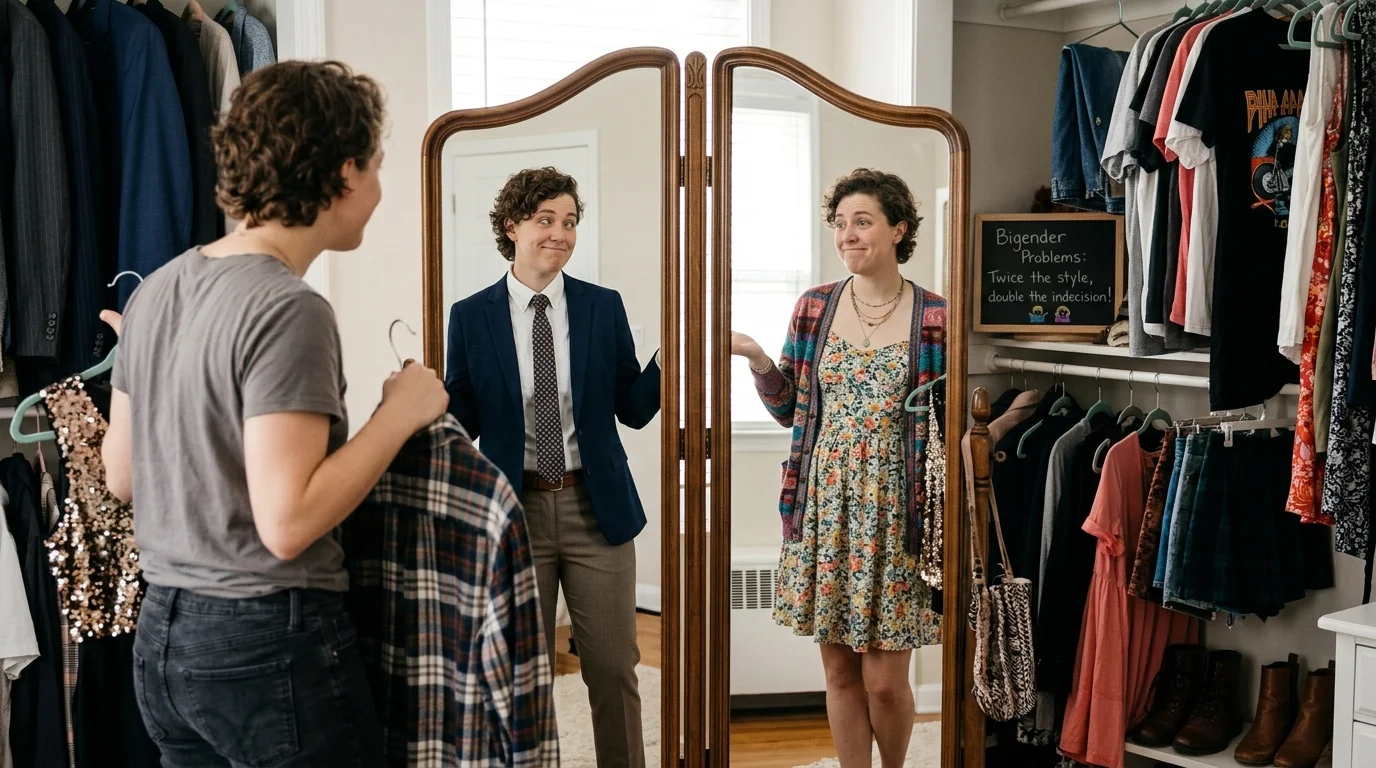
“My wardrobe fighting over masc mode vs fem mode again.”
Explanation
Some bigender people joke about switching styles or presentations depending on how they feel.
Common Signs Someone May Be Talking About Being Bigender
Not everyone openly uses labels, but these phrases sometimes appear in discussions:
- “I identify as both.”
- “My gender changes.”
- “I feel connected to two genders.”
- “I use multiple pronouns.”
- “My gender expression shifts.”
That doesn’t automatically mean someone is bigender, but these ideas are often related.
Common Mistakes & Misunderstandings
Many people misunderstand the bigender meaning at first, especially if they’re unfamiliar with gender identity terminology.
Here are the most common misconceptions.
Confusing Bigender With Bisexual
These are completely different terms.
- Bigender relates to gender identity
- Bisexual relates to romantic or sexual attraction
People sometimes mix them up because both begin with “bi.”
Assuming It’s “Just a Trend”
Gender-diverse identities have existed across cultures for centuries. Social media simply made conversations more visible.
For many people, being bigender is a genuine and deeply personal identity experience.
Thinking All Bigender People Feel the Same
Every person experiences gender differently.
Some bigender people:
- Feel two genders simultaneously
- Alternate between genders
- Express gender differently depending on the day
There’s no single “correct” experience.
Misusing Pronouns Intentionally
One of the biggest mistakes is ignoring someone’s stated pronouns on purpose.
Even if you don’t fully understand a person’s identity, respectful communication matters.
Believing Gender Expression Equals Gender Identity
Clothing or appearance does not automatically determine someone’s gender identity.
For example:
- Masculine clothes do not always mean male
- Feminine presentation does not always mean female
Identity is more personal than appearance alone.
Bigender vs Other Gender Terms
People often search for related identity labels too. Here’s a quick breakdown.
Nonbinary
A broad identity outside the traditional male/female binary.
Some bigender people also identify as nonbinary.
Genderfluid
Genderfluid people may experience changing gender identities over time.
This can overlap with bigender experiences, but they are not identical terms.
Agender
Agender means identifying with little or no gender.
This is different from experiencing two genders.
Transgender
Transgender is an umbrella term for people whose gender identity differs from the sex assigned at birth.
Some bigender people identify under this umbrella; others do not.
Cisgender
Cisgender means someone’s gender identity matches the sex assigned at birth.
Why Understanding “Bigender Meaning” Matters
Even if you don’t personally identify as bigender, understanding the term helps improve communication online and offline.
It can help you:
- Respect others
- Avoid awkward misunderstandings
- Navigate modern internet culture
- Understand identity discussions better
- Communicate more thoughtfully
Language evolves quickly online, and identity-related terms are now a normal part of digital conversations.
Related Slangs & Identity Terms
If you’re researching identity language, you may also come across:
- Nonbinary
- Genderfluid
- Agender
- Demiboy
- Demigirl
- LGBTQ+
- Pronouns
- Deadname
- Cisgender
- Queer
These are strong internal linking opportunities for identity-focused websites or educational blogs.
Tips for Talking Respectfully About Bigender Identity
Here are a few simple guidelines.
Listen First
If someone explains their identity, let them define it in their own words.
Use Correct Pronouns
Using someone’s preferred pronouns shows basic respect.
Avoid Turning It Into a Debate
Most people sharing their identity are not asking for permission or approval.
It’s Okay to Politely Ask Questions
Respectful curiosity is usually fine if the setting is appropriate.
Example:
“Would you mind explaining what bigender means for you personally?”
Don’t Assume Everyone Knows the Same Terms
Identity language evolves fast online. Many people are still learning.