
What Does “Michaelmas” Mean?
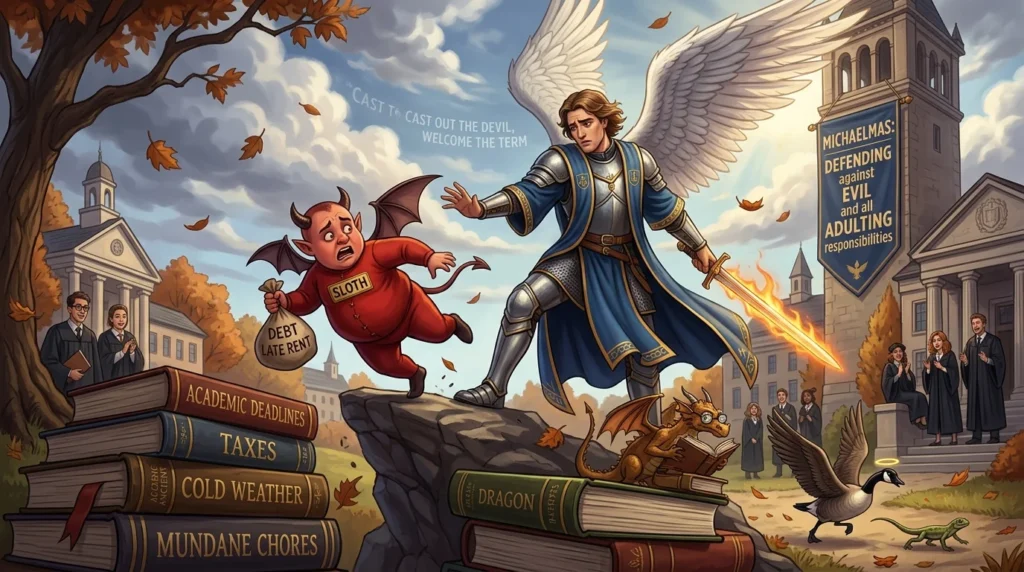
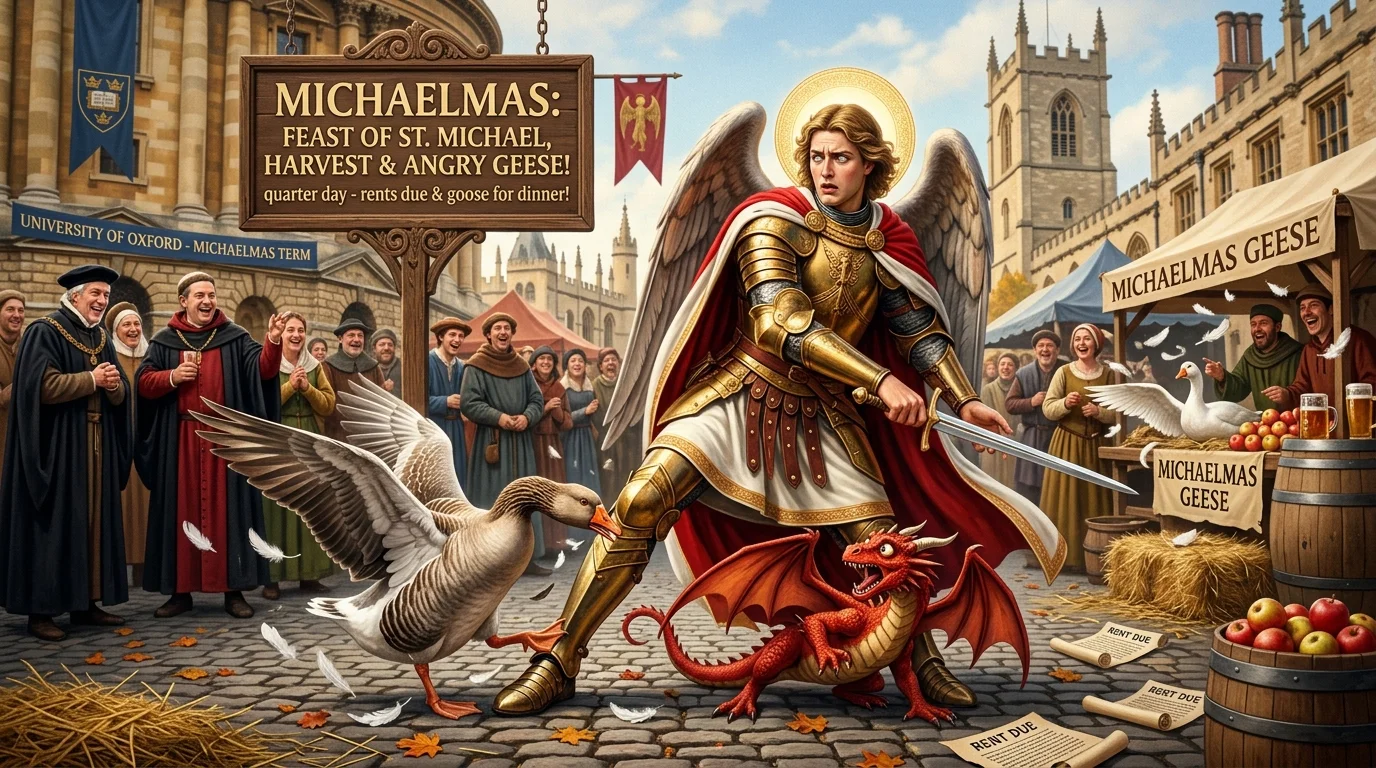
The word Michaelmas refers to the feast day of Saint Michael the Archangel, traditionally celebrated on September 29 in Western Christian traditions.
The term combines:
- Michael — referring to Saint Michael
- Mass — meaning a church service or religious feast
So literally, Michaelmas means:
“The Mass or Feast of Saint Michael.”
Who Is Saint Michael?
Saint Michael is one of the most recognized archangels in Christian tradition. He is often associated with:
- Protection
- Strength
- Justice
- Spiritual warfare
In religious art and stories, Saint Michael is commonly shown defeating evil or protecting heaven.
Historical Origin of Michaelmas
Michaelmas dates back many centuries and became especially important in medieval Europe.
Historically, it marked:
- The end of the harvest season
- The beginning of autumn
- Financial and legal calendar dates
- School and university terms
In old England, Michaelmas was one of the four “quarter days” used to organize:
- Rent payments
- Employment contracts
- Legal agreements
- Academic schedules
This made the day extremely important in everyday life.
Why Michaelmas Was a Big Deal Historically
Before modern calendars and business systems, seasonal feast days helped organize society.
Michaelmas often signaled:
- Summer ending
- Harvest completion
- Preparation for winter
For farmers and workers, it was both practical and religious.
How People Use “Michaelmas” Today
Even in 2025, the word still appears in several modern contexts.
In Universities and Schools
Many British schools and universities still use the term “Michaelmas Term.”
For example:
- University of Oxford
- University of Cambridge
Their academic year often begins with the Michaelmas term in autumn.
Example:
“Classes begin during Michaelmas Term.”
In this context, the word refers to the autumn academic session.
In Religious Communities
Churches still celebrate Michaelmas with:
- Special services
- Feast meals
- Prayers honoring Saint Michael
The day remains important in many Christian traditions.
In Seasonal and Traditional Discussions
People interested in:
- Cottagecore culture
- Seasonal living
- Historical traditions
- Folk customs
often mention Michaelmas online during autumn.
Example:
“Michaelmas always feels like the true start of fall.”
In Literature and Historical Fiction
Writers often use Michaelmas to create an old-world atmosphere.
You might see lines like:
“The agreement would last until Michaelmas.”
This reflects historical British usage.
Michaelmas Traditions and Customs
Over the centuries, many traditions became associated with Michaelmas.
Michaelmas Goose
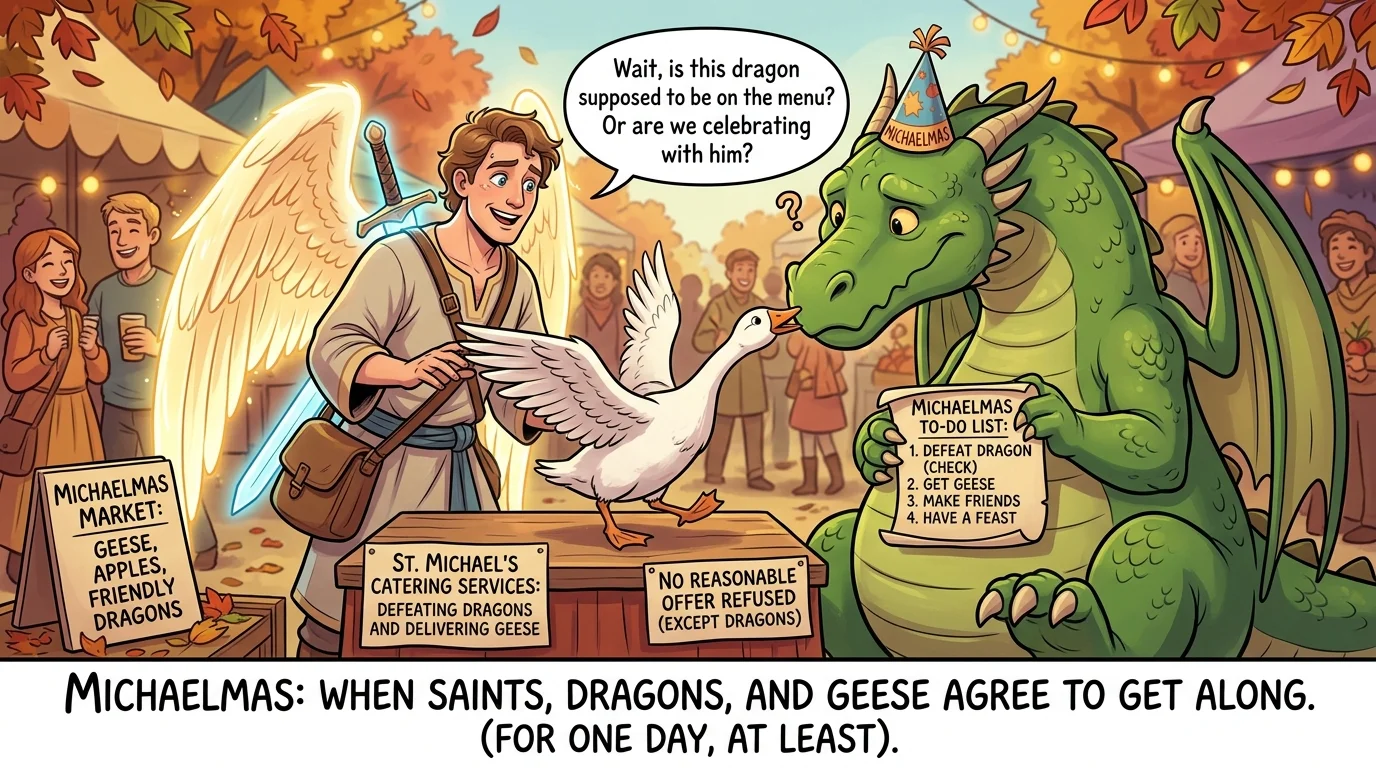
One famous custom involved eating goose on Michaelmas Day.
People believed eating goose would bring prosperity for the coming year.
This tradition became especially popular in England.
Harvest Celebrations
Michaelmas often marked the end of harvesting crops.
Communities celebrated with:
- Feasts
- Gatherings
- Seasonal foods
- Church ceremonies
Blackberry Traditions
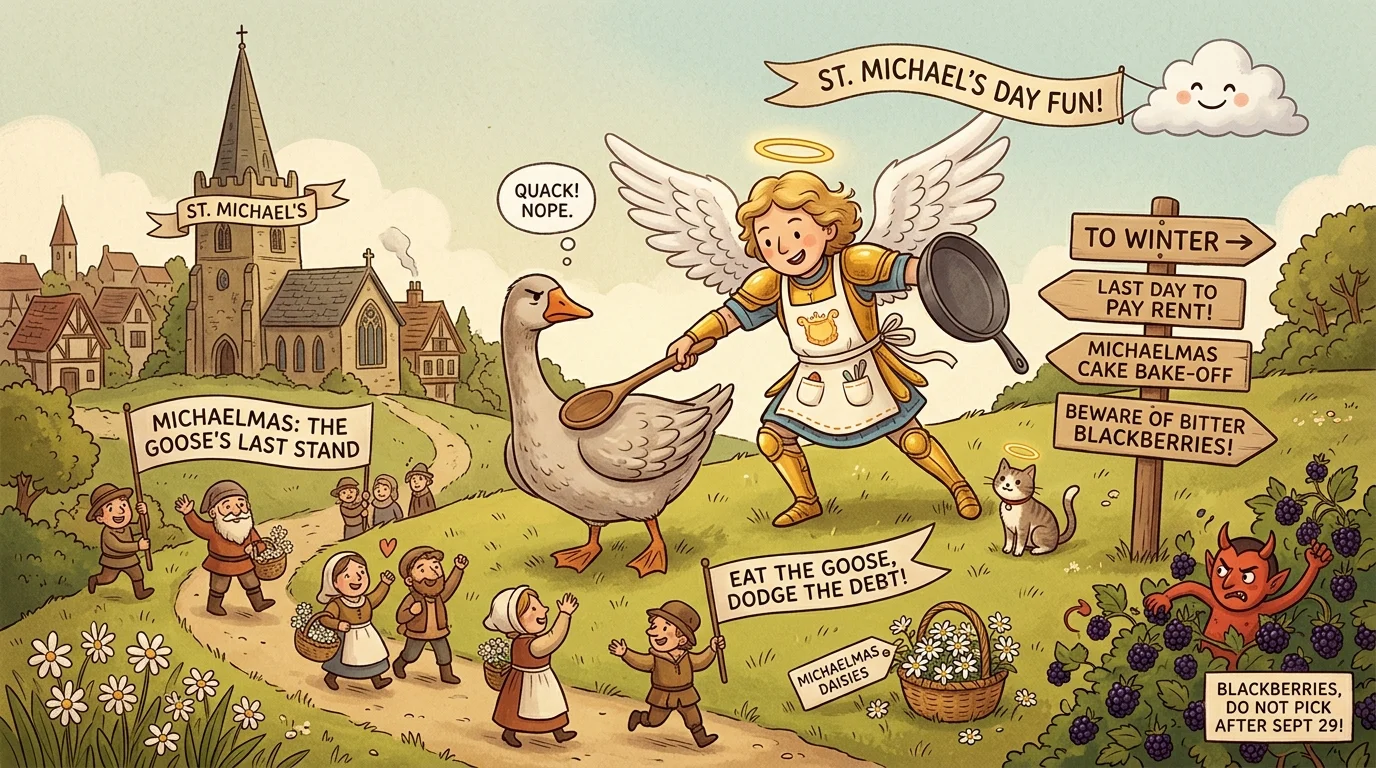
Some folklore claimed blackberries should not be picked after Michaelmas because the devil had cursed them.
This old belief survives in some rural traditions today.
Hiring Fairs and Contracts
Historically, workers were often hired around Michaelmas for seasonal labor.
This was common in farming communities.
Real-Life Examples of “Michaelmas” in Conversation
Here are examples showing how the word appears in modern language.
Example 1
University Conversation
“The Michaelmas term starts next week.”
Meaning
This refers to the autumn academic term.
Example 2
Historical Drama
“The rent must be paid by Michaelmas.”
Meaning
This reflects the old quarter-day financial system.
Example 3
Seasonal Social Media Post
“Happy Michaelmas to everyone celebrating today.”
Meaning
A greeting connected to the feast day.
Example 4
Literature Discussion
“The novel uses Michaelmas to establish the historical setting.”
Meaning
The word helps create a classic or medieval atmosphere.
Example 5
Church Announcement
“Join us for the Michaelmas feast service on September 29.”
Meaning
A religious observance honoring Saint Michael.
Common Misunderstandings About Michaelmas
A lot of people misunderstand the term at first because it sounds unusual in modern English.
Here are the most common confusions.
Thinking Michaelmas Is a Person
Some assume Michaelmas is someone’s full name.
It’s actually:
- A feast day
- A seasonal term
- A historical calendar reference
Confusing It With Christmas
Because both words end in “-mas,” people sometimes think they’re connected.
But:
- Christmas celebrates the birth of Jesus
- Michaelmas honors Saint Michael
Assuming It’s Obsolete
While the word is old, it’s still actively used in:
- British education
- Religious traditions
- Historical writing
- Seasonal communities
Thinking It’s Only Religious
Michaelmas began as a religious feast day, but it also became culturally and historically important.
Today, many people use the word in academic or seasonal contexts rather than strictly religious ones.
Michaelmas Meaning in British Education
One reason people still search for Michaelmas meaning is because British universities continue using the term officially.
At institutions like:
- University of Oxford
- University of Cambridge
the academic calendar often includes:
- Michaelmas Term
- Hilary Term
- Trinity Term
Michaelmas typically refers to the autumn session beginning around October.
For international students, the terminology can sound confusing at first.
Why Michaelmas Still Matters Today
Even though the term is centuries old, Michaelmas remains relevant because it connects:
- History
- Religion
- Education
- Seasonal traditions
- Literature
It also reflects how older language survives in modern culture.
In a world filled with fast-changing internet slang, words like Michaelmas remind us that language can carry centuries of tradition.
Related Terms and Traditions
If you’re exploring historical or seasonal language, you may also come across:
Saint Michael
The archangel honored during Michaelmas.
Quarter Days
Traditional calendar dates used for rents and contracts in Britain.
Harvest Festival
Celebrations connected to seasonal farming cycles.
Advent
Another important Christian seasonal observance.
Candlemas
A Christian feast day celebrated in February.
Lammas
An old harvest festival celebrated earlier in the agricultural year.
These are excellent internal linking opportunities for history, education, or religion-focused websites.