
What Does “Acapella” Mean in Chat or Text?
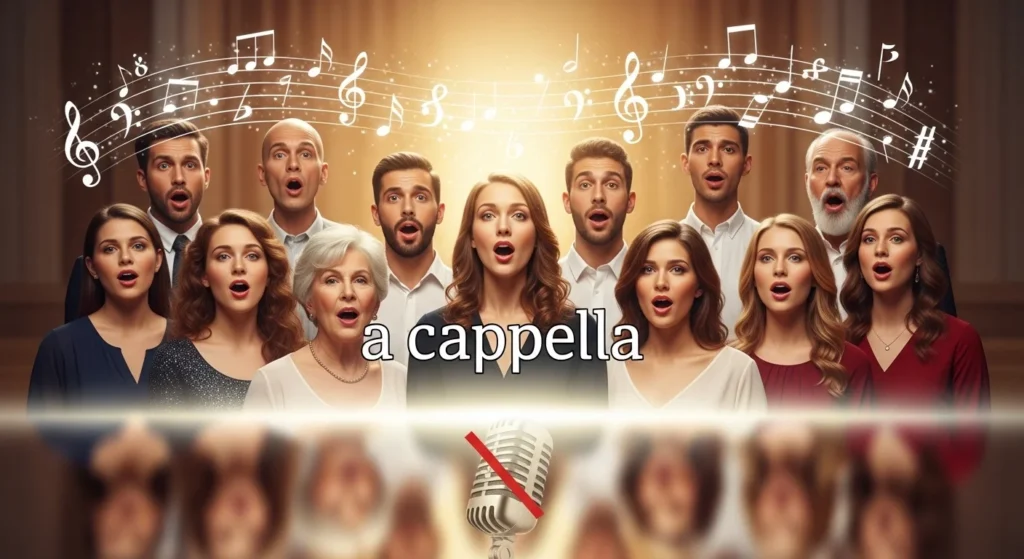
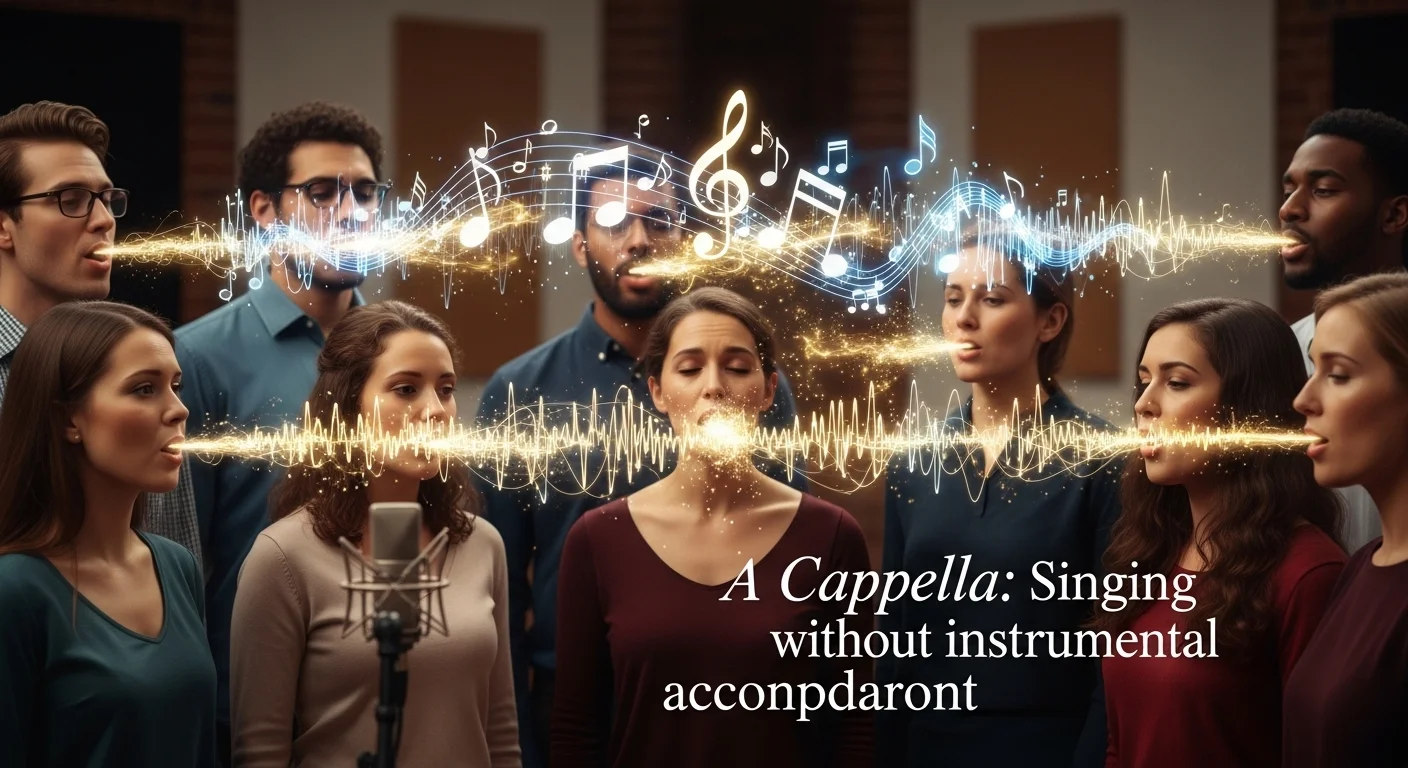
In the simplest terms, acapella means singing without musical instruments.
The word is often written as:
Acapella (common online spelling)
A cappella (original and technically correct spelling)
Both forms refer to the same thing.
Simple Definition
Acapella:
A style of singing where performers use only their voices and no instruments.
This means:
No guitar
No piano
No drums
No background track
Everything you hear is created by human voices.
Sometimes singers will imitate instruments using vocal sounds. This is why beatboxing and vocal percussion are often part of acapella performances.
Acapella Meaning in Chat
In online chats or messages, the term usually refers to a vocal-only version of a song.
Example meanings in conversation:
A version of a song with only vocals
A voice-only performance
A song recording without music
For example:
Someone might ask for an acapella version of a track to create a remix.
A friend might send a clip of themselves singing acapella.
Brief Origin of the Word
The term comes from Italian:
“A cappella” = “in the style of the chapel.”
Historically, it referred to church singing without instruments, which was common in early European religious music.
Over time, the term expanded to include any vocal-only performance.
Today, it’s widely used in:
Music production
Online communities
Social media
Text conversations
acapella How People Use “Acapella” in Real Conversations
You’ll often see the term acapella in chat, especially in music-related discussions.
It appears on platforms like:
Text messages
Instagram comments
TikTok videos
Discord servers
Music forums
YouTube comments
Dating apps (when someone shares music talent)
Common Situations Where People Use “Acapella”
Sharing a vocal performance
Someone might post a clip singing without music.
Example:
“Just recorded this acapella cover in my room.”
Requesting vocal-only tracks
Music producers often ask for acapella versions to remix songs.
Example:
“Does anyone have the acapella for this track?”
Posting singing challenges
Many social media challenges involve acapella singing.
Example:
“Try this chorus acapella if you know it.”
Showing vocal talent
People sometimes sing acapella to show their voice clearly.
Example:
“I prefer acapella covers because you can hear the real voice.”
When It Sounds Natural vs Awkward
Appropriate uses:
Music discussions
Singing videos
Remix communities
Talent posts
Vocal challenges
Awkward uses:
Randomly saying “acapella” outside music context
Using it to describe instrumental music
Confusing it with karaoke
Acapella specifically means no instruments at all, which makes it different from many other music formats.
Real-Life Examples of “Acapella” in Text Messages
Seeing how the term appears in real chats can make the acapella meaning in text easier to understand.
Below are common message-style examples.
Example 1
Friend 1:
“Can you send the acapella version of that song?”
Friend 2:
“Yeah, I found one on YouTube.”
Explanation:
They want the vocal-only track without instruments.
Example 2
“Just tried singing this acapella and it’s way harder than I thought.”
Explanation:
The person is singing without background music, which exposes vocal mistakes more clearly.
Example 3
“Your acapella cover sounds amazing.”
Explanation:
The listener is complimenting someone’s instrument-free singing performance.
Example 4
“Producers love acapellas for remixes.”
Explanation:
In music production, acapella tracks are used to build new beats around vocals.
Example 5 (Funny Situation)
Friend 1:
“I tried singing acapella in the shower.”
Friend 2:
“Everyone thinks they’re a superstar in the shower.”
Explanation:
The joke highlights how singing without music can feel dramatic or emotional.
acapella Common Mistakes & Misunderstandings
Although the acapella meaning slang is straightforward, people often misunderstand the term.
Here are the most common mistakes.
1. Confusing It With American Sign Language
One major confusion happens because of another abbreviation: ASL.
ASL can mean:
American Sign Language
Age, Sex, Location (in old chat slang)
Some people mistakenly connect acapella with sign language discussions, which is incorrect.
Acapella has nothing to do with sign language. It is strictly a music term.
2. Thinking It Means Karaoke
Karaoke and acapella are very different.
Karaoke:
Background music plays
The singer performs with instrumental backing
Acapella:
No instruments
Only human voices
3. Believing It Means “Unedited Singing”
Acapella does not automatically mean raw or unedited audio.
An acapella recording may still include:
Audio effects
Vocal layering
Studio mixing
The key requirement is simply no instruments.
4. Assuming It’s Always Solo Singing
Many people think acapella means one person singing alone.
But large groups can perform acapella.
Examples include:
Choirs
Vocal groups
Beatbox ensembles
Barbershop quartets
These groups create full musical arrangements using only voices.
Related Slangs & Abbreviations
If you’re exploring the acapella meaning in chat, you may also encounter other music or internet slang terms.
Here are a few commonly related expressions.
Beatboxing
Beatboxing is when someone creates drum sounds using their mouth.
Example sounds include:
Kick drum noises
Hi-hats
Snare effects
Beatboxing is often part of modern acapella performances.
Cover
A cover means performing someone else’s song.
Example:
“She posted a cover of that song.”
A cover can be:
Instrumental
Acapella
Full band
Remix
A remix is a new version of a song created by altering or adding elements.
Producers frequently use acapella vocals to build remixes.
Vocal Track
A vocal track is the isolated recording of a singer’s voice.
This is often similar to an acapella version.
Beat Drop
In electronic music, a beat drop is the moment when heavy instruments or bass enter the song.
In contrast, acapella removes those instruments completely.
acapella Why Acapella Is So Popular on Social Media
The popularity of acapella performances has grown significantly online.
Several reasons explain why.
1. Authentic Talent
Without instruments, listeners hear the true quality of the voice.
This makes performances feel more authentic.
2. Easy to Record
Anyone can record acapella singing with just a phone.
No instruments or studio equipment required.
3. Viral Challenges
Many singing challenges encourage users to:
Sing a chorus acapella
Harmonize with others
Add vocal layers
These formats spread easily on platforms like TikTok.
4. Remix Culture
Producers and DJs often search for clean acapella vocals to build new songs.
This keeps the term relevant in music communities.